The Favourite
Friday, November 30
The Favourite Review
The Favourite
Wednesday, November 21
Creed II Review
Creed II
Dir: Steven Caple Jr.
Starring: Michael B. Jordan, Sylvester Stallone, Tessa Thompson, Phylicia Rashad, Dolph Lundgren, and Florian Munteanu
There is a quality in the sport and spectacle of boxing that is absolutely captivating. The way boxing promoters shape and mold the tale of the tape, composing gladiators that have reached the peak of their physical prowess, where the only place left for these athletic gods to venture is into the arena of battle, to prove with their hardened fists that they are the greater fighter. The battle itself is a circus, with pulsating entrance music, explosions of flame, and flashing strobe lights. And right before the two warriors pummel one another, a bell will echo into the night letting all know where their attention should rest. It’s exciting, it’s barbaric…it’s entertainment.
The “Rocky” franchise, built with an underachieving underdog from Philadelphia, is one of the rare sports franchises in film history. With Sylvester Stallone, who wrote all 6 films in the Rocky Balboa saga, fashioning a world where the predominant odds from every possible angle came hurtling into the squared circle to bombard Balboa with their fists. Still, even though Rocky single handedly ended Cold War conflicts with Russia in “Rocky IV”, the hardest fight for this character was always the one he fought with himself.
While Rocky Balboa (Sylvester Stallone) has since retired his boxing gloves, the son of his former foe/best friend Apollo Creed has picked up the boxing legacy and paved his own path to success. Adonis Creed (Michael B. Jordan) has fought his way up the boxing ranks, with Rocky as his corner man, and into the championship glory achieved by his father. Adonis, now famous in the boxing world and making plans for the future with his girlfriend Bianca (Tessa Thompson), is still struggling to understand his place amidst the daunting heritage of his father that his defined every aspect of his life. And just as the past has influenced Adonis’ path, it has also influenced the path of another fighter who is trying to bring pride back to his family name. Viktor Drago (Florian Munteanu) arrives in the United States with his father (Dolph Lundgren) to reclaim the past that was stolen from his family.
“Creed II”, directed by Steven Caple Jr., further explores the complicated past of both the Creed and Balboa storylines, specifically the events that transpired in “Rocky IV”. It’s a narrative balancing act handled with varying degrees of success. It’s a difficult task trying to blend stories, separated by more than 30 years, into something that feels new and fresh while also honoring what is still well regarded from the past. “Rocky IV”, regardless of how silly the story may seem now, took the Balboa story and turned it into something of epic caliber both within the fight in the ring and within the state of affairs in the world in 1985. “Creed II” doesn’t quite achieve the mythical prowess/silliness achieved in “Rocky IV” but it does craft in small moments an interesting take on family, responsibility, and lineage.
Adonis is growing and still immature, trying to live a life honoring the father that was stolen from him in the ring and creating his own path and legacy. Michael B. Jordan is a fantastic actor and imbues Adonis with conflict and confusion. Sylvester Stallone is the reason why Rocky Balboa connects so well, and more than 40 years later the actor still composes the character with undeniable charm, seen through fortune cookie mantras he dispels to Adonis, and well-worn integrity, displayed when he struggles to connect Adonis to the past, present, and future. If for nothing else, these two characters are the reason “Creed II” succeeds even with the missteps found in the narrative.
“Creed II” becomes overly familiar at times, making steps and pushing choices in the same ways we’ve seen from films like this in the past; it fits the “hero’s journey” too completely. Where “Creed”, directed in 2015 by Ryan Coogler, also took a familiar path, it felt less obvious because the history it was revisiting was simply a background fragment, Adonis was his own person trying to break free of the past that would define him. Because “Creed II” revisits so much, the momentum and build up to the final fight against the seemingly superhuman foe just doesn’t have the same quality, the stakes just don’t feel as high or dangerous because it’s already been done so many times. Still, there are moments in “Creed II” that are complete crowd pleasers, the big fight against Drago is filled with the back and forth combat that makes the sport of boxing so much fun.
“Creed II” is a predictable journey, and while it may not ruin the film it doesn’t help it in establishing itself apart from the past. Still, the performances from Mr. Jordan and Mr. Stallone are excellent and the film builds towards the kind of “feel good” sports moments that make this genre of films so endearing.
Monte’s Rating
3.00 out of 5.00
Sunday, November 18
Confessions with Theresa
I’ve Got a Confession
By: Theresa Dillon
Twitter @TheresaDillon
I’ve got a confession to make. Are you sitting down? You may need to be sitting down for this one. Are you ready?
Okay. (Sigh.)
I’m a Twihard.
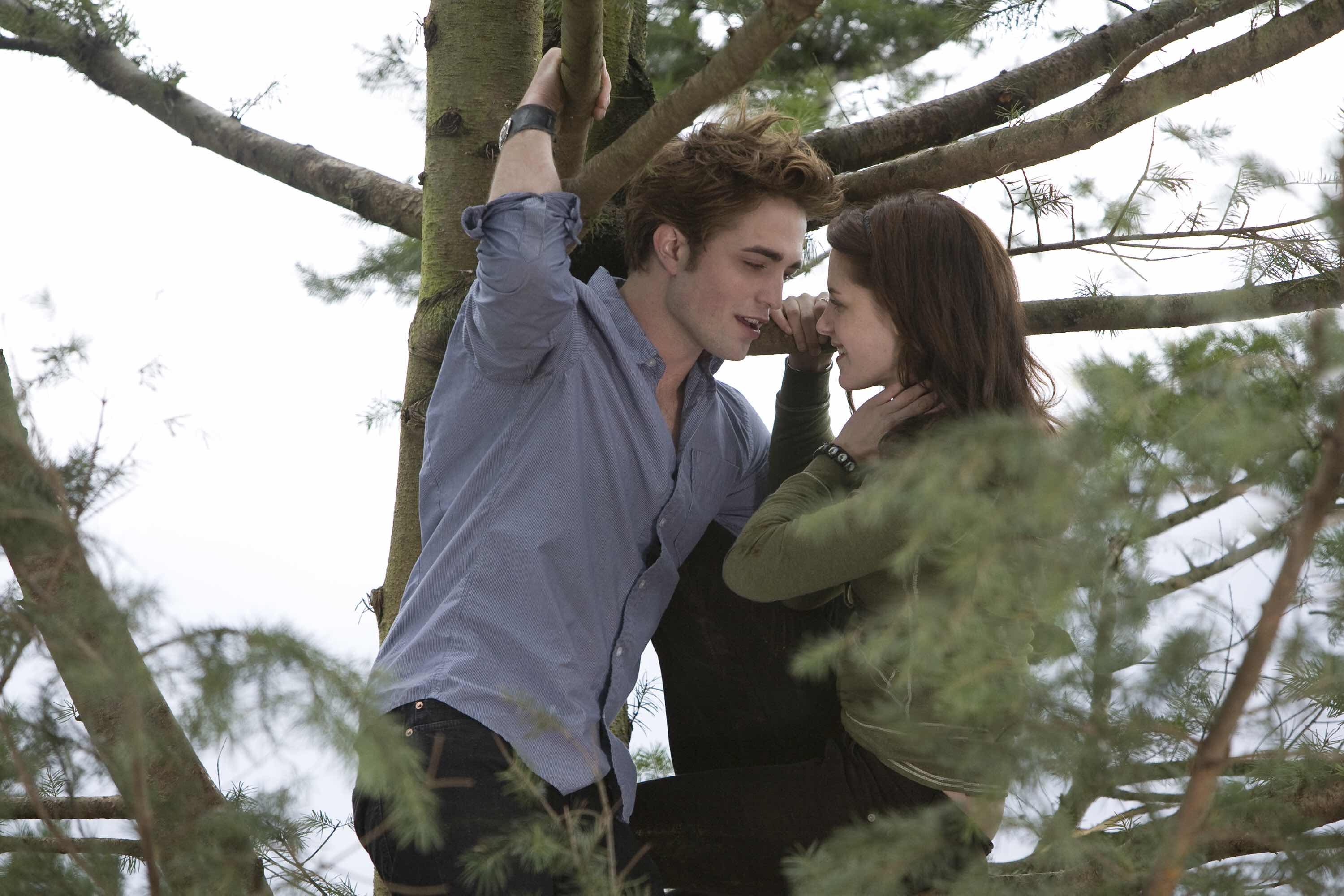
In case you have no idea what I’m talking about, I’m a “Twilight” fan. Yes, that “Twilight”. Team Edward, entire DVD set, entire soundtrack CD set, signed books and posters to boot.
Are you still with me now that I got this off my chest?
Okay, good.
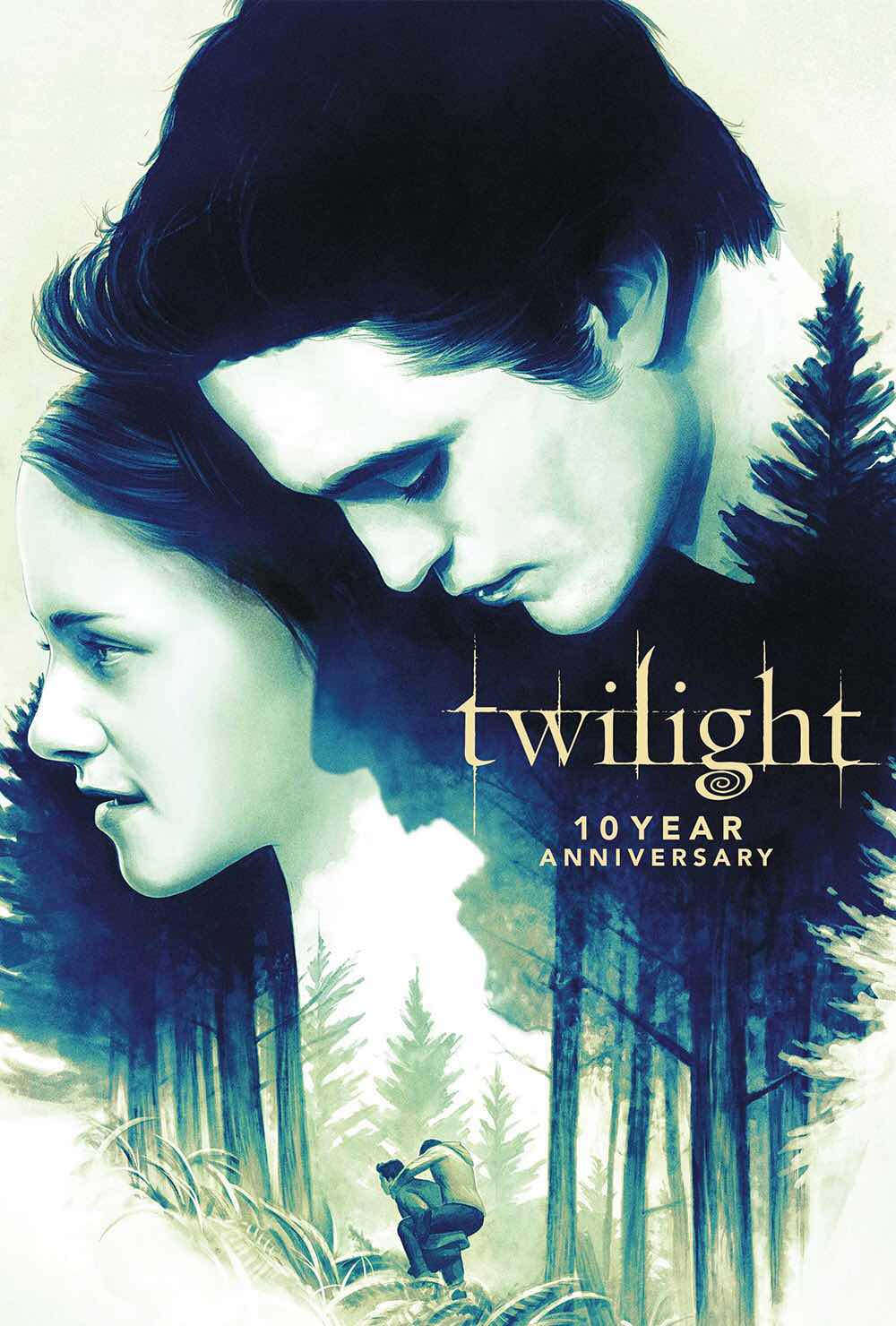
This November 21st will mark the 10th anniversary of the “Twilight” film. Let me give three reasons why this is a thing to celebrate (and not mock).
Reason #1:
“Twilight” was directed by a woman, Catherine Hardwicke. Hardwicke shot the film in 44 days on a budget of $37 million, which was reduced because of rights issues to do with the book. Its $400 million global success made her the most commercially successful woman film director at the time.
Granted I personally think her debut film “Thirteen” is by far her best, most impactful film, I want to celebrate Hardwicke taking the helm. Despite the film, genre, story, or actors/actresses involved, we need to support all women behind the camera. How can they continue on to create their masterpiece if we knock them for one film?
Reason #2:
“Twilight” helped to reboot the vampire genre. You are more than welcome to argue this point with me. Most horror fans insist this is a) not a horror movie and b) not a vampire story as “vampires don’t sparkle.” My response: “How do you know? Have you met one?”
But I digress. What this film (and book series) did was open the door for a new generation to get into horror. Monster horror hadn’t hit the big screen in such a huge way in years. “Twilight: Eclipse” made box-office history as the second-highest-grossing horror genre. Like it or not, “Twilight” lead the way for “Let the Right One In” and countless others.
“Twilight” might’ve been the first introduction of vampires to some teens but maybe they graduated on the original “Dracula”, then “Salem’s Lot” and possibly “I Am Legend”. Maybe “Twilight” was that first bite they needed to get hooked and dive deeper into better stories of the macabre. We shouldn’t judge how they got there but embrace them once they’re here.
Reason #3:
We should celebrate what we love no matter the ridicule.
When I read “Twilight”, I was in a funk. A pre-adult limbo of not knowing what to do with my life. I felt stuck and depressed. Then I read “Twilight” within two days and fell head over heels. Did it magically tell me how my life was going to turn out? No. But it was an escape. A much needed one. I needed something to get excited about again and “Twilight” was that spark that got me off my ass.
As Meg Ryan’s character said in You’ve Got Mail, “When you read a book as a child, it becomes a part of your identity in a way that no other reading in your whole life does.”
I didn’t read the book as a child but it did leave its mark on me. Much like “Joe Versus the Volcano” left a mark on my co-worker. And you know what? She shouts from the rooftops how much she loves that film!
We could all be a little more like her. Love it, own it and high five those that do the same.
Happy 10th anniversary “Twilight”!
Friday, November 16
Fantastic Beasts: The Crimes of Grindelwald Review
Fantastic Beasts: The Crimes of Grindelwald
Dir: David Yates
Starring: Eddie Redmayne, Katherine Waterston, Dan Fogler, Alison Sudol, Claudia Kim, Ezra Miller, Zoë Kravitz, Johnny Depp, and Jude Law
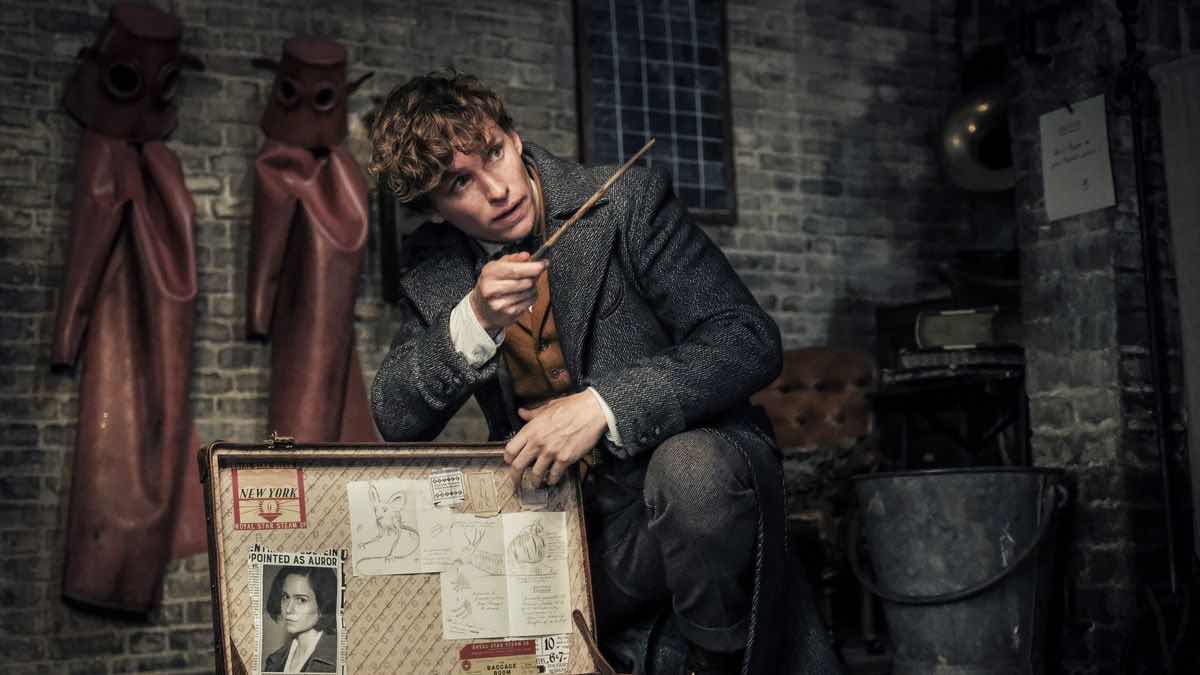
“You’ve never met a monster you couldn’t love.” This sentiment, proclaimed during a titular scene in the continuing wizard saga “Fantastic Beasts: The Crimes of Grindelwald”, is the perfect description for the film and its author/screenwriter J.K. Rowling. This sequel is a monster, a rapturous beast that devours scenery without much rhyme or reason with its abundance of ideas. You can also feel its creators undying admiration and love for the material and characters. Regardless of how unwieldy and overstuffed the film becomes with its shifting plot elements, drifting characters, and magical creatures, it’s clear Ms. Rowling has generated one monster of a movie.
Newt Scamander (Eddie Redmayne) trains, collects, and cares for magical creatures of varying size and magical specialty. Newt, when we last ventured with him, had just thwarted a plan from a powerful wizard, Gellert Grindelwald (Johnny Depp), who was trying to engage war and chaos between the non-magic world and the magic world. Grindelwald, while being transferred from the United States to Europe to stand trial for his crimes, escapes and reignites his plot to form a world ruled by pure blood wizards. It is up to Newt and his pals to fight this evil force once again.
Director David Yates continues to mold his aesthetic over every frame of the film, creating an environment that clearly exists within the structure Mr. Yates has already established during his run with the Harry Potter franchise. With its 1920’s style, deep black and dreary gray visual palette, and flashy special effects laden action, “Fantastic Beasts: The Crimes of Grindelwald” is a fun film to look at, especially when it unleashes all manner of beasts all over the screen. One scene involving a monster that can only be described as a Chinese New Year dragon, provides the fierce yet cute factor that has come to describe most monsters within the wizarding world established by J.K. Rowling.
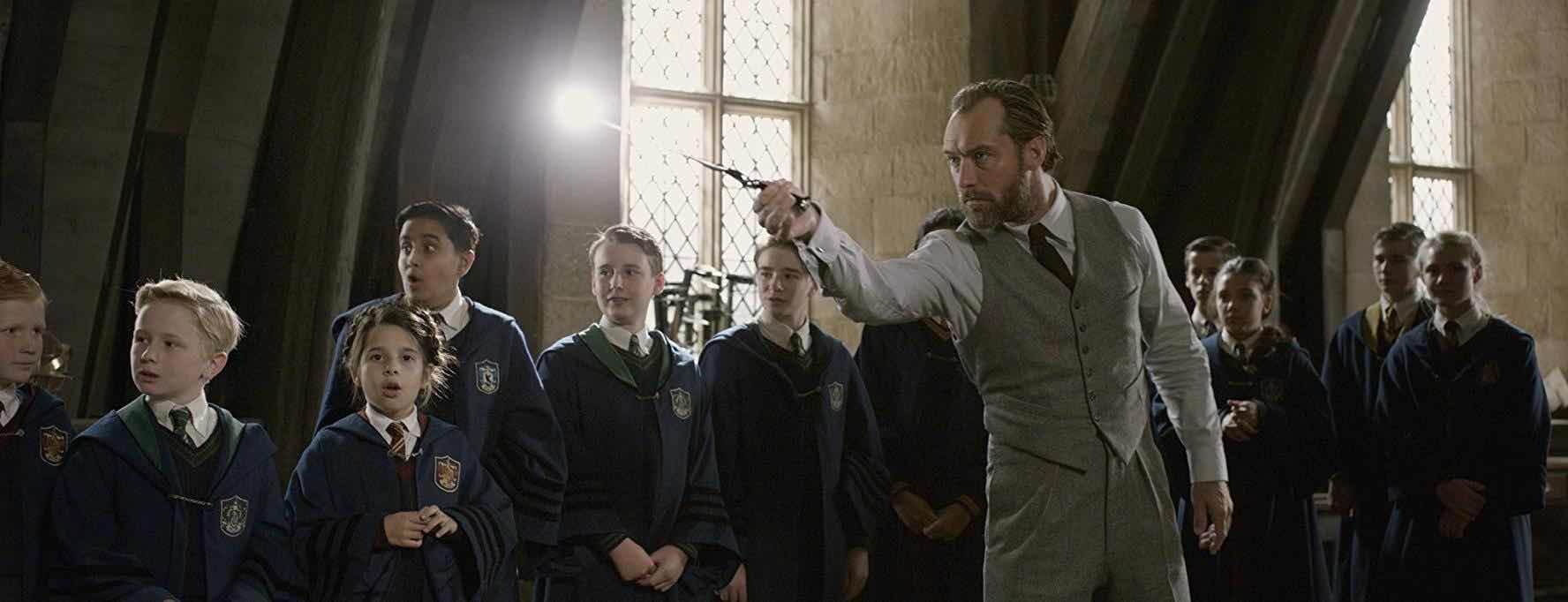
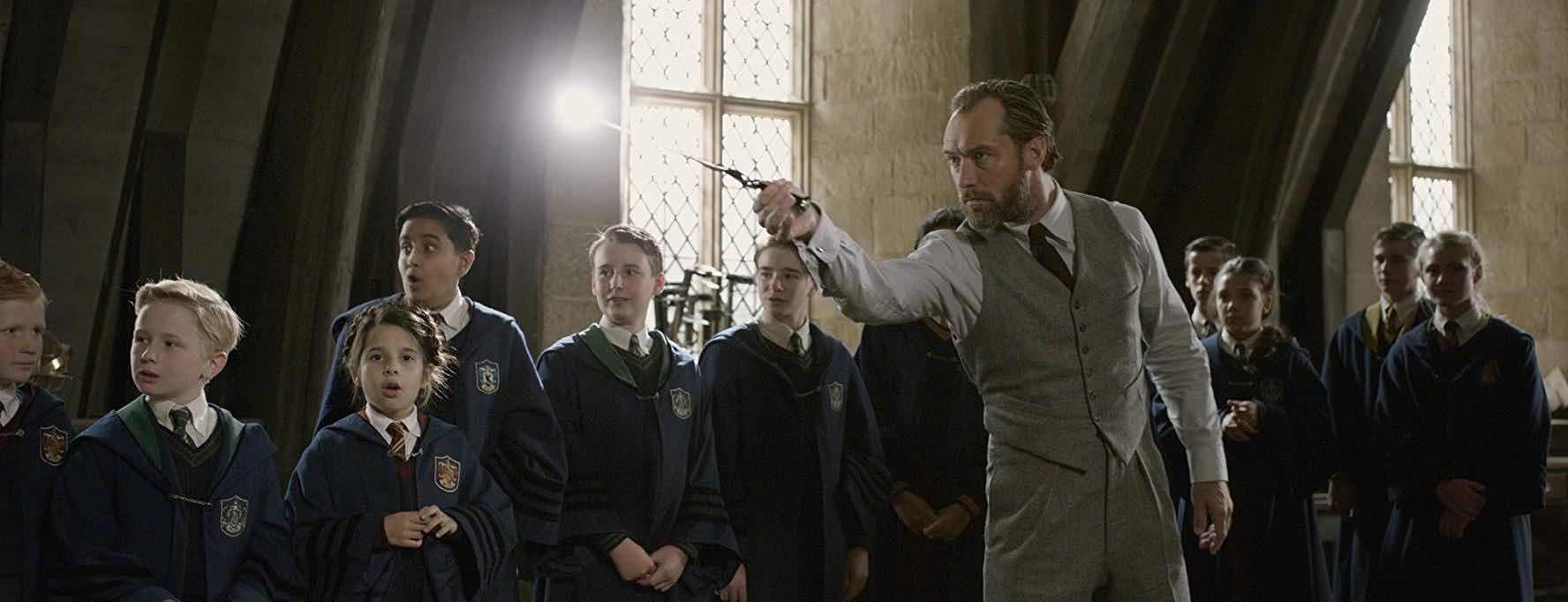
While the film is constantly trying to connect viewers to the sentiments felt during the Harry Potter films, we are provided a visit back to Hogwarts and the inclusion of an old friend Albus Dumbledore played by Jude Law, the journey here feels more convoluted and purposefully mysterious. The questions asked during the first film are not any closer to being answered, instead we are provided with more questions and more mysteries needing to be solved. The awe and wonder of the magic spells and enchanted beings typically found within this world feels more ornamental here, a backdrop that will step in when needed to introduce a new character subplot or fill a quick narrative plot hole. The excitement and tension of spell casting, with wands at the ready, now feels like the simple mumbling and whispering of words.
However, what hurts this film most is its need to expand the universe and engage in more material to elongate this story. Grindelwald, introduced in the final moments of the first film, is slowly rising to power with new followers and new plans that center on a powerful character with an unknown origin. Romantic storylines take greater shape with the primary characters, centering on love lost and love discovered. New characters are introduced and are featured heavily within the main story of the film, adding complications to themes associated with the past and directly influencing matters of the future. And within all of this is the story of Newt and his fantastic beasts; it’s a lot to handle and direct in one film. You can sense early that more sequels will be needed to complete the story loops. It makes it hard to find perspective with a piece of work if you are only given the frame to work with, the vessel that would transport characters from one solution to another is never present with the film.
“Fantastic Beasts: The Crimes of Grindelwald” still has some great characters that shine when given the opportunity. Eddie Redmayne is awkward and indecisive in very charming ways and Katherine Waterston does a great job of playing off Redmayne’s strangeness as the the head strong love interest. Johnny Depp plays the villain here, and while there is nothing wrong with the performance, the character of Grindelwald just never feels threatening in the composition of everything happening.
David Yates and J.K. Rowling clearly understand that this franchise will need more time, more characters, and more fantastic beasts to find its closure. And while, when it’s all said and done, we may look back and see how this film piece fits into the whole puzzle, currently it’s easier to find the crimes than the fantastic with this film.
Monte’s Rating
2.50 out of 5.00
Friday, November 9
Boy Erased Review
Boy Erased
Dir: Joel Edgerton
Starring: Lucas Hedges, Russell Crowe, Nicole Kidman, Madelyn Cline, and Joel Edgerton
For many of us, the correlation of “erasing” something is in direct reference to righting a mistake, correcting something that didn’t turn out how we perceived. “Boy Erased” is a film exactly about that, though in a far more horrific and inhumane way. What is being “erased” in this film isn’t a mistake on an art project or a misspelled word on a hand-written letter, it’s the identity of a young man who is struggling with his sexuality and the conflicts it has on his faith. The people doing the “erasing” are his parents through a conversion therapy program. “Boy Erased” is a horror film in the most reality driven way.
Jared Eamons (Lucas Hedges) is a college student with loving parents who have supported him in every aspect of life. His father Marshall (Russell Crowe) is a car dealership owner and a minister in the local church, his mother Nancy (Nicole Kidman) is a proud wife and even prouder mother. Jared, trying desperately to keep his secret, is forced to come out to his parents. They are not receptive and through guidance from members of their church Jared is sent to the “Love in Action” program, a conversion therapy program.
The film is based on the memoir of Garrard Conley and adapted for the screen by Joel Edgerton who also directs and stars in this film. Mr. Edgerton, who proved his skill behind the camera with the 2015 thriller “The Gift”, shapes “Boy Erased” with a jumping narrative that switches from the past into the present. It helps in quickly establishing the key moments that lead to Jared’s stay at “Love in Action”. Unfortunate , here also lies the problem with the film. The aspects of the past that are explored during the film are so neatly packaged that its easy to lose sight of the complications that would exist with a family so committed to their faith that they lose sight of their own son’s physical and mental well-being. Lost is the emotional conflict for the family who aren’t necessarily bad people, Nancy has a few moments of doubt, as they are being guided by the structure and views of their faith and other people who have no connection to Jared.
Still, the performances are what transcend the simplistic designs of the character and narrative. Lucas Hedges does a great job of displaying the concerns that exist with his decision of embracing his feelings and committing to a wayward treatment for the comfort of his family structure. Russell Crowe and Nicole Kidman are equally good too; Mr. Crowe offers a convincingly staunch approach to the portrayal and Ms. Kidman does a great job of being the compassionate mother who is skeptical of the entire process but is bound to the hierarchy that exists within her religious foundation. Joel Edgerton plays the leader of the therapy center, it’s a character who epitomizes the hatred that exists with those who are unwilling to accept people regardless of their differences.
“Boy Erased” has some truly disturbing and troubling moments, a scene of sexual assault and the abandonment seen in Jared’s eyes when he reveals his feelings to his family are completely heartrending. Joel Edgerton never tries to sensationalize the drama during this film, instead, the director quietly guides the viewer into the situation and diverts from the perils that may exist along the way. The film makes a point about the terrible things that happen every day in America, both inside terror facilities like conversion therapy clinics but also the misfortune that enters the home with parents and friends who are unaccepting of the feelings and emotions of others. While the narrative could have pushed for more insight and observation of Jared and his family’s journey, the effort being presented in “Boy Erased” is well-intentioned. Sometimes you don’t need ghosts or masked killers to bring horror to life, sometimes reality is all the monster you need.
Monte’s Rating
3.25 out of 5.00
Overlord Review
Overlord
Dir: Julius Avery
Starring: Jovan Adepo, Wyatt Russell, Mathilde Ollivier, Pilou Asbaek, and John Magaro
A convoy of American war ships and transport planes are traveling on the sea and through the sky with Germany in its sights. It’s the night before D-Day, a billowing cloud of smoke erupts with explosions that illuminate the sky as combat planes fad into the abyss of artillery clouds. A group of soldiers, fresh out of boot camp, nervously wait for their call to parachute into battle. In a blink, bullets riddle the airplane and chaos overtakes the company. The adrenaline fueled, absolutely terrifying, chaos of war.
Director Julius Avery and writing team Billy Ray and Mark L. Smith introduce their crossover genre film “Overlord” with an emphasis on real life atrocities and the terror of combat. However, the team also isn’t too concerned with making a full-blown war film but rather focus their attention on crafting a fright fest. “Overlord” utilizes many of the awful aspects of war to make its point about monsters; the captivity, the torture, and the maniacal control make perfect sense when crossing paths with horror.
Boyce (Jovan Adepo) and Ford (Wyatt Russell) are two paratroopers who survive the fall to earth after their plane is destroyed over the combat zone. Their mission is to take down a Nazi controlled radio tower that sits atop a hill outside a nearby village. Boyce, trying to connect with other members of his platoon, gets forced into the radio tower station which is completely occupied by Nazi soldiers. Boyce discovers a laboratory beneath the tower where a scientist is conducting terrifying experiments on locals from the village and captured soldiers.
“Overlord”, amidst some nasty bits of human experimentation, torture, and assault, is operating to induce the same sensation one might feel while playing an intense round of team deathmatch in a multiplayer first-person video game. And, unfortunately, just like the sporadic and fleeting nature of video game shooters, the thrill is short lived. That’s the major issue with “Overlord”, it seldom commits towards embracing the frenetic and frightening pace it achieves in very small doses, specifically the first and final 15 minutes of the film which are fantastic. It lingers in moments of needless exposition and meaningless side missions, these moments undercut the thrill achieved in the introduction and take away from the building excitement of entering a madhouse of horror.
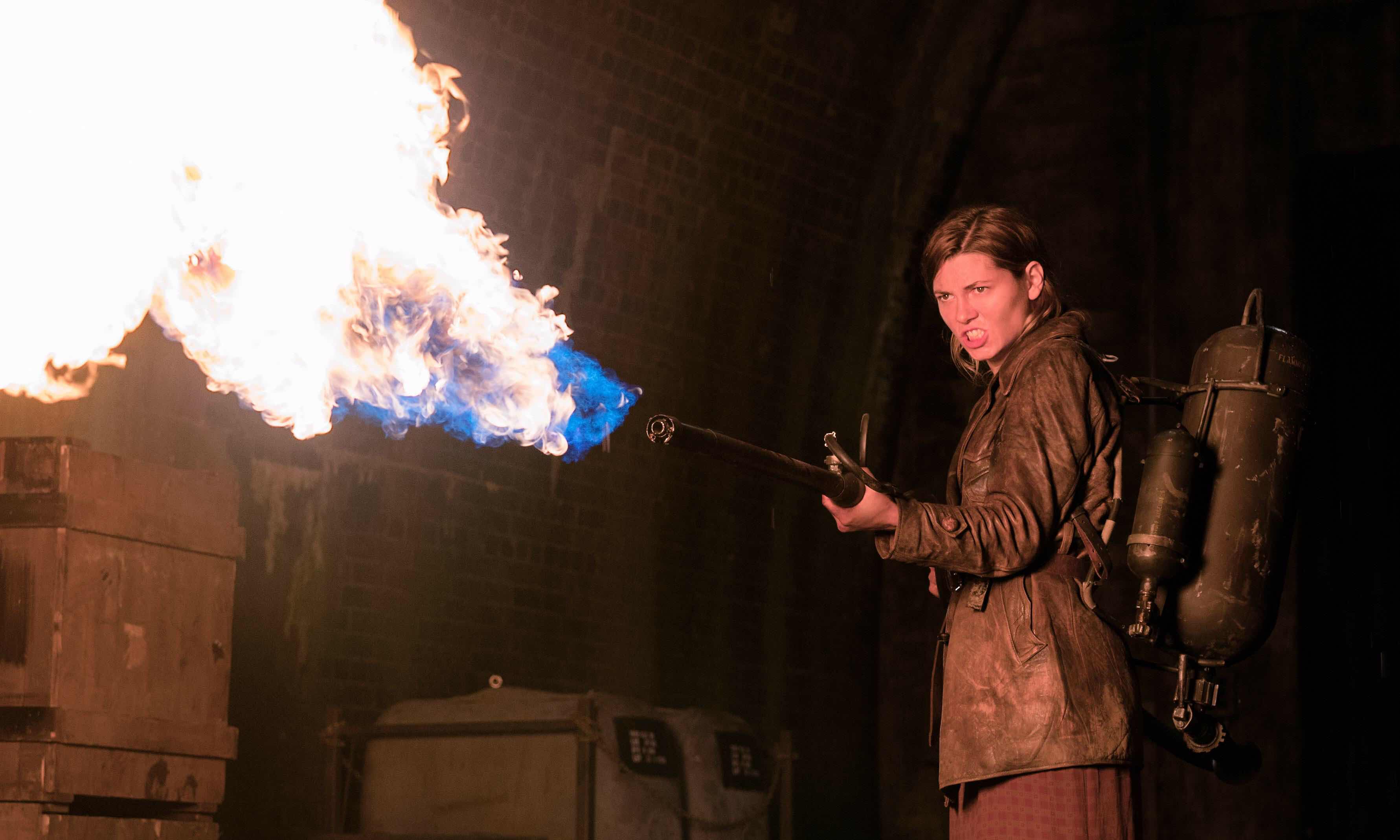
However, when the film unleashes into action sequences, with all of its monster mayhem and breakneck brutality, the film is an absolute crowd pleaser. The intensity of the terror, when it pushes into this realm, is such a good time. It feels like your favorite video game with the gun fights, the exploration and finding of clues inside different environments, and the stalking through dingy tunnels and darkened hiding places. While this technique doesn’t allow for the best character development, there are still a few highlighted performances specifically from lead Jovan Adepo who controls the balance of showing humanity versus turning into the monsters he is fighting. Also, Mathilde Ollivier, playing a French freedom fighter, does a nice job wielding a flame thrower and showing the soldiers she can fight just like them.
“Overlord” struggles in finding the path and tone it wants to take, combining the war and horror genre was the best choice here because neither story in this film was strong enough to exist on their own. Still, there are many genre film fans who will find the nearly 2-hour experience entertaining because of its commitment to punishing war violence and gory monsters.
Monte’s Rating
3.00 out of 5.00
Friday, November 2
Suspiria Review
Suspiria
Dir: Luca Guadagnino
Starring: Dakota Johnson, Tilda Swinton, Mia Goth, Chloë Grace Moretz, and Angela Winkler
The way one discovers a film is important. Some films can transfer from simple moving pictures into some kind of transportive experience, where you will remember everything that contributed to the event and its effectiveness. Dario Argento’s horror masterwork “Suspiria” is one of those films. For me it was a 35mm print that was slightly distressed inside a theater with sticky floors and stale popcorn. It was an experience that I would never forget.
In today’s film world no film is sacred enough to be kept from being remade or reimagined, even a film as well-regarded in the horror community like Argento’s “Suspiria”. Also, when you mention a film during first encounters with cinephiles as holding a place on your cinematic handshake, as I do, it’s impossible not to have speculations or expectations attached. Director Luca Guadagnino, who last helmed the impressive drama “Call Me by Your Name”, takes on the daunting task of remaking Argento’s film and transforms it into a wholly individual artistic expression that is equally beautiful as it is completely brutal.
Susie Bannion (Dakota Johnson) is an aspiring dancer from America who arrives unexpectedly and uninvited to the Helena Markos Dance Company in West Berlin. Provided the opportunity to showcase her talent, Susie dazzles Madame Blanc (Tilda Swinton) and is summoned to attend the prestigious school. Amidst the all female dance troupe, Susie begins to experience strange occurrences, ones that overtake her when she performs.
Mr. Guadagnino is known for meticulously crafting the elements in his films; from the boisterous emotional content, to the beautifully designed environments, and the luscious locales that richly compose the backdrops, the director understands how to arrange captivating frames and characters you can’t help but get attached to. All of these facets are present in “Suspiria” as well, the film is gorgeously composed on all technical levels. The photography zooms and whips across and through the dance school’s staircases and studios while lingering in disheveled streets and vacant lots in Germany. The construction of the dance facility is a maze of hallways and mirrors swathed with gothic fascinations, an oddly ornamented room or the darkened corners of a hidden dungeon are equally unsettling. The score from composer Thom Yorke is mesmerizing, a mix of ambiance and vocal work that blends nicely into the chaos of it all.
Tilda Swinton, who has worked with the director quite a few times, is fantastic in numerous roles here. Ms. Swinton’s versatility is exceptional, the actress can do anything, even taking on the primary male performance in prosthetic makeup. Dakota Johnson is also good, playing naïve with a wild-eyed charm but also completely determined to the extent of seeming obsessive. It works for the progression of the character who discovers new things about herself, awoken amidst the witchcraft of the dance she is performing.
The aspect of history is the only, minor, misstep in the film. The script, written by David Kajganich, composes a backdrop in Germany that features 1970’s political upheaval featuring riots, violence, kidnappings and mentions of the Baader-Meinhof group and also the Holocaust. There’s a lot going on beyond the story of evil deeds in a dance school. Whether commentary to discuss the role and abuse of women during times of political dissonance, or how fear induces emotional change over the course of continued trauma, or simply a backdrop to keep 1972 Berlin relevant amidst the chaos of devilish dances and evil enchantments, the writer and director are clearly alluding to some kind of connection.
Still, Luca Guadagnino’s “Suspiria” is absolutely entrancing and hypnotizing. The design elements are stunning and the performances are impressive. The film remarkably transitions between arthouse compositions and grindhouse exploitations, the ballet of blood and brutality is off the charts at times. This re-envisioned take on Argento’s classic stands confidently on its own designs.
Monte’s Rating
4.50 out of 5.00