Friday, May 28

Cruella Review


Cruella


Dir: Craig Gillespie

Starring: Emma Stone, Emma Thompson, Joel Fry, Paul Walter Hauser, Kirby Howell-Baptiste, John McCrea, and Mark Strong

2 hr 14 min


In Disney's 1961 animated classic, One Hundred and One Dalmatians, audiences were introduced to one of the most memorable, inherently evil, villains in cinema history with Cruella de Vil. The apparent motivation of the chic, flamboyant, and unstable London heiress is simple, to make fur coats out of Dalmatian puppies!! It seems like a hard corner to turn this devilish designer into someone moviegoers would care to watch.


Director Craig Gillespie, who last helmed the darkly humorous yet heartfelt I, Tonya, takes the iconic villain from its animated inspirations and crafts an origin story of a young woman living outside the realms of good conduct. Cruella, which arrives in theaters and on Disney+ Premier Access on Friday, is simply a fun time at the movies. Gillespie imbues the film with filmmaking and costume style, allows two magnificent actors the opportunity to compose campy and colorful characters, and wraps the entirety in a killer soundtrack. 


Estella (Tipper Seifert-Cleveland) is a troublemaker in the best sense, a curious and rebellious young girl with an appetite for fashion and a hairstyle that matches her bold tendencies. Adult Estella (Emma Stone) narrates her upbringing, which tragically includes the death of her mother (Emily Beecham) and the journey to London into a life of pickpocketing and thievery. She finds a makeshift family with two other orphans, Jasper (Joel Fry) and Horace (Paul Walter Hauser). But Estella is still drawn to her fashion dreams, and with some help, she finds herself employed and quickly in the limelight working for a ruthless fashion designer known as The Baroness (Emma Thompson). 

The first hour of Cruella is an absolute feast for the senses. Gillespie composes the roots of Estella's story like a music video, keeping the camera in perpetual motion while choreographing music needle drops with absolute precision. The Doors, Ike & Tina Turner, Queen, The Clash, Nina Simone, and a show-stopping cover of the Stooges' "I Wanna Be Your Dog" make appearances throughout the film. It offers unique pacing and presentation that makes the story sizzle with high energy. 


Oscar-winning costume designer Jenny Beavan, who is sure to be back in awards consideration after this display, adorns the screen with unique visions of fashion that embody a range of elegance. Whether in a messy shopping window display, with an evening gown that glimmers with life, or in the abandonment of thrown-away dresses from the back of a trash dump truck, it's all so beautiful to watch. 


Emma Stone gives Estella a charming attitude, transitioning into more punk-rock aesthetics with every turn of the story. Once Cruella makes her inevitable appearance, new accent and style intact, Stone chews the scenery with absolute glee. She is a joy to watch. On the other side playing, unusually, the film's real villain is Emma Thompson as The Baroness. The cutthroat, unforgiving fashionista may feel sewn from the same cloth as Meryl Streep's character in The Devil Wears Prada, but Thompson makes the role her unique portrayal. When the actress stares daggers, with three snarling Dalmatians sauntering around her presence, it's hard not to smile at the performance on display.

All the visual bravado hides the narrative flaws, which never makes a villain out of Cruella. Yes, the character grows snobbish and less concerned about the well-being of her improvised family once Cruella takes over, but still, there is a heroic quality surrounding her quest in the third act. While, in a different movie not connected to the 1961 Disney property, this wouldn't be so much of a complaint. But the way Cruella is composed in this film almost eliminates the character seen in the animated movie. 


Cruella might have worked better as a story without the ties to the original animated icon. But that doesn't stop Gillespie and the team from making a thoroughly entertaining, crowd-pleasing film.


Monte's Rating

3.50 out of 5.00

A Quiet Place Part II Review


A Quiet Place Part II


Dir: John Krasinski

Starring: Emily Blunt, Millicent Simmonds, Noah Jupe, Cillian Murphy, Djimon Hounsou, and John Krasinski

1 hr 37 min


In the beginning moments of John Krasinski's A Quiet Place Part II we are placed in the past, on Main Street somewhere in Small-town, U.S.A. The Abbott family gathers at a Little League game for Marcus (Noah Jupe), who tentatively stands in batting position while fastballs whiz past him. Lee (John Krasinski) arrives a little late to the game, having to stop at a general store for snacks before sitting atop the bleachers with his daughter Regan (Millicent Simmonds). Suddenly, something strange happens; a large fiery object explodes and streaks across the cloudy skyline as the crowd scatters in confusion. Alien creatures crash onto the scene, smashing into vehicles and chasing down running humans. It's chaotic, scary, and emotional. It's also cinematic, a brilliantly executed introduction for this exciting sequel.   


In A Quiet Place, the tension-filled horror origin story, the Abbott's survived the creature invasion by building a shelter, growing their food, and using sign language (their oldest child Regan is deaf) to communicate with each other. The arrival of a newborn baby, a brilliant character to introduce into a world that is ultimately supposed to remain silent, and the domino effect of decisions that call the monsters into play leads the family to abandon their shelter. Lee, making the heroic sacrifice, saves his children from death by offering himself to the alien beings. 


A Quiet Place Part II takes place immediately following the events of the previous film. Evelyn (Emily Blunt) leads her children from their home and into the wilderness towards a signal fire that serves as the only beacon of hope for the mourning and traumatized family. Evelyn plays the role of sole protector for her family, carrying a newborn across her chest and trying to instill a level of comfort and safety for her older children. Emily Blunt is excellent in this role, combining emotions of disbelief and grief with grit and tenacity in the face of everything that is falling to pieces. 


Krasinski demonstrates with this film a keen understanding of horror characteristics and, most impressively, the expectations that smart movie fans have for the genre. On numerous occasions, Krasinski will indicate that a scare is coming, whether through framing, with the exceptional immersive sound design, or with a shadow that feels out of place. Then, just as the audience thinks they grasp what is coming or how it might present, the big scare will come from a different location or with a different emotional emphasis. 


Krasinski, who also wrote the film, does this manipulation of expectations with the narrative also. There is a sense of where this story is going, but figuring out how the start will meet the finish is composed of ingenious trips and traps. However, beyond these finely tuned moments of tension and terror is where Krasinski shines with the narrative, with the story of parents and children and the roles that shift and emerge as they continually grow in the apocalyptic landscape. The young actors Millicent Simmonds and Noah Jupe do a great job of embodying their characters' contrasting emotions at the beginning of the film. Where one is strong-willed and impulsive, the other is timid and cautious. As the film moves into a place where the children must fight for their future, the young characters become the focus of the action. It's an interesting transition that separates the sequel from its predecessor.


A Quiet Place Part II has a few noise-induced jump scares but again establishes its horror focus with a motive of tension-building driven by character and the bonds formed between them. There are only a few moments when the film loses track of its emotional core, mainly when the family must separate, but Krasinski masks this issue by ramping up the action and tension. When three separate stories converge during the finale, it's wholly cinematic and will have you on the edge of your seat. 


Monte's Rating

4.00 out of 5.00

Friday, May 14

Spiral: From the Book of Saw Review


Spiral: From the Book of Saw

Dir: Darren Lynn Bousman

Starring: Chris Rock, Samuel L. Jackson, Max Minghella, and Marisol Nichols

1h 33m


In 2004, the genre film world of horror movies was crowded with depictions of the walking dead and seeing tremendous influence from Asia with long-haired ghosts frightening audiences in theaters and on home video. In October 2004, a film called Saw changed the scary movie landscape. It turned a low-budget, ultra-gory film about a murderer named Jigsaw who creates grotesque games of life or death into a horror tentpole, now one of the genres defining franchise.


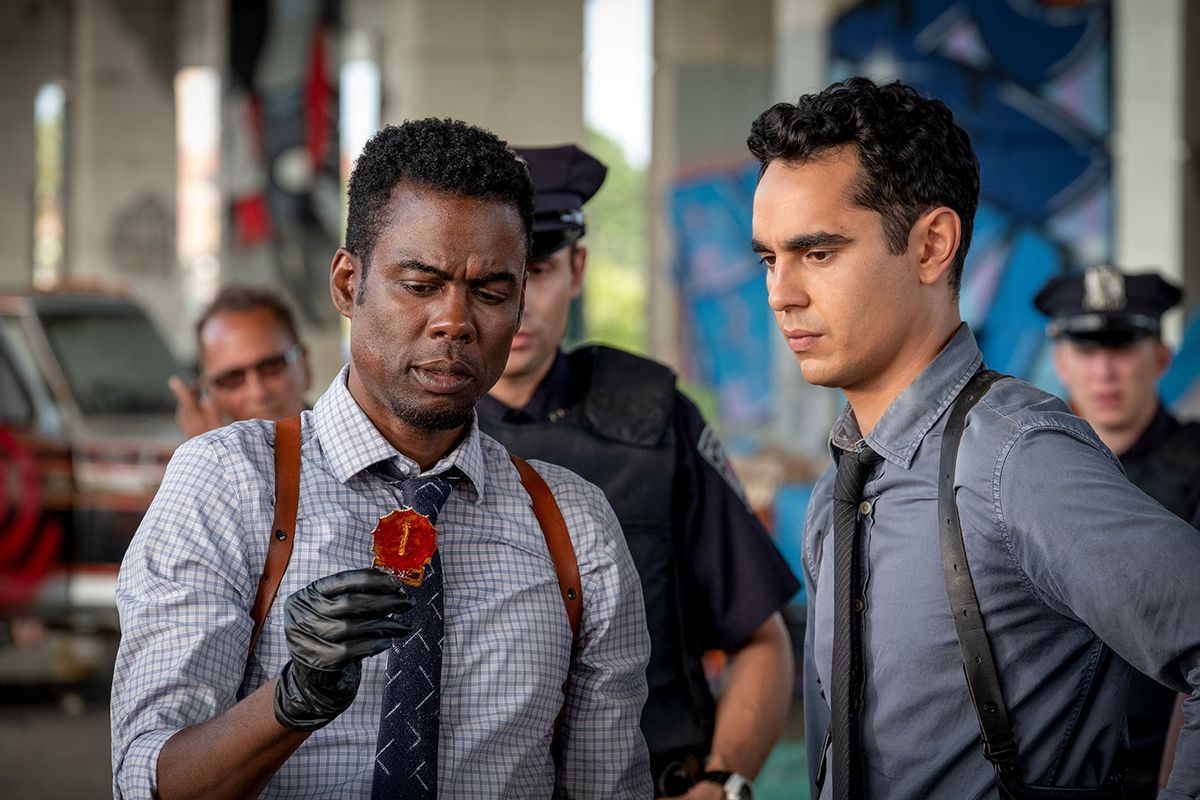
Spiral: From the Book of Saw continues the deranged work of Jigsaw, this time taking torturous focus on a corrupt police department in a sweltering big city dripping in detective story color palettes. Chris Rock, who may seem an odd choice for this franchise, has a significant screen presence throughout this familiar franchise exercise. 


Zeke Banks (Chris Rock) is a detective who his fellow law enforcers have rejected after turning in a crooked cop. A dead rat in a trap, left on his desk, describes how respected Zeke is amongst his peers on the force. Rookie detective William Schenk (Max Minghella) is forcefully paired as Zeke's new partner. The first case for the new teammates involves the gruesome death of a fellow officer, one of the few in the department that Zeke called a friend. The officer's death, involving a subway train and a trap placed directly on the tongue, echoes a resemblance to John Kramer, the mastermind behind the infamous Jigsaw murders. Zeke and William become intertwined in a new game with new stakes involving a corrupt law enforcement department. 


Spiral begins unlike no other Saw film in the franchise, with a hefty dose of humor brought by an entertaining Chris Rock telling a story about how Forrest Gump couldn't be made in present times. Rock, a seasoned comedy icon, injects personality and presence throughout the entire film. Rock's dramatic turns struggle to come off as smoothly during moments of despair or frustration. However, underneath the messy detective shirt and ties and dark sunglasses, the actor's laid-back demeanor and coolness help make the clichéd detective story twist and turns to play out with more intrigue. Samuel L. Jackson shows up briefly as Zeke's dad, the former police chief, and their chemistry offers some of the best moments of the entire film.


Spiral starts with some exciting narrative angles, social commentary about police concerns brought to the forefront, and an investigation-driven procedure that steps away from the splatter spectacle that defines the Saw franchise. These bright moments fade as Spiral: From the Book of Saw reverts to the franchise formula of retreaded plot twists and pig-masked trappings that are easily identified. 


Still, this is a memorable return and easily one of the best Saw films of recent memory. Chris Rock's screen presence keeps the one-dimensional story engaging. While the horror, the visceral and gory exhibition, of this franchise, part nine, remains the primary connective tissue that supports the puzzle from completely falling apart. 


Monte's Rating

3.00 out of 5.00

Friday, May 7

Wrath of Man Review

Wrath of Man

Dir: Guy Ritchie

Starring: Jason Statham, Holt McCallany, Jeffrey Donovan, Josh Hartnett, Laz Alonso, Eddie Marsen, and Scott Eastwood

1 h 58 m


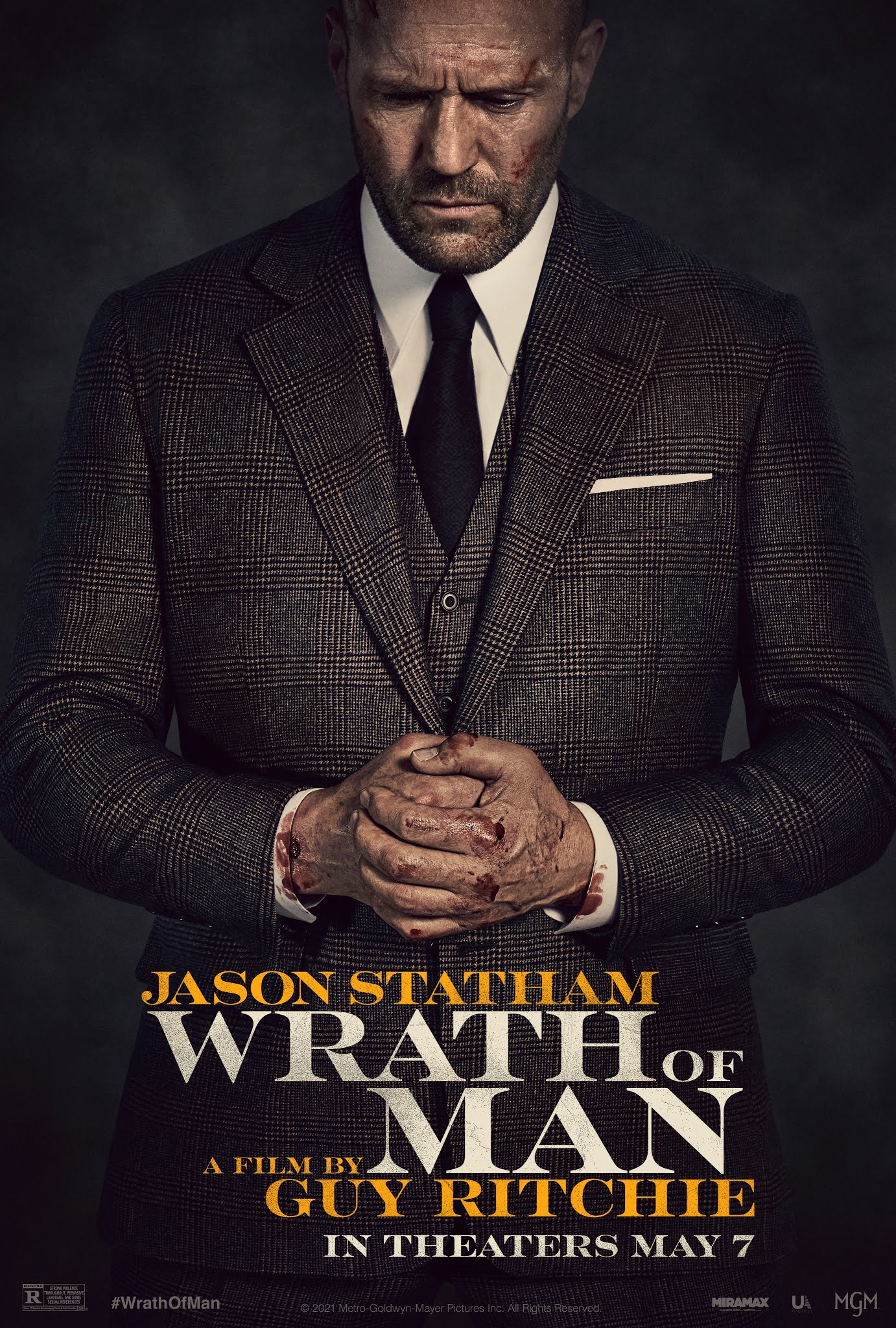
Director Guy Ritchie and longtime collaborator Jason Statham reunite with the gritty and violent heist story Wrath of Man. Ritchie, who has dabbled in a range of different genres with recent films like AladdinSherlock Holmes, and King Arthur: Legend of the Sword, returns to the tough and tumultuous crime drama genre that helped launch his career and continues to be the sweet spot for the director's unique style of filmmaking.


Wrath of Man, a remake of the 2004 French film Le Convoyeur, displays the chaotic flair of bullets, blood, and brutality that Ritchie has become savvy at implementing into his movies. Jason Statham's quiet menace, a quality that helps separate the actor from other action stars in the genre, always works best in Ritchie's textured, if minimal, character developments. While Ritchie's style helps and distracts from the thin plot, Wrath of Man works to find the balance between the dishonorable, many times heartless, characters that populate the story and the vengeful stakes that push the narrative towards a climax of greed and revenge. 


The calm and calculated H (Jason Statham) barely passes his field examinations to join a crew of cash truck guards responsible for moving millions of dollars around greater Los Angeles. During his first few days on the job, H's armored truck detail is caught in a hijack. However, before any money is stolen, H meticulously assassinates the masked thieves, cornering and interrogating the last thief standing before finally killing him. The crew at the security company is left wondering where this mysterious man came from. H's motives become apparent as he takes deadly and irrevocable steps to settle a revengeful score. 


Ritchie's unique style, which can be methodically hectic and indulgently flashy in both the best and worst ways, is restrained a touch in Wrath of Man. While elements are still present, specifically within the editing design, which can become distracting at times, the film focuses a majority of the flourishes on helping mold the mystery of H's dubious intentions. Ritchie has become quite accomplished at composing action scenes; here, the composition is sharp and exciting.


Jason Statham helps immensely in making the journey in Wrath of Man exciting and fun to watch. Statham pushes the grittier elements of the story into exciting territory with his menacing demeanor and tough-as-nails action persona. Ritchie understands how to use Statham to punctuate a scene. Whether in moments of frenzied action or during stages of quiet intimidation, Statham is one of the best things about this film.


The narrative design is a simplistic setup that tries its best to make the most out of the complicated nature of the revenge motivations. Ritchie's character composition in this film is packed with unredeemable people; those whose hands remain somewhat clean have fortunes left to the impulses of the bad guys who hold priority in the script. When the stakes reach their inevitable culmination, placing all the complicated characters in the same room, it's hard to care about what happens to them. Ritchie and writers Ivan Atkinson and Marn Davies do their best to add drama into their revenge tale, and in small moments they succeed, but the characters make it hard to invest in the outcome truly.


Wrath of Man is a fun return for Guy Ritchie and Jason Statham. The calm approach for the typical style-driven director is a welcome surprise and proves that Ritchie can still compose hard-boiled crime capers with the best of them.


Monte's Rating

3.50 out of 5.00