Friday, September 27

3 From Hell Review

3 From Hell
Dir: Rob Zombie
Starring: Bill Moseley, Sherri Moon Zombie, Richard Brake, and Sid Haig

Amidst a barrage of bullets and backed by the theme of “Free Bird” by Lynyrd Skynyrd, director Rob Zombie pulled a cinematic magic trick with his 2005 horror film “The Devil’s Rejects” by making the vile, disgusting, psychotic murdering roadshow threesome into characters that strangely, in those final minutes of the film, have the poise and demeanor of folk heroes rushing into their final battle. 

Rob Zombie, a director whose style has fluctuated from music video motifs to major Hollywood gleam, continues his savage saga of murder mayhem with the Firefly Family in “3 From Hell”. The film is far more introspective than the other films in the trilogy; where “House of 1000 Corpses” crafted a funhouse with horror maniacs and “The Devil’s Rejects” aimed to humanize the cartoonish killers into grungy 70’s outlaws. “3 From Hell” attempts to create a family dynamic with these characters by further delving into their demented intentions and motivations. Unfortunately, the film often loses perspective and balance amidst the mixture of ideas and themes proposed throughout.


The film begins moments after the gun smoke lifts revealing the bullet-riddled convertible carrying the Firefly Family members Otis (Bill Moseley), Baby (Sheri Moon Zombie), and Captain Spaulding (Sid Haig). Zombie wisely uses vintage footage of television reports and newspaper clippings to resurrect his characters and update the viewer on the happenings after the capture. All members of the murderous clan are serving life sentences, Otis is planning an escape, Baby is tormented by a vengeful prison guard (Dee Wallace), and Captain Spaulding spouts boastful soliloquies for news reporters explaining the many reasons the Firefly Family is necessary for the world. It’s a haunting introduction that does a great job of moving the film from the late 1970s into the early 1980s. 

Zombie combines more than a few themes throughout this film but the prevailing focus remains steadfast with the idea of family, both the severe dysfunction and deep-seated connections family members have with one another. When Zombie takes time to let this narrative focus breathe, “3 From Hell” exudes such an interesting blend of character-driven ideas that makes the eventual road trip film have insight into the composition of these outlandish characters, even if the outcome is that their chaos is bred by the chaos they are inflicting onto the world. 

In terms of violence and brutality, and may I emphasize that this film is NC-17 rated for a reason, this is a far more restrained film considering Zombie’s penchant for pushing the limits of sadism in his films. There is one moment that allows the group to indulge in their specific brand of bloody menace, it’s a scene that is photographed with jolting chaos in an effort to portray tormenting tension and it’s completely unnerving and uncomfortable. 

The performances throughout are a mixed bag of emotions, each portrayed with different levels of success. Bill Moseley is most effective playing the leader of the group Otis, his sinister swagger and piercing eyes do most of the heavy lifting. Sheri Moon Zombie has the difficult task of playing the broken member of the group, in the big moments her blend of shrieking laughter mixed with playful pandemonium is pitch-perfect, however, in other quieter moments, the performance just doesn’t connect like it should. Sid Haig, in his final performance, struggled with health concerns prior to shooting this film so his Captain Spaulding is only found in one short yet completely effective scene which displays why his character will always be a horror icon. 

“3 From Hell” seems like a film that resisted every attempt to exist, yet it still came to life. That seems to be the quality that defines Rob Zombie as a filmmaker, an artist who will push to make his specific blend of horror come to life no matter what. While “3 From Hell” may not connect from moment to moment, with lapses in narrative cohesion and themes lost amidst the big ideas trying to be expressed throughout the film, fans of Rob Zombie’s films should still seek this one out.

Monte’s Rating
2.50 out of 5.00

Friday, September 20

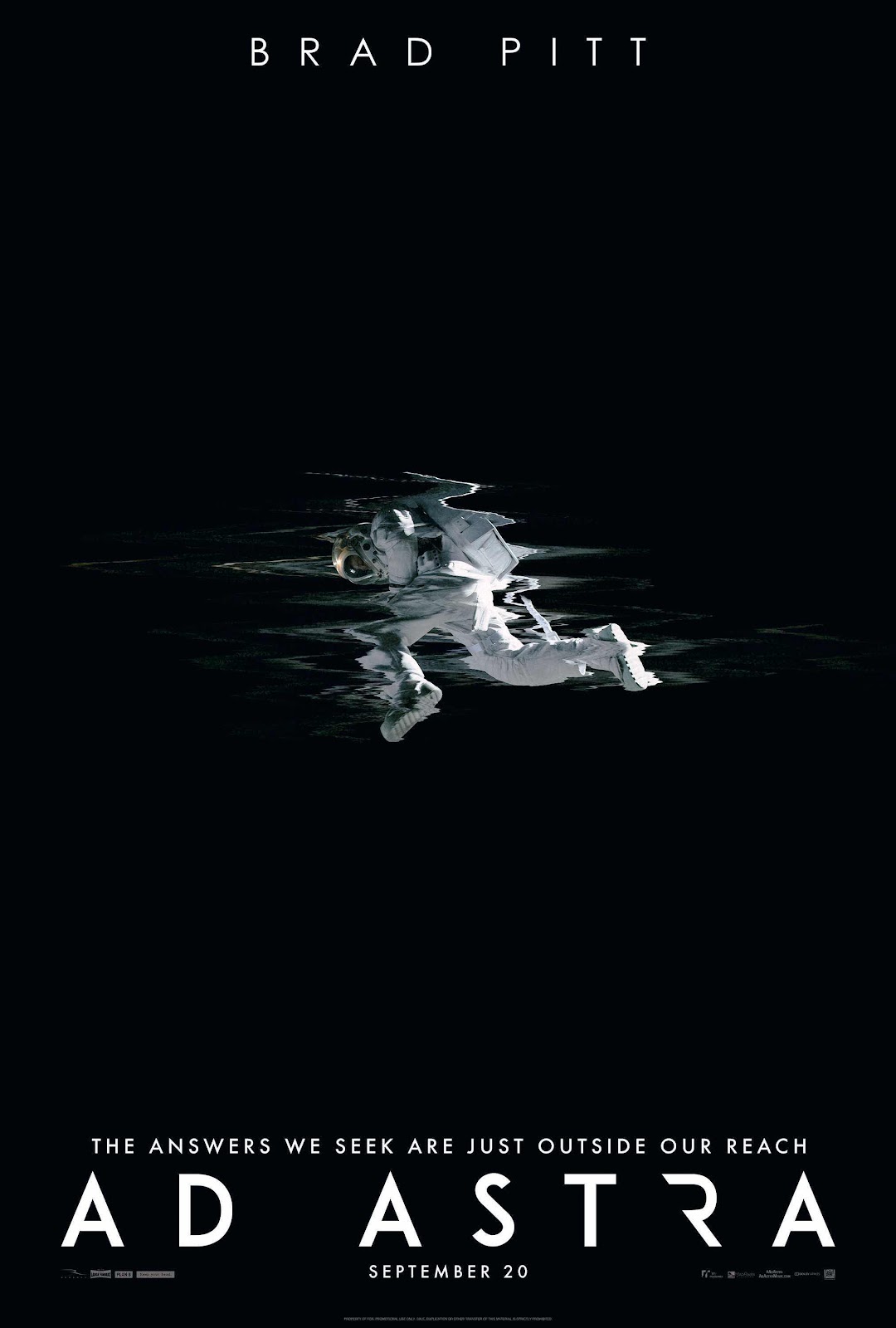
Ad Astra Review


Ad Astra

Dir: James Gray

Starring: Brad Pitt, Tommy Lee Jones, Ruth Negga, Liv Tyler, and Donald Sutherland


In the first few minutes of director James Gray’s deliberately paced, visually intriguing space exploration “Ad Astra”, the image of a person uncontrollably plummeting to earth is witnessed. The tumbling, somewhat lifeless, figure falling from the blue heavens towards the green earth seems poetic in a film that aims for insight over intensity, that examines the journey of the exploration instead of the joy of the destination. 


“Ad Astra” is an often quiet and utterly controlled film, one that is pulling influences from other methodically structured films like “2001: A Space Odyssey” and most often “Apocalypse Now”. The isolation from the world, the journey of self-discovery, and the fear of the unknown are all themes explored in all these referenced films. “Ad Astra” has all of these concepts clearly apparent from the opening minutes, sometimes even using a voice-over narrative to make these ideas extra focused. 


The narrative mission is simple, an astronaut has gone rogue and his exploits are threatening life on earth. His son, a famous space scientist named Roy McBride (Brad Pitt), is tasked with traveling to the moon and then onto Mars to deliver a heartfelt message/plea to try and thwart the efforts if his father (Tommy Lee Jones). 


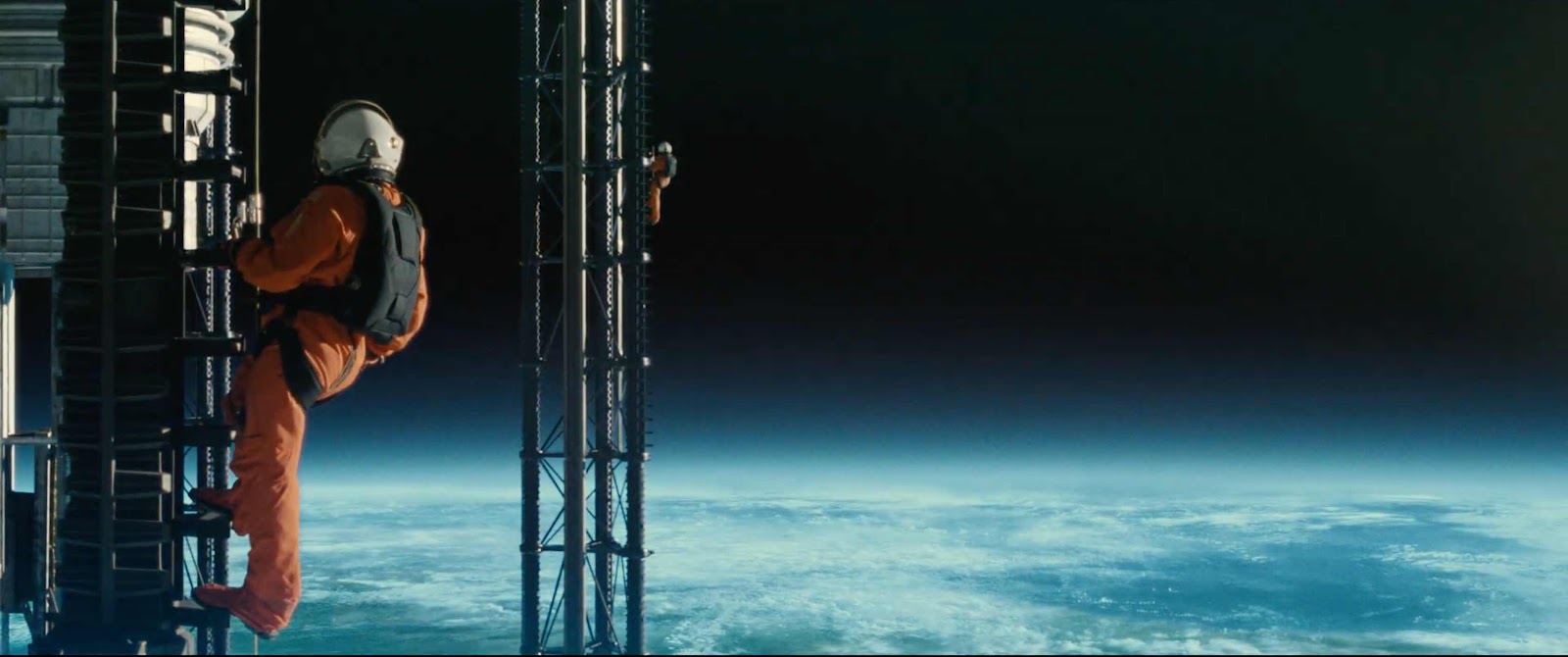
The composition of the film is completely stunning, a visual treat of the “not-too-distant” future that seems completely genuine in the portrayal of what the arrival terminal would look like on the moon, how massive an antenna tasked with searching for extraterrestrial life would look, and how business would find a way to make a quick dollar with airline luxuries. Add to this the beautifully composed photography with striking color bursts and intriguing geographic angles, and the film is a complete pleasure to look at. 


Director James Gray has a distinct quality that can be felt in the design elements but the narrative for “Ad Astra” depends heavily on actor Brad Pitt, who is fantastic here, to progress the scenes from one moment to another. Pitt does an interesting job of composing his journey of self-discovery, the subtle emotional touches seen with mannerisms during the crumbling connection with his wife (Liv Tyler) and the calm demeanor displayed during tense scenes help to display the focus of the character who is in search of answers outside the normal. But it is solely Pitt doing the heavy lifting throughout the film as many of the other actors in the film are crafted with minimal depth, sometimes no depth at all.


Even with great performances and some fantastic designs, the narrative for “Ad Astra” struggles consistently throughout the film in connecting its themes of loss, fear, abandonment, and isolation in more meaningful ways. Instead the film turns into a bland story about fathers and sons. And while it searches for more meaning, it begins to meander aimlessly. This severely affects the pacing of the film which starts with promise but very quickly slows to a crawl. Scenes begin to feel overly drawn out and, most disappointing, the investment in Roy McBride and the journey to find his father dwindles and ultimately is lost by the time the final act arrives. 


“Ad Astra” is a beautiful film to look at with an exceptional performance from Brad Pitt. Unfortunately, the promising theme of self-discovery becomes, like it’s primary character, lost in its own search into the unknown.


Monte’s Rating

3.00 out of 5.00


Friday, September 13

The Goldfinch Review


The Goldfinch

Dir: John Crowley

Starring: Ansel Elgort, Oakes Fegley, Nicole Kidman, Jeffrey Wright, Finn Wolfhard, Luke Wilson, and Sarah Paulson


The first major art exhibit I attended featured the landscape and floral works of Georgia O’Keeffe. As I strolled through the collection of beautiful artworks listening to experts and enthusiasts discuss aspects of form, space, and contrast, an older couple wandering in front of me asked an interesting question to one of museum curators… “how many people have tried to steal something off the wall?”. The curator responded, “more than you’d think”.


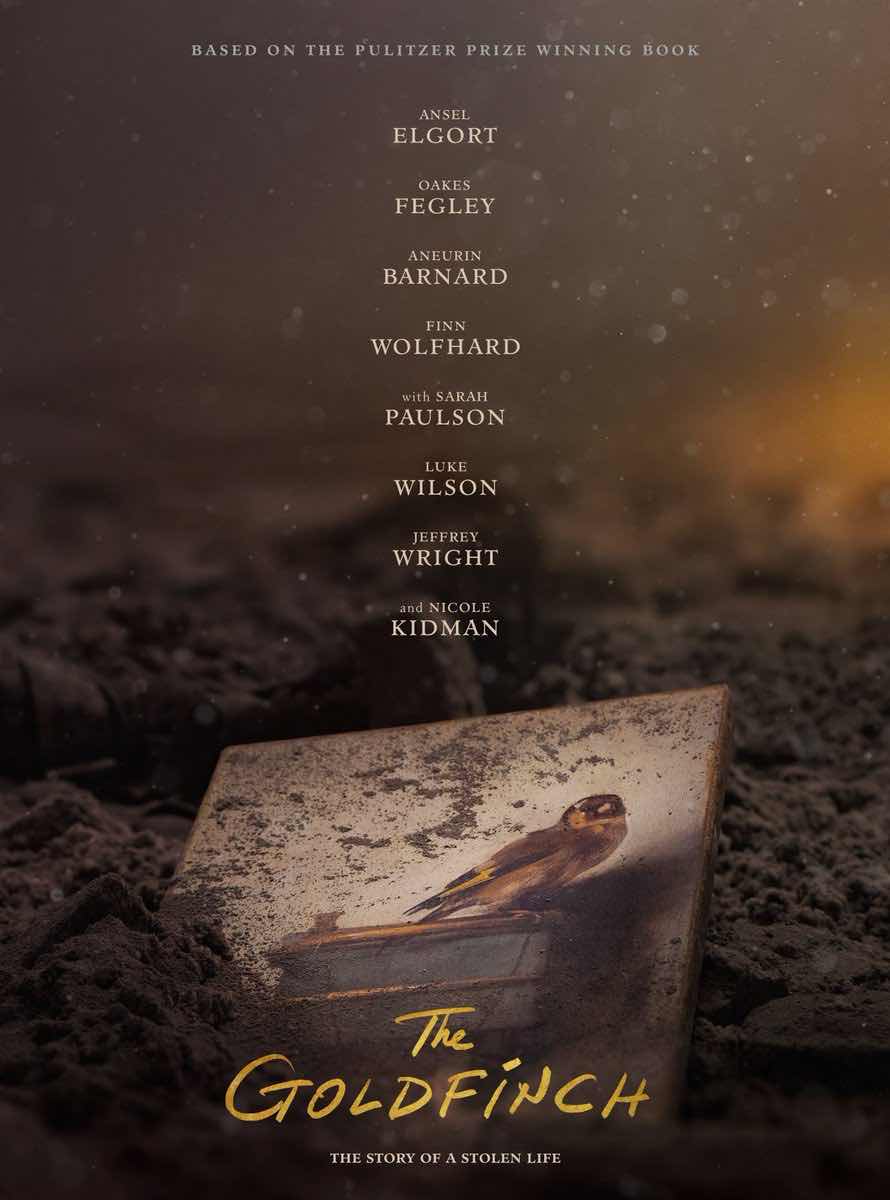
Author Donna Tartt’s Pulitzer Prize winning novel “The Goldfinch” centers on a stolen piece of art, the real Carel Fabritius painting of a chained goldfinch bird on a perch, and a young boy named Theo who grows up keeping a secret about the famed piece of art. It’s a sprawling story featuring numerous plot themes ranging from terrorism, antique collecting, and drug abuse that spans the tragic childhood and tormented adulthood of Theo.


Director John Crowley organizes an exceptional group of talented actors in an earnest attempt to bring this expansive story to life. The result is a confounding adaptation that struggles to fit all the plot pieces and subtle character developments from the book into a nicely packaged cinematic experience. 


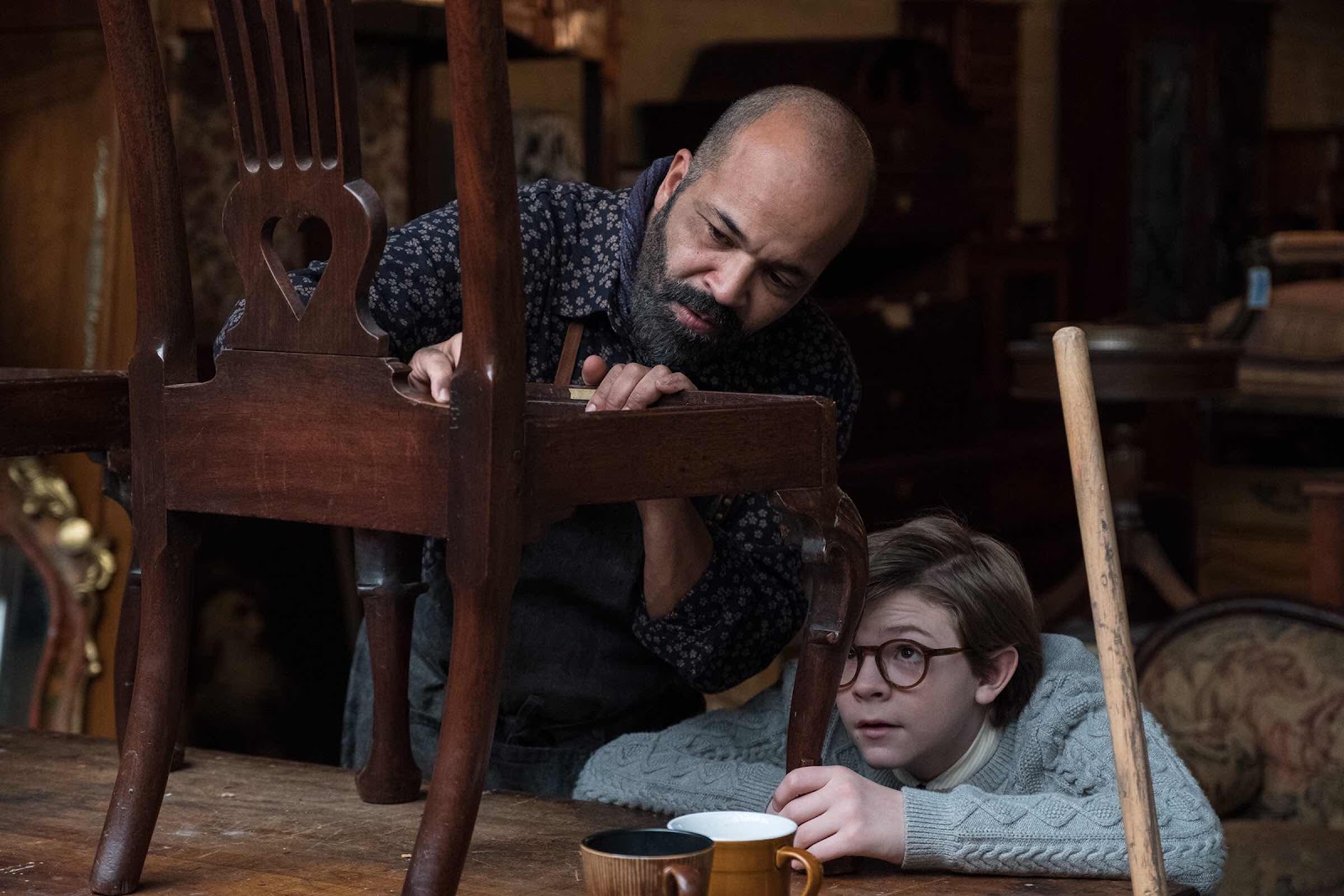
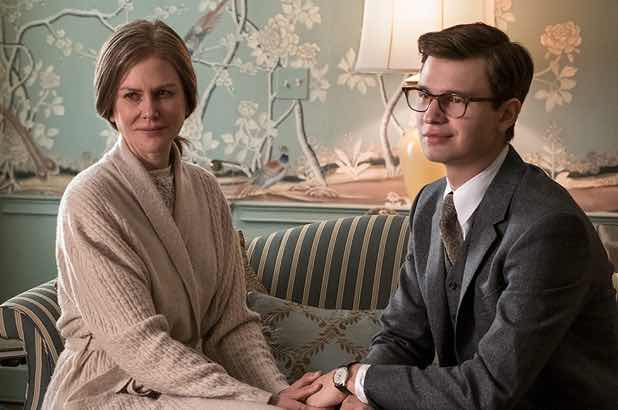
Theo (Oakes Fegley) is visiting the Metropolitan Museum of Art with his mother when a bomb explodes, killing his mother and destroying the museum in the process. Theo is placed with an upper-class foster family in the Upper East Side, nurtured and helped through the traumatic experience by Mrs. Barbour (Nicole Kidman), and then transfers to Nevada and into the care of his neglecting father (Luke Wilson). Theo (Ansel Elgort), now a young adult, works in the antique community with his mentor Hobie (Jeffrey Wright) selling modified antique furniture. But Theo has been keeping a secret since the day that changed his life, a stolen art piece that he took from the rubble of the museum.  


For a film that centers on a bomb explosion and the theft of a piece of art, you would think the plot would be a fairly straight-forward thriller, possibly a whodunit mystery. “The Goldfinch” never commits to these simplistic ideas, instead it remains somewhat plotless throughout the course of the film while it focuses on Theo and his absolutely terrible journey through life. The theme of love and loss is present throughout, the feeling of loneliness and dependency is felt in numerous places. All of these pieces are present but somehow missing the emotional mark or rushed into and out of scenes for the sake of narrative progression. 


The best concept involves the theme of family which permeates every interaction that Theo has with the world. The death of his mother leads Theo to search for that special connection with someone, anyone who will have him or is around him. It’s tragic watching the young character have numerous people ripped from his life, seemingly while he is on verge of making an emotional connection with someone. 


Ansel Elgort does a nice job of composing older Theo with a charm just thick enough to hide the broken parts of his character. Nicole Kidman is the highlight in the film however, displaying a refined yet somewhat cold motherly demeanor. In her quiet moments, when she is watching Theo interact with other kids, is when Ms. Kidman shines bright. 


“The Goldfinch” feels like the quick highlights from the novel bundled together in a film adaptation with talented actors and beautifully composed photography. It’s the equivalent of the cliff notes for a story, enough information so that you can talk about it without the deeper substance to make it as memorable as it should be.


Monte’s Rating

3.00 out of 5.00


Friday, September 6

It Chapter Two Review


It Chapter Two
Dir:Andy Muschietti
Starring:Jessica Chastain, James McAvoy, Bill Hader, Isaiah Mustafa, Jay Ryan, James Ransone, Andy Bean, and Bill Skarsgård

Memory is a funny thing. Think for a moment about what you remember from the past? Think about a fair or carnival you went to. Do you remember the sound of the carnival? The smell of the cotton candy? The words illuminated in bright florescent lights on the rides? The feeling of seeing that clown make a puppy out of balloons? Is it the one sensation, the one word, or is it all of it? Depending on the experience, specifically, the emotion connected, will determine what and how you remember the event. And as the memory drifts farther from the moment, elements tend to change in exaggerated ways or sometimes fade in how strongly you remember everything. 

“It Chapter Two” explores this aspect of memory and also the trauma and fear associated with the past in the continuation of the sinister saga of Pennywise the Clown versus the formerly young, now adult Loser’s Club. 


27 years have passed since the showdown between a group of young friends and a monstrous being who utilizes the deepest, darkest fears of its victims against them. The young Loser’s Club defeated the evil creature, who takes the form of a clown named Pennywise (Bill Skarsgård), but only in delaying his feeding schedule. 27 years later and the group of adults must return to their hometown of Derry, Maine to face the fears of their past unleashed upon them by the malevolent Pennywise.  

The Loser’s Club are grown-ups who have found success; Richie (Bill Hader) is a comedian, Ben (Jay Ryan) is an architect, Eddie (James Ransone) is a risk analyst, and Bill (James McAvoy) is a famous writer. Beverly (Jessica Chastain), the lone lady in the group, seems to have a successful life but is married to an abusive husband. While they have worked to separate themselves from their past trauma, a simple phone call from Mike (Isaiah Mustafa), who still lives in Derry, brings the past crashing back to the present. 

The past has a way of coming back. This is target sentiment for “It Chapter Two” and a turn of dialog uttered in different ways by every member of the grown-up Loser’s Club. The narrative focuses significantly on this primary story element throughout the proceedings that occupy a journey for a group of adults back to the past. Through flashbacks, scenes featuring the completely delightful young Loser’s Clubs actors from the first film, and terrifying manipulated recreations, ones that evoke the deep-seated fear and trauma from the childhood of these characters, “It Chapter Two” composes a rich and rather interesting analysis of fear. 

The past makes and molds different developments of life; the way we think about the past often connects our emotions in the present in different ways. Much is the same here with these characters. No matter how far these characters have moved away from home, how far they have separated their trauma from their consciousness, their past remains intact and intertwined with the experience they had in their hometown, with their friends and family, and with the creature Pennywise. The film narrative uses memory as a catalyst for fear. The past is the foundation for everything that defines these now grown adults, the pieces that have ultimately connected these characters into the world 27 years after they conquered their fear. Pennywise the clown is a metaphor for trauma; childhood, societal, and historical all represented in different ways in the film. It’s an interesting touch to the narrative working with genre frights and scares.

It’s unfortunate that this horror film, amidst its exploration of past trauma as a vessel for horror, somehow fails to execute many of the scary elements throughout the film. Computer-generated effects substantially hinder the effectiveness of the shocks. The sound design is pumped up in places to entice a jump scare but the images associated fail to do much more in making things scarier. The best moments are the simple ones when Bill Skarsgård is allowed to act in clown makeup and modify his voice in truly disturbing ways. The sound of a weeping clown in the shadows of the dark is truly terrifying. The CGI design of some of the other monsters found here come and go without much remembrance. 


The film does a great job of matching the young actors in the first film with their older counterparts. And the performances throughout “It Chapter Two” are good, specifically Bill Hader as the wise-cracking Richie and James Ransone as the asthma-induced Eddie. The banter between them adds levity to some of the more serious moments.

“It Chapter Two” is nearly three-hours long, it doesn’t need to be even though fans of the source material might enjoy the deliberateness. There are moments in the film that drag and the tone lingers in places that it doesn’t need to, this is what ultimately makes the running time feel so overlong. Still, the narrative and performances are especially interesting even if the scares are undercut by an overabundance of exaggerated spectacle. “It Chapter Two” doesn’t have the charm of the first film but that doesn’t keep it from being an interesting continuation of the themes of friendship, innocence, and the places that exist between reality and the unknown that Stephen King explored in his beloved novel. 

Monte’s Rating
3.25 out of 5.00

Satanic Panic Review


Satanic Panic
Dir:  Chelsea Stardust
Starring:  Rebecca Romijn, Hayley Griffith, Ruby Modine, Jerry O’Connell, Jordan Ladd, and Arden Myrin

Every Friday night during my childhood was pizza night. My parents would call their friends, the kids would rent some scary movies from the video store, and food would be delivered from the local pizza palace. Thirty minutes later the doorbell would ring and the delivery person would be standing there, waiting with fresh pizza and hoping for hefty tip. 

In director Chelsea Stardust’s new film, “Satanic Panic”, a pizza delivery girl named Sam (Hayley Griffith) is trying to keep herself financially above water by delivering to a wealthy neighborhood known for their odd practices. After being stiffed for a tip, Sam stumbles into the house and realizes that she’s interrupted a party…a party of Satanist’s looking for a virgin to sacrifice. 

“Satanic Panic” is going for that 1980’s straight-to-video vibe, trying to achieve in its less than 90-minute run time that nice balancing act of combining enough humor to keep the tone fun, freewheeling and campy, a few gory scenes to make one “ooh” and “aah” at the viscera, and enough odd and strange twists and turns to make it stand apart from others like it. 

And, for the most part, the film is successful in remaining entertaining primarily because of the lead performance of Hayley Griffith who provides Sam with enough self-confidence and honesty to maintain the seriousness of her character’s dilemma. Supporting character Ruby Modine, playing an accompanying sacrificial offering named Judi, has some great one-liners while Arden Myrin, playing one of the more bonkers occultists named Gypsy, gets to chew on the scenery with comedy throughout the film. Rebecca Romijn, one of the big names in this production, gets to hail and hiss with hubris as the head-witch named Danica. 


There is a strong 80’s aesthetic being pushed throughout the film; the score specifically has all the digital synth sounds to evoke that feeling and the emphasis on practical grisly effects is a nice touch. The narrative also aims for throwback vibes but wobbles between an interesting final girl scenario that is unconventional in a good way and a worn-out occult tale that struggles to make the impact necessary to turn the devilish troupe into something more sinister. However, it’s still fun to watch the inventive ways the film finds to eliminate the evildoers. 

Unfortunately, some of the dialogs come off clumsy, with some characters stumbling over wordy exchanges and others not provided much to work with at all. The pacing crashes from scene to scene with inconsistent results while trying to connect the puzzle of effects gags and story transitions. 

Still, there is a fun vibe composed throughout this film, one that shows that the creators of this movie grew up with scary VHS tapes from the video store and greasy pizza from the delivery guy. 

Monte’s Rating
3.00 out of 5.00