Showing posts with label Jessica Chastain. Show all posts

Friday, September 6

It Chapter Two Review


It Chapter Two
Dir:Andy Muschietti
Starring:Jessica Chastain, James McAvoy, Bill Hader, Isaiah Mustafa, Jay Ryan, James Ransone, Andy Bean, and Bill Skarsgård

Memory is a funny thing. Think for a moment about what you remember from the past? Think about a fair or carnival you went to. Do you remember the sound of the carnival? The smell of the cotton candy? The words illuminated in bright florescent lights on the rides? The feeling of seeing that clown make a puppy out of balloons? Is it the one sensation, the one word, or is it all of it? Depending on the experience, specifically, the emotion connected, will determine what and how you remember the event. And as the memory drifts farther from the moment, elements tend to change in exaggerated ways or sometimes fade in how strongly you remember everything. 

“It Chapter Two” explores this aspect of memory and also the trauma and fear associated with the past in the continuation of the sinister saga of Pennywise the Clown versus the formerly young, now adult Loser’s Club. 


27 years have passed since the showdown between a group of young friends and a monstrous being who utilizes the deepest, darkest fears of its victims against them. The young Loser’s Club defeated the evil creature, who takes the form of a clown named Pennywise (Bill Skarsgård), but only in delaying his feeding schedule. 27 years later and the group of adults must return to their hometown of Derry, Maine to face the fears of their past unleashed upon them by the malevolent Pennywise.  

The Loser’s Club are grown-ups who have found success; Richie (Bill Hader) is a comedian, Ben (Jay Ryan) is an architect, Eddie (James Ransone) is a risk analyst, and Bill (James McAvoy) is a famous writer. Beverly (Jessica Chastain), the lone lady in the group, seems to have a successful life but is married to an abusive husband. While they have worked to separate themselves from their past trauma, a simple phone call from Mike (Isaiah Mustafa), who still lives in Derry, brings the past crashing back to the present. 

The past has a way of coming back. This is target sentiment for “It Chapter Two” and a turn of dialog uttered in different ways by every member of the grown-up Loser’s Club. The narrative focuses significantly on this primary story element throughout the proceedings that occupy a journey for a group of adults back to the past. Through flashbacks, scenes featuring the completely delightful young Loser’s Clubs actors from the first film, and terrifying manipulated recreations, ones that evoke the deep-seated fear and trauma from the childhood of these characters, “It Chapter Two” composes a rich and rather interesting analysis of fear. 

The past makes and molds different developments of life; the way we think about the past often connects our emotions in the present in different ways. Much is the same here with these characters. No matter how far these characters have moved away from home, how far they have separated their trauma from their consciousness, their past remains intact and intertwined with the experience they had in their hometown, with their friends and family, and with the creature Pennywise. The film narrative uses memory as a catalyst for fear. The past is the foundation for everything that defines these now grown adults, the pieces that have ultimately connected these characters into the world 27 years after they conquered their fear. Pennywise the clown is a metaphor for trauma; childhood, societal, and historical all represented in different ways in the film. It’s an interesting touch to the narrative working with genre frights and scares.

It’s unfortunate that this horror film, amidst its exploration of past trauma as a vessel for horror, somehow fails to execute many of the scary elements throughout the film. Computer-generated effects substantially hinder the effectiveness of the shocks. The sound design is pumped up in places to entice a jump scare but the images associated fail to do much more in making things scarier. The best moments are the simple ones when Bill Skarsgård is allowed to act in clown makeup and modify his voice in truly disturbing ways. The sound of a weeping clown in the shadows of the dark is truly terrifying. The CGI design of some of the other monsters found here come and go without much remembrance. 


The film does a great job of matching the young actors in the first film with their older counterparts. And the performances throughout “It Chapter Two” are good, specifically Bill Hader as the wise-cracking Richie and James Ransone as the asthma-induced Eddie. The banter between them adds levity to some of the more serious moments.

“It Chapter Two” is nearly three-hours long, it doesn’t need to be even though fans of the source material might enjoy the deliberateness. There are moments in the film that drag and the tone lingers in places that it doesn’t need to, this is what ultimately makes the running time feel so overlong. Still, the narrative and performances are especially interesting even if the scares are undercut by an overabundance of exaggerated spectacle. “It Chapter Two” doesn’t have the charm of the first film but that doesn’t keep it from being an interesting continuation of the themes of friendship, innocence, and the places that exist between reality and the unknown that Stephen King explored in his beloved novel. 

Monte’s Rating
3.25 out of 5.00

Friday, December 22

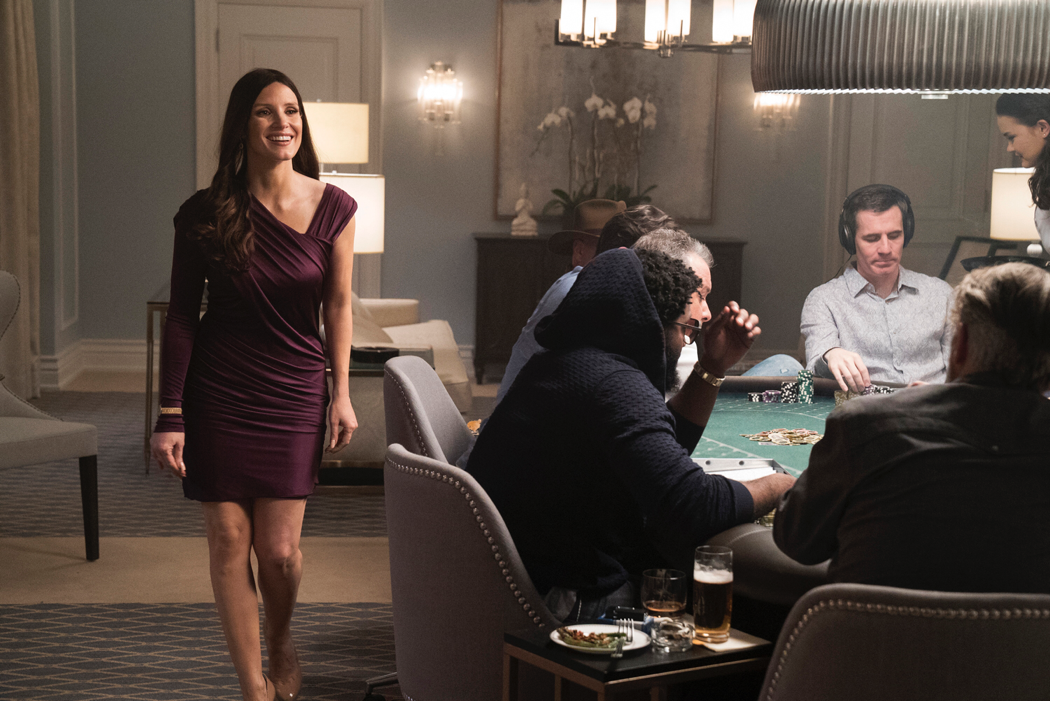
Molly’s Game Review


 Molly’s Game
Dir: Aaron Sorkin
Starring: Jessica Chastain, Idris Elba, Kevin Costner, and Michael Cera

“Sports doesn’t build character, it reveals it”. My high school basketball coach drilled this sen- timent into my head, especially when things weren’t going like I had planned them. Molly Bloom was on the verge of punching her ticket to the Winter Olympic Games until an unavoid- able disaster sent her plummeting down a hill, severely injuring her in the process, and shatter- ing the chance she had been training for her entire life. If this wasn’t one of those character building moments, I don’t know what is.

Aaron Sorkin tackles this interesting true life story of a would-be Olympic athlete turned orga- nizer of one the world’s most exclusive high stakes poker games with all the wordy flair and verbose film style you might expect from this screenwriter turned director. Starring Jessica Chastain in the pivotal role of Molly Bloom, “Molly’s Game” is a quick witted, fast paced story about the fortitude of a woman who refused to play by the rules.


Molly Bloom (Jessica Chastain) is struggling after her accident on the slopes. She has moved to Los Angeles, sleeping on a friends couch, and works as a waitress at night and an office secretary for a loud mouthed executive named Dean Keith (Jeremy Strong). Dean is pretending his way towards the Hollywood dream, rubbing elbows with high rollers at a high stakes poker match that he organizes in the back room of a restaurant. Molly gets roped into Dean’s scheme, though Molly has never been much of a follower and soon starts her own exclusive poker game, bringing the wrath of movie stars, mobsters, and the federal government.

“Molly’s Game” is a jumpy, high energy film that feels more like a heist flick than a drama about greedy, loathsome poker players. The film has a fluctuating timeline that hops throughout three facets of Molly’s life; while this method of editing has a tendency to become somewhat confus- ing, annoyingly so, it also works in giving the story legs.

Mr. Sorkin has consistently displayed his talent as a wordsmith, but his characters are also part of the reason the speeches, the sentimental stories, and the pointed word placed in the perfect position have such power. Molly is provided so many qualities amidst her extensive flaws, she is strong willed, determined, confident, conniving, manipulative, and deceitful. She is the kind of character that could be wholly comfortable strong-arming a power move in a board room or on the streets while still composing herself as an upstanding professional.


Jessica Chastain gives yet another knock-out performance as Mollly; she completely embodies the confidence and compassion of the character, displaying the conviction of a woman who will not be told how to live, how to work, or how to act. Working against Ms. Chastain’s tough character is Idris Elba who plays the respectable attorney that represents Molly. Mr. Elba does a great job of bringing conflict and conviction to Molly’s story, playing the only character who sees through some of the more disreputable qualities that forwarded Molly into the position of power she had. Amidst these two fine performances is Kevin Costner playing Molly’s psychia- trist father. Costner has one of the best speeches of the film in an uncomfortable, yet poignant conversation with his daughter.

This is Aaron Sorkin’s directorial debut; in places, like with the editing decisions and some of the meandering scenes, you can feel the growing pains of a first time director. However, the narrative content is completely suited for Sorkin’s style as a writer, building intriguing charac- ters that are both complicated yet sympathetic. What “Molly’s Game” does best above all is reveal the character that a woman must have amidst the objectification, the barriers, the cheap shots, and the manipulation when fighting in a world manipulated by men.

 Monte’s Rating 
4.00 out of 5.00

Monday, December 12

Miss Sloane Review

 
Miss Sloane
Dir: John Madden
Starring: Jessica Chastain, Mark Strong, Gugu Mbatha-Raw, Alison Pill, Michael Stuhlbarg, Jake Lacy, Sam Waterston, and John Lithgow

Powerful, sure-minded women who speak their minds and have intelligent opinions are often given a bad reputation in motion pictures. Many times being told, mostly by men, that they are cold, heartless, or unfeeling. Coming on the heels of a divided election and having an even more pertinent message than the producers could have imagined , "Miss Sloane" is a film about an ambitious female lobbyist in Washington D.C. going toe-to-toe with a male dominated gun industry. The film is directed by John Madden, a best director Academy Award nominee for the film "Shakespeare in Love" in 1999, in the style of a political-thriller but is more suited as being an intriguing character study with a strong performance from Jessica Chastain who plays the title character.

Elizabeth Sloane (Jessica Chastain) is introduced sitting in a Congressional hearing concerning the ethical intentions of her role as a lobbyist for an organization that was spearheading a new bill on gun regulation. Every aspect of her career in under scrutiny, including her personal life and her former employment with another organization that is currently her opponent for the gun bill. Mr. Madden orchestrates a taut courtroom drama in these moments, with Sloane the target seemingly from every angle and every person in the courtroom. However, these beginning moments aren't given much context other than an brief introduction to all the players associated with Sloane.
 
The film takes the viewer back to the beginning, two years, when Sloane was an up-and-coming lobbyist making positive and negative impressions with everyone she encountered. Abruptly, Sloane decides to leave the organization and move to a rival group after being asked to consult on a campaign opposing background checks for gun owners by a National Rifle Association-like group. From this moment the film begins to dig into the character of Elizabeth Sloane, displaying her shrewd tactics, viewed by some as conniving, and her meticulous methods that display her ambition for success. While this sometimes comes off as callous to her constituents who have trouble keeping up with her decisions, they cannot deny the results she achieves. Many times she seems one, two, even three steps ahead of everyone in the room.
 
Director John Madden handles the aspects of Sloane's character with confidence, portraying a female character in a such a way that no character in the film ever feels like her equal. It's her character that makes the film so enjoyable, a quality that should be attributed foremost to the wonderful performance by Jessica Chastain who deftly layers many aspects of the performance with engrossing touches that correspond to the themes of vanity, loyalty, and purpose that define her character. Without such strong lead performances from the lead and supporting cast, Gugu Mbatha-Raw as a pawn for manipulation and Michael Stuhlbarg as a loud antagonist to Sloane are both very good, some of the deficiencies of the narrative would be harder to ignore. Aside from the long-winded political rhetoric which offers great opportunities for the actors to unleash a bit; the structuring of the build-up for the story doesn't fit many of the resolutions, which seem too neatly packaged for as complicated as the issues are explained to be. 
 
Still, "Miss Sloane" is a great character film that offers an impressive performance from Jessica Chastain. While it may not completely achieve the thrilling political moments it reaches for, it does create a thrilling mystery watching a character that is never easily categorized and is always a step ahead of everyone.

Monte's Rating
4.00 out of 5.00

Friday, November 7

Interstellar Review

Interstellar
Dir: Christopher Nolan
Starring: Matthew McConaughey, Anne Hathaway, Jessica Chastain, Michael Caine, John Lithgow, Wes Bentley, Casey Affleck, Ellen Burstyn, Topher Grace, and Mackenzie Foy

There are movies and then there are Christopher Nolan movies. Nolan, whose career catalog has been nothing short of impressive, attempts to accomplish one of the most ambitious visionary feats of recent years with “Interstellar”. This film is an experience in the fullest terms; visually beautiful to watch, awe-inspiringly composed, and bursting at the narrative seams with thematic theoretical wonders. “Interstellar” is a film whose ambitiousness will ultimately become its Achilles heel, though in a film so passionately composed, it’s a minor concern for the film enthusiast this film is intended for.

Earth is dying and the last of humanity lives as farmers to produce food for a dwindling existence. A former pilot named Cooper lives with his family in a small town. With the help of his daughter Murph (Mackenzie Foy) Cooper discovers coordinates that lead him to a group of explorers heading a mission into deep space, beyond our galaxy, to find a habitable planet to save mankind.

Nolan composes a distinct vision of the future. A bleak outlook and regretful remembrances occupy an Earth that is searching for any glimmer of hope. This is found through a wormhole near the rings of Saturn with coordinates received from an unknown source that is guiding the explorers. The script is ingenious with mounting theories that drive the film from plausible to implausible positions, a rift at times that Nolan traverses with ease and other times tumbles messily into. It’s the kind of obstacle that in lesser hands would derail a film, however Nolan recovers and continues to charge forth towards further ambitious expanses. Nolan builds events towards near epic standards with such ease and simplicity of design. In one scene the sheen of a spacecraft floating across a gorgeously rendered backdrop of Saturn’s atmosphere is accommodated by Hans Zimmer’s equally moving score. This all escalates gradually, giving the journey into uncharted territory a grandiose quality without looking overdone. It’s a brilliant design.

Just as all the best science fiction, there is an underlying message being proposed. Nolan discusses regret throughout. Difficult choices, necessary choices, and selfish choices all compose a collection of people who understand that the right decisions, both individual and communal, could have been made in the past to prevent the current state. There is a constant connection with the elements as well, represented through layers of wind blown soil, pummeling water, and flashes of fire, these elements seemingly betraying humanity by displaying their dominating destructive force on life.

The cast, as in most of Nolan’s films, is great. McConaughey is the consummate heroic figure, self-sacrificing to a fault and emotionally motivated for the greater good. The script spends time building his character as a devoted family man with subtle emotional touches initially, but as the film charges into space the relationship between his family is slightly stilted and relinquished to a few, albeit touching, moments. One might defend this portrayal as another character facet by Nolan to display the nature of a father willing to attempt impossible feats to save his family, but the emotional influence is lost until the final act. Mackenzie Foy, who portrays young Murph, is quite excellent. As is Jessica Chastain, who portrays older Murph with a maturity that is strong willed though bruised by the abandonment felt by her father. There are also nice turns by Michael Caine and Anne Hathaway accommodating another reflective father and daughter story.

 “Interstellar” has minor difficulties living up to its lofty ambitions, however it is still an exceptional vision unmatched by other films in recent memory. Christopher Nolan confidently crafts an intricately beautiful and seemingly uncompromised work of science fiction.

Monte’s Rating

4.00 out of 5.00