Showing posts with label Comic Book. Show all posts

Friday, November 18

Black Panther: Wakanda Forever Review


Black Panther: Wakanda Forever
Dir: Ryan Coogler
Starring: Letitia Wright, Angela Bassett, Danai Gurira, Lupita Nyong'o, Dominique Thorne, Florence Kasumba, Winston Duke, Martin Freeman, and Tenoch Huerta
2h 41m

It's been four years since the cinematic cultural phenomenon of writer/director Ryan Coogler's "Black Panther," a film that broke box office records but, more importantly, celebrated black culture, diversity, and inclusion. So much has changed in four years, both within the Marvel Cinematic Universe and the vastly changed landscape worldwide. 

"Black Panther: Wakanda Forever" reflects the many changes felt throughout the world, the political power struggle, the desperation for advancement, and the grief for loved ones lost through the changing times. For fans of "Black Panther," the tragic death of actor Chadwick Boseman is an emotion immediately felt. All of these topics are examined within Ryan Coogler's nearly three-hour-long runtime. This sequel honors the memory of Chadwick Boseman and continues the celebration of cultural diversity but struggles to find its stride amidst a mix of new characters and diverging storylines. 

The film begins with Shuri (Letitia Wright) delivering a prayer to help her brother, King T'Challa, who is dying from an unknown illness. Shuri is unable to heal him. The kingdom of Wakanda mourns the death of their king while Queen Ramonda (Angela Bassett), T'Challa's mother, takes over leadership. At the same time, the rest of the world looks to take advantage of a resource-loaded country without its protector, the Black Panther.

As Wakanda stands strong, maintaining control of the valuable resource vibranium, a research team starts looking deep within the ocean for additional reserves. Namor (Tenoch Huerta), the ruler of an underwater kingdom known as Talokan, protects his people by aggressively retaliating against the researchers. Wakanda is blamed for the assault. Namor, an indigenous descendant of a group of people enslaved by colonizers, understands the danger of vibranium in the wrong hands. Namor hopes to enlist the support of Wakanda in conquering those who threaten their kingdoms, but Queen Ramonda refuses, leading to an ultimatum for Wakanda. 
  
Ryan Coogler does an exceptional job of weaving the narratives associated with the ever-changing Marvel Cinematic Universe, along with the emotion of paying tribute to Chadwick Boseman. It's an intricate balancing act that Coogler deftly accomplishes without depending on extravagant action set pieces. "Wakanda Forever" deliberately examines the emotional, political, and environmental changes in the absence of the Black Panther. And, refreshingly, allowing the weight of the story to be carried by the strong female cast. 

Letitia Wright does a fine job filling big shoes as the film's lead, Shuri, and Danai Gurira is still intimidating as General Okoye but also allows more emotional resonance in this film, offering their characters more depth and complication. Angela Bassett, who has displayed countless exceptional characters throughout her career, leads the cast with another powerful performance.

As "Wakanda Forever" moves away from examining grief for Shuri and Ramonda and the historical trauma for Namor and his people, the film begins to function like the recent batch of Marvel films. The conflict between Namor and Wakanda inevitably leads to a forgettable fight. While Namor is offered ample time for character development at the start, the final act provides a hasty one-note resolution. Shuri's plight is more complicated as the stakes grow more significant for Wakanda, but her journey also feels underdeveloped. 

"Wakanda Forever" soars when it provides the time to explore the characters and their connection to the powerful emotions that motivate their journey. While the pacing can weigh heavy at times, and the action sequences operate as a necessity for the genre, Ryan Coogler is still an exceptional filmmaker. The director composes more than a few great scenes, imbues characters with interesting emotions, and structures a unique vision of culture into comic book filmmaking. "Wakanda Forever" always had high expectations to meet, and in moments it exceeds and excels beyond them. 

Monte's Rating
3.50 out of 5.00


Friday, November 5

Eternals Review

Eternals

Dir: Chloé Zhao

Starring: Gemma Chan, Richard Madden, Kumail Nanjiani, Angelina Jolie, Salma Hayek, Brian Tyree Henry, Ma Dong-seok, Lauren Ridloff, Barry Keoghan, Lia McHugh, and Kit Harington

2h 37m


Director Chloé Zhao won an Academy Award, both for achievement in directing and best picture, for the film “Nomadland” earlier this year. Zhao’s moody and minimalistic film follows a woman in her sixties embarking on a journey through the American West after losing everything in the Great Recession. During a worldwide pandemic, “Nomadland” touched on issues of isolation and loneliness while also beautifully portraying the independence and peace found within a solitary existence connected to the world. Zhao’s catalog of films examines identity within the complicated structures of the ever-changing American ideal. And Chloé Zhao is the director Marvel Studios chose to helm their newest franchise addition, “Eternals,”; and it’s a fascinating and complicated decision.


The Eternals, created by comic-book legend Jack Kirby in 1976, are lesser-known heroes in the Marvel Universe. The god-like humanoids have existed for centuries, watching/helping worlds evolve in creative and self-destructive ways while safeguarding humanity from threatening creatures known as Deviants. 

Zhao’s film takes the origins of Kirby’s comic and adapts a story for the Marvel Cinematic Universe (MCU) that feels like that one puzzle piece that could fit anywhere but also nowhere at the same time. With beautiful wide-framed locations and a sensibility leaning into authentic instead of artificial composition, Zhao’s filmmaking presence is felt from the opening scene and, at moments, within the performances from the impressive cast playing the immortal superheroes. However, despite all its attempts to separate itself from the MCU’s consistent, familiar structures, “Eternals” unique introductions get lost in the mix of mundane Marvel ingredients.


Ancient aliens known as Eternals have been living on Earth in secret for thousands of years. Their job is to support humanity by helping them advance while also protecting them from otherworldly creatures known as Deviants. The Eternals have seen their efforts preserve and devastate society. This cycle grows more difficult for the nine superheroes to accept, knowing that they have the abilities to help in different ways. After centuries of working as a team, the Eternals separate over how they should use their powers. They begin living their own lives amongst humanity. The Deviants, which the Eternals thought they had defeated, return and start attacking the separated heroes individually. These attacks bring the Eternals back together, exposing the truth about their long-lived history and the plan for the future of humanity.


Chloé Zhao’s filmmaking sensibilities are present throughout the film, at times obvious and other times more subtle. Zhao brings a sense of connection between the world and those separated into this massive Marvel machine. Much like her past films, which focus on the disenfranchised moving through the American dream, Zhao asks questions and explores feelings with these immortal aliens. Questions about worth, sacrifice, honor, and servitude. Emotions like confusion, fear, love, and contempt. It’s all there and examined through varying degrees of magnification. A scene that explores the bond of family, specifically the fear of leaving and losing family, is beautifully captured in a quiet moment during a bedtime routine with a child. At the same time, a scene about the joy and passion of love, both physical and emotional, is inelegantly portrayed with a passionless sex scene and a sappy moment of new love set against magic-hour sunlight. It’s easy to see that “Eternals” is trying to be different, trying to frame a story about superhuman beings, magic powers, and ancient universes with captivating actors and a dynamic director to bring a new and different quality to familiar material. While the execution is elegant, the story and characters rarely engage in anything new but instead exist to introduce prospective properties.

An impressive cast of characters, who range in ability, race, and sexuality, played by an equally impressive list of actors, helps “Eternals” remain engaging. Zhao is fantastic with actors; the ensemble is excellent when all together, but there isn’t enough material or time for the individual cast to develop beyond superficial qualities. Angelina Jolie’s character Thena is an impressive warrior, but the character often feels like an afterthought. Salma Hayek plays the leader Ajak but her screen time is limited to a couple of group scenes and a few short monologues where the character offers sage words of wisdom. Gemma Chan, playing the lead Sersi, is provided the most depth, but against the grand scheme of the story, the character’s change from reluctant team member to influential leader rarely has the effect it should. As the flying Ikaris, Richard Madden has a good screen presence and works his superhero arrogance with glee. Bryan Tyree Henry, Kumail Nanjiani, and Barry Keoghan have secondary roles, but they provide a few insightful moments and some laughs in their limited time. Lauren Ridloff, playing Marvel’s first deaf character Makkari, and Lia McHugh, portraying Sprite, shine bright in their limited roles.


 “Eternals,” throughout the film, is planting the seeds of future stories for the MCU to cultivate. While this isn’t particularly new for the Marvel efforts, there are moments in “Eternals” that make you think about the future characters and story plots instead of remaining in the present with the story being told on the screen. While “Eternals” tries its best to stand on its own, as a separate pillar in the Marvel universe, it ultimately feels like another stepping stone.


Monte’s Rating

2.75 out of 5.00

Friday, October 1

Venom: Let There Be Carnage Review


Venom: Let There Be Carnage

Dir: Andy Serkis

Starring: Tom Hardy, Michelle Williams, Naomie Harris, and Woody Harrelson

1h 37m


What happens when that little voice inside your head, the one that helps you reason good versus bad decisions, tells you to eat people? That's the strange dilemma between an odd couple journalist named Eddie Brock, played by a committed Tom Hardy, and an alien symbiote named Venom, voiced with grumbly enthusiasm by Tom Hardy. 


"Venom: Let There Be Carnage" is the continuation of the relationship between Eddie and Venom, this time moving from a conflicted new friendship into something more akin to an old married couple. Director Andy Serkis crafts a lean and mean comic book oddity that feels just outside the norm of the Marvel cinematic formula. That's a good thing, even if the final result struggles to excel beyond the limitations of an average script. 


Eddie Brock (Tom Hardy) finds balance in his chaotic life, living with an alien inhabiting him and consistently providing a manic internal dialogue and a craving for brains. They co-exist in a messy apartment, with holes in the ceiling made by outbursts from Venom and two chickens lovingly saved from a dinner plate and renamed Sonny and Cher. Their relationship is on rocky ground. Venom craves freedom and urges Eddie to embrace a role as protector of the city - while also allowing him to eat the heads of the bad guys they defeat. Eddie fears exposing the truth of his sudden abilities to solve cases the police can't and hopes to resolve his broken relationship with his former girlfriend Anne (Michelle Williams). 


Eddie finds attention from a serial killer named Cletus Kasady (Woody Harrelson). After Eddie writes, with Venom's help, a story that solves a slew of cases, Cletus is fast-tracked to the front of the death row line. As a final request before the execution, Cletus asks to see Eddie one last time. Cletus bites Eddie during an altercation, and a piece of the symbiote attaches to Cletus, unleashing a monster born for carnage. Eddie and Venom set their differences aside to save the world. 


Director Andy Serkis takes a breakneck approach to storytelling in "Venom: Let There Be Carnage." The film, without credits, is under 90 minutes. That's unheard of for superhero films these days. But what Serkis does in limited time is focus on the highlights for fans of the Venom character. 


Tom Hardy composes an unusual Eddie Brock, providing the mostly unlikeable journalist with enough charm and awkwardness to sympathize with the character. Hardy's nervous and timid performance is an essential quality for Eddie's composition because the story doesn't leave much time for character development. At the same time, the film quickly introduces the film's key villains, a lovelorn couple played by Woody Harrelson and Naomie Harris. Harrelson, whose performance feels just a few steps away from his character in "Natural Born Killers," goes for broke. While the wild-eyed Naomie Harris, whose superpower is a ferocious scream, isn't offered much to do besides looking unhinged. A side story following Eddie's love interest Anne, a completely underutilized Michelle Williams, feels like an afterthought from the narrative.


"Venom: Let There Be Carnage" leans on its oddball vibes and harmless humor, along with an oddly captivating performance from Tom Hardy, to keep this sequel centered on simplistic entertainment value objectives. For the most part, it succeeds in honoring the path set by the original film. If you enjoyed the first "Venom," you will find reason enough to smile with this sequel.


Monte's Rating

2.50 out of 5.00
Friday, August 6

The Suicide Squad Review


Suicide Squad

Dir: James Gunn

Starring: Margot Robbie, Idris Elba, John Cena, Viola Davis, Joel Kinnaman, David Dastmalchian, Daniela Melchior, and Sylvester Stallone

2h 12m


The modern superhero movie has allowed audiences to grow familiar with strange, odd, and unusual sights. Like an underwater kingdom where an aqua man telepathically controls marine life. Or a young boy who turns into a powerful being just by saying the words "Shazam." It's commonplace to see superhumans battle giant creatures, massive monsters, or ancient gods on the big screen at least once a month these days. 


Director James Gunn, who is responsible for producing a specific brand of strange and silly to the Marvel Cinematic Universe with two "Guardians of the Galaxy" films, tackles the reboot/sequel of the bad-guys-gone-good 2016 movie "Suicide Squad." Leave it to James Gunn, the director of some horribly beautiful cinema like "Slither" and "Super" who also got his start in the Troma Entertainment brand, to make the best kind of silly and perverse comic book movie to date. 


The mix of dark and mindless humor, gory and unflinching violence, and the odd and quirky heart he gives the characters we shouldn't care about is a combination of everything the writer/director has tailored over all these years. "The Suicide Squad" forms a pitch-perfect comic book movie with a new stance to the saturated market of world-saving heroes. And yes, he also contributes more strange, odd, and usual sights, like a walking, talking shark who sounds like Sylvester Stallone. 


Amanda Waller (Viola Davis) organizes a group of outcast bad guys who do covert operations that the world's superheroes can't do. The Suicide Squad, as they call themselves, is assigned to invade the fictional Corto Maltese to stop a government coup with plans to unleash a secret weapon on the rest of the world. The team is led by the reluctant Bloodsport (Idris Elba), a marksman who is touted as putting Superman in the hospital with a kryptonite bullet. The rest of the team features Harley Quinn (Margot Robbie) and Rick Flag (Joel Kinnaman), both from the previous “Suicide Squad”, and new teammates like the rodent controlling Ratcatcher 2 (Daniela Melchoir), the demoralized Polka-Dot Man (David Dastmalchian), the homicidal justice seeker Peacemaker (John Cena), and a giant walking shark named Nanaue (voiced by Sylvester Stallone). In true comic book fashion, the ragtag team must accomplish their mission before the world is destroyed. 


James Gunn takes absurdist humor to incredible extremes throughout the film, taking a bloody or violent moment and undercutting it with some comedy element. Whether dark, deadpan, silly, or sometimes all of them at once, it's within this humor-driven sensibility that "The Suicide Squad" finds its footing for the composition of the characters that range from unredeemable to misguided. 


Gunn is an accomplished screenwriter, bringing straight tension and horror with the remake of "Dawn of the Dead" or modernizing the live-action follies of the ghost hunting gang in "Scooby-Doo." Gunn finds the unusual beats and abnormal rhythms in storytelling. It's what separates and defines his unique style. 


Throughout "The Suicide Squad," Gunn takes the formulaic structure of the superhero film and modifies it just enough to make it feel out of rhythm. With a character like Harley Quinn, who fans would assume might be front and center in this film, Gunn places the well-known character in a supporting role while giving her the best fight scene the character has in any film. The arrogant Peacemaker is perfectly cast with John Cena, who is doing the charming bad guy wrestler character, even at one time showing up in a mock pair of "tights."  Gunn abrupts the accustomed structure with characters like Nanaue, also known as King Shark, and Ratcather 2, providing them with a piece of the strange heart that grounds the film with emotion amidst the chaos and mayhem that happens consistently on-screen. 


  "The Suicide Squad" combines heart, humor, and heroics in fun, ingenious, and gruesome ways. It's the most fun film of all the summer blockbuster films in 2021. 


Monte's Rating

4.00 out of 5.00

Friday, February 7

Birds of Prey Review


Birds of Prey
Dir: Cathy Yan
Starring: Margot Robbie, Rosie Perez, Mary Elizabeth Winstead, Jurnee Smollett-Bell, Ella Jay Basco, Chris Messina, and Ewan McGregor

When you think of iconic superhero villains it doesn’t take very long to recognize the clown prince of crime, The Joker. Immortalized throughout cinema by actors like Cesar Romero, Jack Nicholson, Heath Ledger, Jared Leto, and Joaquin Phoenix, The Joker is chaos, carnage, comedy, and cream cosmetics wrapped into one complicated bad guy. 

Perhaps it’s time to clear some space for another villain, or even better a villainess, painted in the vein of The Joker. Harley Quinn made her first appearance in the DC Comics movie misstep “The Suicide Squad”, but Harley, played by Margot Robbie, was the highlight of the entire film, even overshadowing a new performance from Jared Leto playing The Joker. 

“Birds of Prey” or “Birds of Prey (And The Fantabulous Emancipation of One Harley Quinn)” lets Margot Robbie loose with a zany, messy, comical, clumsy comic book movie that relishes in its cinematic mayhem. What transpires is less a superhero quality and more a straightforward action film with a group of tough-as-nails ladies standing up to a world dominated by loathsome men. 

Harley (Margot Robbie) has a story to tell, one that only she can tell, and it involves bad breakups, murderers, new friends, and a lost diamond. Harley is moving on from Mr. J (her pet name for Joker), trying to make a new path in Gotham City but not realizing how many bridges she has burned while living freely in love. Now, she’s a wanted woman, specifically by a new bad guy in Gotham named Roman Sionis (Ewan McGregor).  Harley, being hunted by every person she wronged while dating the Joker, is forced into finding a young pickpocket named Cass (Ella Jay Basco) who has stolen something very valuable.

“Birds of Prey” is an R-rated romp in overindulgent style and over-the-top comic book antics. It’s cluttered in parts, specifically during the chaotic back-and-forth storytelling style where Harley narrates her version of the events leading towards the finale, but also exceptionally fun, like when Harley unleashes her fighting flair with a baseball bat or chats cute with her pet hyena. 

Margot Robbie seems tailored for the role of Harley, she composes a playful sensibility from the beginning, almost shedding the villain quality completely in favor of a powerful woman who will not be told what to do and how to live. Whether giggling maniacally, screaming obscenities or spouting big intellectual psychology comments, Ms. Robbie completely owns the character. 

The supporting cast helps the sloppy narrative. Rosie Perez, tough and showing wonderful attitude, plays an underappreciated cop who is chasing all the loose ends perpetrated by Harley. Jurnee Smollett-Bell is a welcome addition playing a lounge singer with a powerful voice and Mary Elizabeth Winstead does a great job of being nervously awkward as a crossbow-wielding assassin. Ewan McGregor plays the big bad with a confident quirkiness, while it doesn’t always work it seems Mr. McGregor is having lots of fun with the role.

The film, at times, feels too deliberately wacky and purposefully cartoonish, but the madcap quality does have its benefits in keeping the tone very lighthearted and focused on creating something of a crazed carnival of scenes. This movie feels like an appropriate transition, or side story, for the DC Films brand that has composed a more serious atmosphere for their superhero stories. 

“Birds of Prey” thrives best when Harley has a team to work around and with. Margot Robbie holds the film together even when it becomes too frenzied for its own good. Still, the charm of the eccentric characters, the amusement park of hectic action, and the playfulness found in almost every scene make this a must-see for comic book fans.

Monte’s Rating
3.00 out of 5.00

Friday, October 4

Joker Review

Joker
Dir: Todd Phillips
Starring: Joaquin Phoenix, Robert De Niro, Zazie Beetz, Frances Conroy, and Brett Cullen

The power of laughter is an amazing characteristic. Laughter composes so many emotions, happiness and sadness and everything in-between and beyond. Laughs are uniquely individual, sometimes they are contagious, other times they can be scary, and in some occasions, they can be forged. 

Joaquin Phoenix utilizes a maniacal, nervous, and ultimately tragic form of laughter to compose an unstable character, the DC supervillain “Joker”. Phoenix, in a completely amazing, transformative performance, is placed within a shallow, depressing, and somewhat pointless film that is aspiring for thoughtful insight on numerous subject matters but instead meanders into a place of emptiness. 

Arthur Fleck (Joaquin Phoenix) is a lonesome, damaged man working as a sign-waving clown, moonlighting as a stand-up comedian who keeps a journal of jokes, in the dingy, rough streets of Gotham City where desperate kids steal his sign and entitled men beat him up on the subway. Arthur is struggling in life, he is meeting with a psychologist and taking medication for his concerns, one of which is an uncontrollable laughing condition that signals some kind of substantial past trauma. Arthur lives and takes care of his ailing mother (Frances Conroy), who once worked for the storied Wayne family in Gotham, holds fond admiration for a late-night television show host (Robert De Niro), and has a crush on a girl (Zazie Beetz) who lives in his apartment complex. But Arthur is slowly breaking at the same time as Gotham City, leaving both man and city in a desperate place. 

“Joker” has a lot of narrative wheels spinning; ideas concerning the state of mental illness and the lack of assistance available for those dealing with difficulties, the social divide and inequality that pushes poor and rich characters in Gotham further away from any semblance of decency, and the victimization of people who don’t fit into the specific spaces defined by society. 

In the middle of all of the confusing contemplations and supposed insightfulness is one of the most famous comic villains of all time. And while comic book films have found ways to incorporate complex moral stories about characters struggling with their motivation or responsibility, “Joker” never seems to make a clear choice about what kind of character it wants to compose. 

Arthur is suffering, his nervous laugh seemingly teetering from complete sadness to utter contempt in moments, yet the moral struggle ends with the laugh. The world around Arthur is crumbling, the city of Gotham is at a boiling point, anarchy and chaos are imminent and Arthur’s personal emotional frustration and outbursts with and without clown makeup are exploited by the media which eventually points to him as some kind of poster child for Gotham’s frustration. It’s never completely identified because Arthur’s character is never composed to connect his disturbing actions to the turmoil found in the world he exists in. And even if the design of the story was to connect Joker’s origin as bred from chaos, to connect that Joker would exist in some way because society predicated the design, there isn’t enough in the narrative to make these ideas have the strength to become meaningful and astute. Instead, it feels lost, shallow, and misguided. 

Still, amidst the narrative issues, the film boasts a stunning performance from Joaquin Phoenix. The actor composes a character with physical actions that combine bodily contortions; the actor is frail and manipulates his face and body in rigid manners, while also embodying a delicateness, seen within graceful dance moments and gentle hand gestures that move with a fluid-like feel. Robert De Niro is also interesting here, poised in a position as a late-night talk show host that feels similar to Jerry Lewis’ role in Martin Scorsese’s “The King of Comedy”, a film where De Niro played the role of an obsessed lurker. 

“Joker” unfortunately never has a target in mind, which ultimately makes all of the moves it takes predictable and somewhat derivative of other films that handle a similar subject matter. The film understands how to photograph a world in distress, how to compose a score that feels ominous and anxious, but it never provides the narrative material for the astonishing abilities of Joaquin Phoenix’s character, and impressive complicated laugh, to have the gravity and depth it craves. 

Monte’s Rating
2.75 out of 5.00

Monday, July 1

Spider-Man: Far From Home Review


Spider-Man: Far from Home
Dir:Jon Watts
Starring:Tom Holland, Zendaya, Jon Favreau, Samuel L. Jackson, Cobie Smulders, Marisa Tomei, Jacob Batalon, and Jake Gyllenhaal

Growing up is complicated. It involves shifting attitudes and desires, becoming comfortable and capable with new responsibilities, and often times the destruction and development through awkward phases where self-confidence and self-awareness builds and crumbles with every encounter within every situation. If that sounds terrible, it is!!

Think about all these multifaceted aspects of emotional and physical development and add to all of this an extra special ability, something not provided to the rest of your peers. With this great power comes the great responsibility of having the abilities to save a life, to end a life. Suddenly the algebra test, the big dance, the pep rally, don’t have the same level of importance. 


Director Jon Watts returns to further the adventures of Peter Parker with “Spider-Man: Far from Home”. Taking the story to new territory, this time away from the school hallways and into foreign countries on a class trip, the journeys of the friendly neighborhood Spider-Man grow more dangerous with added hero duties but also more personal as Peter’s two lives converge with greater risks. For a film coming off the heels of a pop culture event like “Avengers: Endgame”, “Spider-Man: Far from Home” succeeds by looking towards the future and offering a glimpse of what the continued Marvel Universe might have in store.

Peter Parker (Tom Holland) continues to go through the trials and tribulations of adolescence, however, the world isn’t the same anymore after the near cataclysmic “snap” from Thanos that altered lives and caused a 5-year pause of life for millions of people…including Peter Parker and many of his classmates. 

Now, the world is trying to return to some state of normalcy, but for Peter, the world will never be the same. Spider-Man is an Avenger, went to another planet in space, helped save the world from Thanos, and, most affecting, lost a mentor/father figure in the process of it all; for Peter, life continues to grow vastly complicated. And, just when things seem to settle down, when Peter has a moment to plan his pursuit of MJ (Zendaya) during his class trip abroad, another terror arrives destroying cities across the globe while a new ally named Mysterio (Jake Gyllenhaal) enters Earth from a parallel dimension. Complications abound.

Screenwriters Chris McKenna and Erik Sommers do a nice job of tying together the major events that have passed since “Avengers: Endgame”, utilizing Peter’s interactions, like a touching discussion with Happy Hogan (John Favreau) or humorous banter with bestie Ned (Jacob Batalon), and general world interruptions, like a funny school news report or foreign television correspondence, to move the story forward. However, amongst all of these world establishing elements is something much stronger, an emotional component that directly addresses the missing piece of Tony Stark whose memorialized visage is a constant reminder for Peter of the responsibility and ultimate sacrifice heroes must make. Most of these reminders are subtle designs, like graffitied walls or physical objects like a pair of sunglasses left for Peter from Tony.

While these components all push the story in some really interesting directions, it does take some overly deliberate time to get these pieces into operational places. For the first 45 minutes of the film, the pacing is a complete mess. Side stories like a romance between Ned and classmate Betty (Angourie Rice) and encounters between Happy and Aunt May (Marisa Tomei) are introduced quickly without much consequence towards the primary focus of everything. Amongst the complications that have overtaken Peter’s life, some of the side stories seem inconsequential in perspective of everything that has happened. Perhaps that’s the purpose, however, that the minor distractions in Peter’s life are easier to handle than the burden of the greater components. That focusing on minor issues that Peter understands how to grasp is better than trying to figure out why threats are constantly trying to tear the world to pieces. It feels like this was the direction being proposed in the early moments of everything in the film, but it’s not so clear.

When Mysterio, a really charming yet offbeat Jake Gyllenhaal, enters the equation, “Far from Home” finds exceptional traction because of some inventive narrative choices but also because it focuses specifically on Peter Parker and the enormous emotional swings that have been affecting his life. In the second part of the film, it becomes obvious that Peter Parker can no longer just be the “friendly neighborhood Spider-Man”, that the world has changed so much for Peter that his motivation and identity will forever be connected to a red mask of a superhero.

“Spider-Man: Far from Home” is connecting a wealth of story ideas to make its ultimate point. In the process, the film struggles initially to find its balance of all these themes, but by the end, the different storylines, whether delicately or forcefully placed, work in establishing a new world and direction for Spider-Man to venture.  

Monte’s Rating
3.00 out of 5.00


Friday, June 7

Dark Phoenix Review


Dark Phoenix

Dir: Simon Kinberg

Starring: Sophie Turner, James McAvoy, Michael Fassbender, Jennifer Lawrence, Nicholas Hoult, Tye Sheridan, Alexandra Shipp, Evan Peters, Kodi Smit-McPhee, and Jessica Chastain


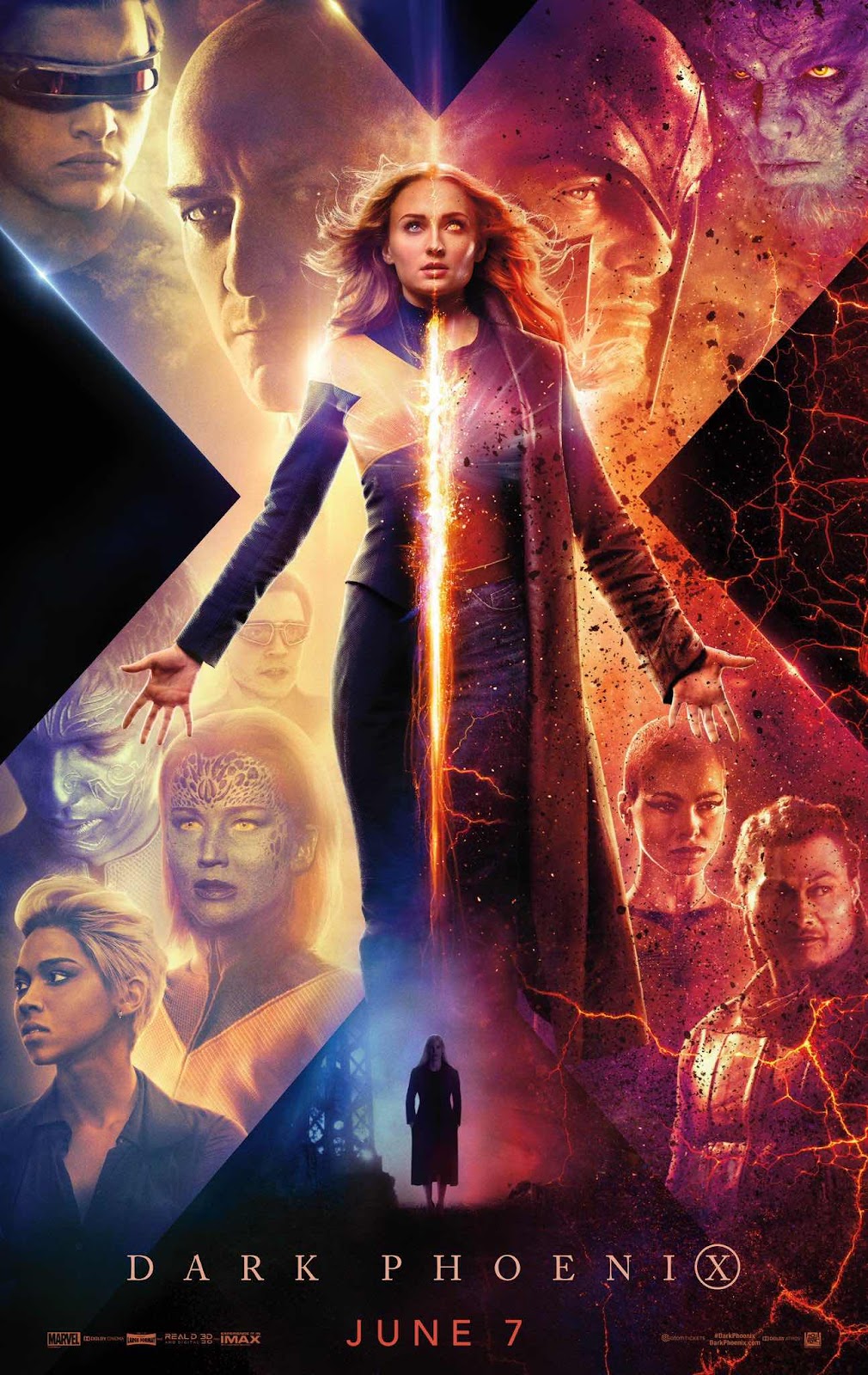
Before “The Avengers”, before “The Justice League”, before “Spider-Man”, the foundation for the modern era model for comic book movie franchises was started with a 2000 film called “X-Men”. Nineteen years later and the X-Men have gone from wrapping up one storyline to rebooting the entire series of characters altogether, the twelfth installment of the long-standing franchise concludes once again with the film “Dark Phoenix”.


Director Simon Kinberg, who has produced a wealth of action and comic book films, helms his first feature with “Dark Phoenix”. Unfortunately the results aren’t terrific but there are moments of potential with certain characters and with some of the moments of spectacle. For a franchise that has seen its progression roller coaster from fantastic heights to disappointing depths, “Dark Phoenix”, though not the worst in series, deserved a better sendoff for its characters and storyline. 


Professor Xavier’s (James McAvoy) School for Gifted Youngsters has grown into a veritable superhero training academy and, for some, a safe place for young mutants to educate themselves and hone their powers for inclusion into the “normal” world. Jean Grey (Sophie Turner), Professor X’s prized pupil, continues to develop at staggering pace along with the rest of the young team which features Ororo “Storm” Munroe (Alexandra Shipp), Scott “Cyclops” Summers (Tye Sheridan), and the team leaders Raven “Mystique” (Jennifer Lawrence) and Hank “Beast” McCoy (Nicholas Hoult). During a mission into space the X-Men team encounter a powerful force that embeds itself into Jean Grey, turning her into an unstoppable force consumed by anger and rage. 


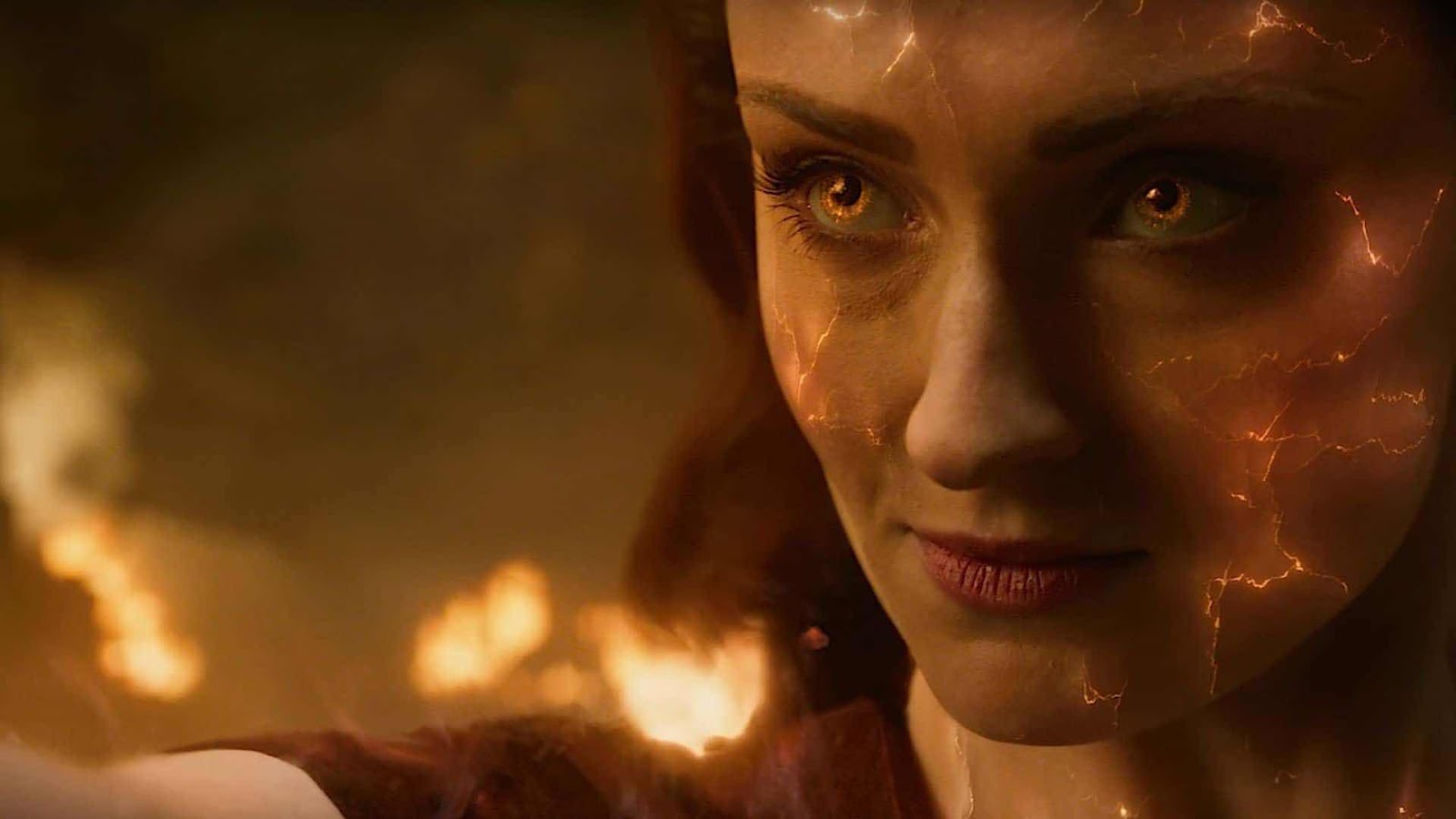
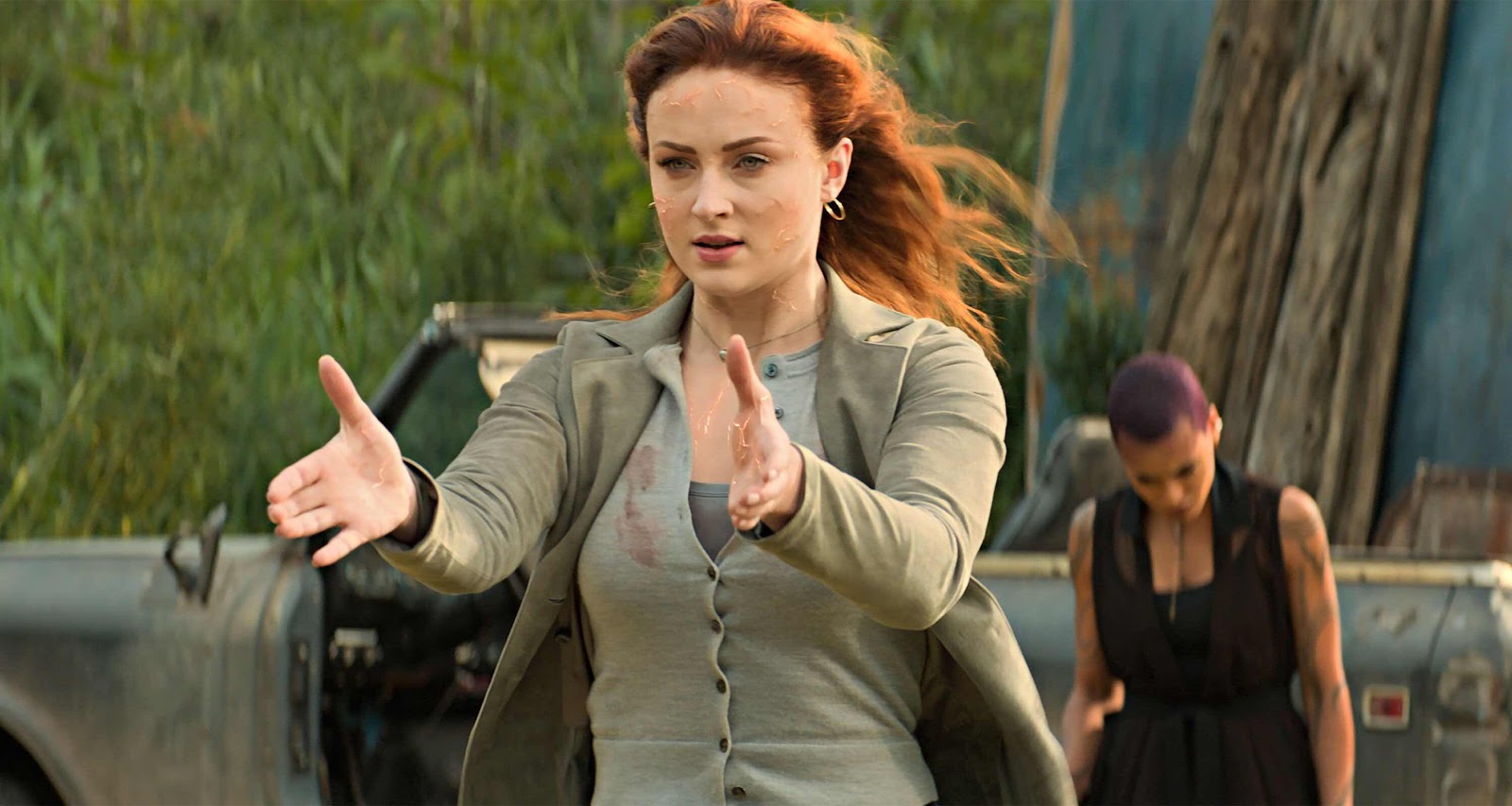
The character of Jean Grey is a fascinating and intriguing villain, a force of dominance amongst the X-Men world but also a character with a rich backstory who is directly connected to all the core characters in this world. There are narrative themes associated with trauma that shape the story early in “Dark Phoenix”; Jean has a past steeped in pain and sorrow, her newly achieved power opens up these memories that Professor Xavier has been trying to hide, unknowingly adding to the traumatic elements that Jean has already experienced in her life.  The story does a nice job initially of displaying the turmoil Jean has been through but also proposing that Professor Xavier’s best intentions for the mutant world may be more self-serving than helpful. It’s a nice element introduced for these characters.


Unfortunately, these interesting insights and intriguing narrative themes dissipate as Jean grows into a force that is being hunted by the X-Men, the Government, and an old foe named Magneto (Michael Fassbender). The film quickly introduces another villain, a rogue group of alien beings led by a determined and stoic Jessica Chastain, and all the work to establish “Dark Phoenix” like a Jean Grey focused film disappears into the same familiar formula we’ve seen before in the X-Men Universe before. While this narrative formula isn’t necessarily bad, there are some nicely composed battles and some interesting references for fans, after twelve films it just feels overly familiar. 


Sophie Turner, unfortunately, isn’t provided the proper character to develop here, any nuance of emotion is replaced with big bursts of raw anger and sadness that never feels necessary or provides the scenes with the kind of power they are shooting for. Ms. Turner is a talented actress capable of so much more. Even Jennifer Lawrence and James McAvoy aren’t provided the character structure to build upon. Michael Fassbender’s Magneto character doesn’t change much throughout these films, so the actor does a decent job of being brooding and filled with rage, hellbent for revenge. 


“Dark Phoenix” has a few moments when the action takes over, director Simon Kinberg seems most comfortable during these big scenes, nicely composing effects with crisp clarity and utilizing the best abilities from the characters to showcase some great fight moments. It’s a shame that more attention wasn’t provided towards the story or characters interacting throughout. The film is trying hard to rise above the other films in this franchise, though it’s far from terrible, “Dark Phoenix” gets lost along the way.


Monte’s Rating

2.75 out of 5.00


Friday, February 16

Black Panther Review


Black Panther

Dir: Ryan Coogler

Starring: Chadwick Boseman, Michael B. Jordan, Lupita Nyong’o, Danai Gurira, Martin Freeman, Daniel Kaluuya, Letitia Wright, Sterling K. Brown, Angela Bassett, Forest Whitaker, and Andy Serkis


There are more than a few moments in director Ryan Coogler’s superhero feature “Black Panther” when the real trials and injustices of the past converge with the fictional lives of the characters living in this superhero universe, it displays a world unlike any world portrayed in the Marvel Cinematic Universe. It’s refreshing, unexpected, and altogether necessary considering the divided world we live in today. “Black Panther” imbeds culture and tradition into every single frame of the film, displaying a Black world filled with rich environments, conflicted characters, and complicated scenarios all surrounding and socially aware of race, gender, social class, and history. 


T’Challa (Chadwick Boseman), the new King of Wakanda, returns home to the technologically advanced hidden African nation to oversee rule. However, T’Challa quickly realizes that rule in his country comes with obstacles, many from factions within Wakanda. The country has a material called vibranium that allows them to develop technology that far exceeds anyone else in the world. This brings two enemies into the conflict, both wanting to utilize Wakanda’s resource for their own deadly plans.


Mr. Coogler, who brought back the Rocky Balboa saga with the standout “Creed”, composes a Marvel film that has all the familiar  and cliché sequences one would expect in a comic book movie; fast cars, explosions, flying costumed characters with super capabilities are all on clear display. However, it also does something wholly different from most recent Marvel films; it explores the mythology of a culture that thrives with tradition and emphasizes it’s uniqueness in the modern world; the wardrobe, the ceremonies, the design of Wakanda all have strong visions influenced by African and African American imagery. It’s beautiful every time it’s on display.


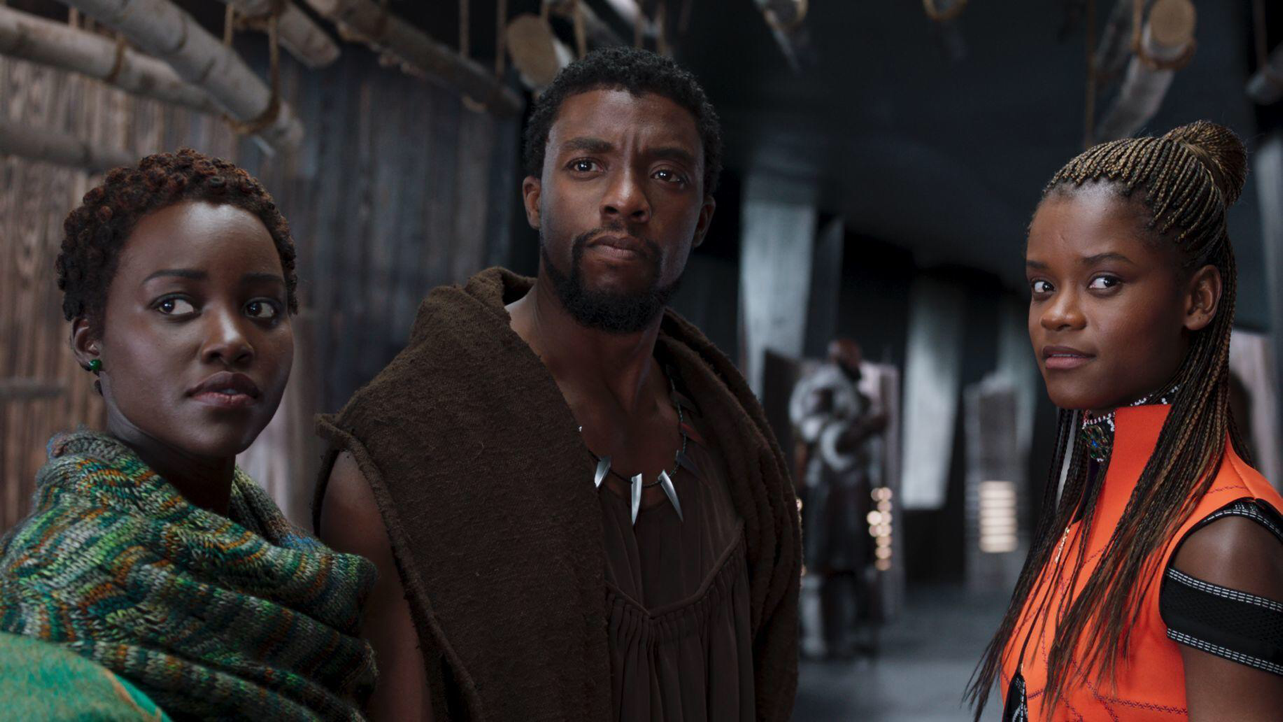
The film understands the power of gender, utilizing female characters that not only support the male hero at the forefront but form the foundation for everything that T’Challa stands for. By his side, saving his life a few times throughout the film, is General Okoye (Danai Gurira) who is a strong, tough-as-nails woman that is the definition of fearless. Ms. Gurira has an exceptional presence in the film. Making the gadgets is T’Challa’s sister Shuri (Letitia Wright), a smart young woman who knows exactly how to put her older brother in check. Ms. Wright is simply fantastic, a star turning role for the actress. Nakia (Lupita Nyong’o) is a spy who challenges T’Challa in understanding the role he has as King of Wakanda. To call her the “love interest” is a disservice to the role that she really encompasses. Nakia, played with passion by Ms. Nyong’o, is the connection to the real world, to the world that still struggles, to the people that still fight for the most basic human rights. 


Mr. Coogler separates his film from the Marvel Universe in another way by composing a villain that actually feels threatening, one that feels more than just another bad guy looking to destroy the world. Erik Killmonger is operating with a purpose, one that is directly connected to the past that helped in building Wakanda and completely influenced by the future that T’Challa is trying to protect. It’s great character development for Killmonger because it comes with realistic complexities such as the mistreatment of African American’s throughout history and the hope for a future where oppression will finally be challenged. This is the best composed Marvel film villain in some time.  Michael B. Jordan exudes confidence and has an intensity that shines when his character comes face to face with the Black Panther. Assisting Mr. Jordan’s character is another steady performance from Andy Serkis who is having all kinds of fun chewing the scenery as Ulysses Klaue. 


Race is of great significance in this film. It’s the pivotal narrative element that separates “Black Panther” from the other Marvel films because it is handled in such a multifaceted manner. We are provided a film that understands the affect of the past, how history has treated a people in unfair and unjust ways, and how the abuse of power has threatened an entire cultural way of life. That alone makes any film thrive with a quality that resonates far beyond the barriers of any genre, the fact that a superhero film embodies this element on a mainstream platform is a wonderful, and important, achievement. 


Monte’s Rating

4.25 out of 5.00