Showing posts with label Jennifer Lawrence. Show all posts

Friday, March 16

Red Sparrow Review


Red Sparrow

Dir: Francis Lawrence

Starring: Jennifer Lawrence, Joel Edgerton, Matthias Schoenaerts, Charlotte Rampling, Mary-Louise Parker, Ciaran Hinds, and Jeremy Irons


At this point in the career of Jennifer Lawrence it’s pretty easy to imagine her playing almost any kind of character no matter how preposterous it might look like on paper. Body morphing blue mutant, home shopping network tycoon, talented archer in a dangerous game; it all seems possible for the Oscar winning actress. In “Red Sparrow” Ms. Lawrence plays a Russian professional ballerina turned deadly spy, the actress’s performance keeps this meandering and familiar spy film afloat.


Dominika Egorova is a talented ballerina in Moscow; she is at the peak of her career when an catastrophic accident leaves her unable to dance ever again. With no way to care for her ailing mother (Joely Richardson) she is forced to take an unsavory job offer from her uncle Vanya (Matthias Schoenaerts) who is a high-up official in the foreign intelligence agency for Russia. The job is to seduce a target by any means necessary, things go terrible wrong and Dominika is forced to join a secret agency of young, attractive spies known as Sparrows.
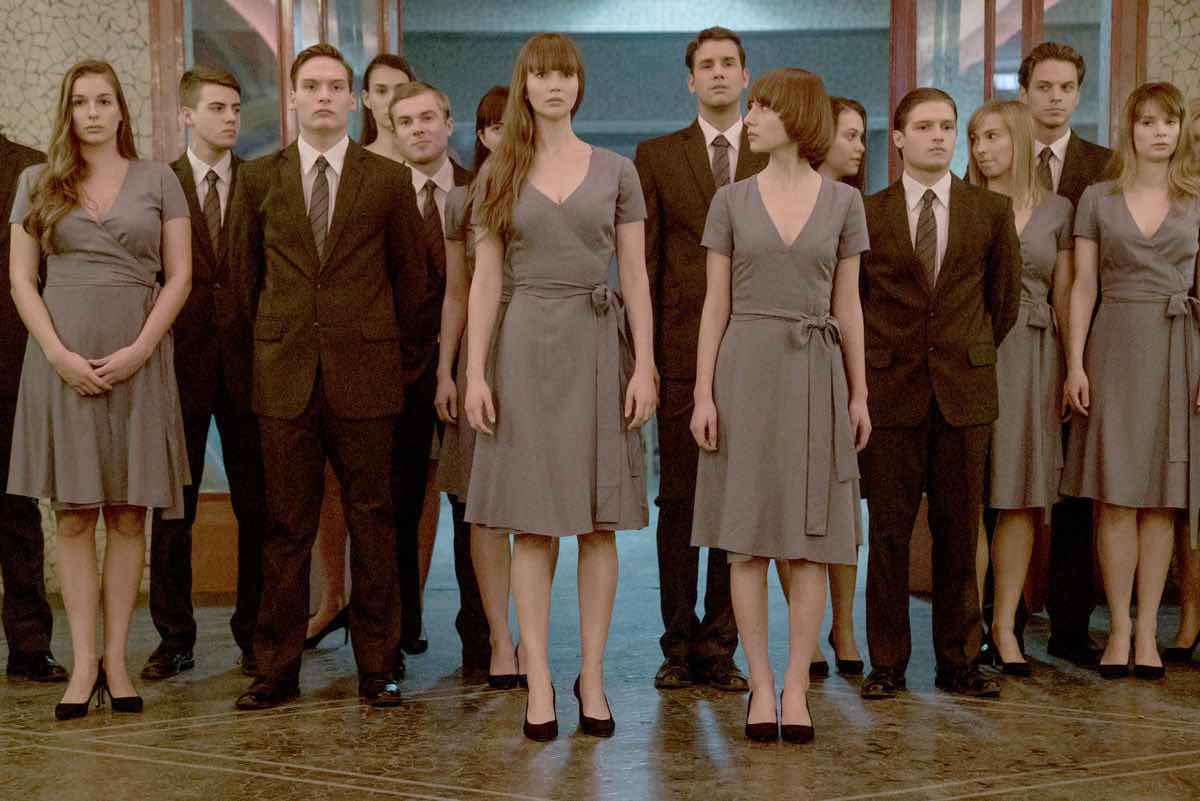


Director Francis Lawrence, who has worked with Jennifer Lawrence (no relation) in all the “Hunger Games” films, paces the film in the beginning with the twists and turns one would expect from a spy film, it’s unfortunate that this doesn’t maintain throughout the film as the narrative elements settle into the mundane. Still, the director does some interesting things when it comes to the character of Dominika who undergoes the change from ballerina to spy in a viscous way. The push for control and manipulation means that the Sparrows are constantly forced into uncomfortable sexual situations and torturous head games for training purposes. The weapon for the Sparrows is much more than simple guns and knives, instead they are trained to manipulate and exploit the desires of their targets to accomplish their mission. 


Jennifer Lawrence shines in the lead role, playing the character with a thick accent and providing all the confidence to make Dominika come to life. Ms. Lawrence moves easily throughout some of the rough terrain in this film, dancing elegantly one moment then brutally beaten the next, it’s her performance that makes these moments feel convincing. Also making some of the paper thin Russian characters make an impact are veteran actors Jeremy Irons and Charlotte Rampling, making throw away characters have more purpose than they should. Joel Edgerton plays an American operative who has his cover blown but cleverly stays in the mix by having connections with a secret Russian operative. Mr. Edgerton’s character is somewhat misused throughout the film, mostly left to provide a clue or pathway for Dominika to follow.


“Red Sparrow” doesn’t feel like James Bond, instead it feels more akin to the Jason Bourne films or the “Atomic Blonde” film from last year. Jennifer Lawrence is the highlight here, playing a character that operates for self survival amidst numerous opportunities to bend to the will of the powerful, the moments to let men have control over her life, or the numerous times to follow the gender roles established within this specific environment. It’s unfortunate that “Red Sparrow” doesn’t do more to compliment this intriguing character. 


Monte’s Rating

2.75 out of 5.00

Friday, September 15

mother! Review

mother!
Dir: Darren Aronofsky
Starring: Jennifer Lawrence, Javier Bardem, Ed Harris, Michelle Pfieffer, Brian Gleeson, Domhnall Gleeson, Stephen McHattie, and Kristen Wiig

In the middle of an undisclosed forest, a house exists. It’s an odd looking mansion of sorts that, once entered, is filled with pathways leading throughout the labyrinthine structure. A woman and a man live in this house; the woman is tasked with shaping and molding the house into a home, while the man searches for inspiration for his new book wherever and with whomever he can. You can feel that this story is building towards something uneasy, something difficult; a place that will challenge the characters’ understanding as they try so desperately to control their crumbling, destructive situation.


Director Darren Aronofsky, the auteur behind films like “Requiem for a Dream” and “Black Swan”, composes a story that functions as a metaphor, a parable, and a satire. It’s an allegory that is a bold artistic expression with equally frustrating and fascinating strokes. Mr. Aronofsky’s film is also deeply personal, for the director and the viewer, echoing sentiments from places religious, political, and ecological.


Without ever stating specific names, the film opens with the awakening of a woman identified as Mother (Jennifer Lawrence) looking for a man identified as Him (Javier Bardem) throughout a sprawling house in the middle of rejuvenation. The couple seems distracted and lonely, lost in the seclusion they have manufactured for themselves. Interruption invades their seemingly idyllic existence in the form of two guests (Ed Harris and Michelle Pfeiffer), from this point the paradise that they have created becomes torn apart. 


From the beginning moments of “mother!” you can feel the influences taking hold and pushing your attention in different ways. Mr. Aronofsky doesn’t aim for subtle movements, the narrative design may operate on a few different planes of explanation but the connections to the ideologies the director is trying to express are felt throughout. What you may connect with may not be the same as someone else who watches this film but that’s not the point. This is a film that aims to conjure an emotion, in some moments you may feel aggravated or confused while in other places you may feel surprisingly optimistic. To a point, these feelings may depend largely on your outlook within the world or your relationship with the themes examined. Saying this film is about religious fascination, political and social divisions, or environmental destruction may be too easy an explanation.


The director connects again with his longtime visual collaborator, director of photography Matthew Libatique, who composes the film within swathes of light that illuminate natural shadows composed by the house. The camera follows Mother while she moves throughout the house, we see her frustration and visualize her changing emotions, you can feel her seclusion and isolation through the tight framing of the camera. The photography also takes a cue from Stanley Kubrick, playing with space and time within the house similarly to how it was composed in “The Shining".


Jennifer Lawrence is provided the difficult task of playing Mother, a multifaceted character that plays passive throughout the melodramatic first half of the movie and dynamic in the frenzied latter portion. Because her character is written to embody far greater meaning than the simple aspect of a woman living in a problematical relationship, the changeover in the finale for the character is equally as complicated. The portrayal is brimming with passion and extravagance while in other ways it is missing an emotional component that makes the character feel empty and somewhat inhuman. It's all by design and Jennifer Lawrence does her best to convey everything that's being introduced.


Film, like any other form of art, is subjective. Your ultimate interpretation is part of the process of connecting with an artistic expression, regardless of whether it’s negative or positive. “mother!” will be divisive but it will also be thought provoking. Some may see the demonstrations of violence and the more sensational aspects of the script too intense while others, myself included, will find the comic audacity in the embellishment of the ideas the director is trying to transmit. “mother!” in many instances is what filmmaking should be, a vessel for the expression of ideas.


Monte’s Rating

4.50 out of 5.00

Wednesday, December 23

Joy Review

Joy
Director: David O. Russell
Starring: Jennifer Lawrence, Robert De Niro, Bradley Cooper, Édgar Ramírez, Virginia Madsen, Isabella Rossellini, and Diane Ladd

You know that self-wringing mop you have or have always wanted to use? It’s called the “Miracle Mop” and entrepreneur Joy Mangano invented it. Ms. Mangano, a college graduate with a degree in business administration, was a divorced mother of three working a variety of different jobs and selling her cleaning invention out of her father’s body shop. After a few years of selling in her local community Ms. Mangano’s luck changed after she pitched her invention to television shopping network QVC. Director David O. Russell, “American Hustle” and “Silver Linings Playbook”, takes on this rags-to-riches story with the help of a fantastic performance from Jennifer Lawrence. While “Joy” may not always display the quality its title describes and becomes rather formulaic very quickly, Mr. Russell puts enough trust in his assemble cast to bring a rather lackluster script to life.

Joy (Jennifer Lawrence) is a struggling divorced mother, raising her children, taking care of her purposefully bedridden mother (Virginia Madsen), and offering a basement for her ex-husband (Édgar Ramírez) to live in while he works nights as lounge singer. Room becomes sparse when her father (Robert De Niro) is thrown out by his girlfriend and moves into the basement as well. Joy, pushed over and taken advantage of, unexpectedly finds inspiration to create an invention that could change her, and her families, entire life.

Underdog stories are a familiar narrative trope in films; everyone likes to see admirable characters rise up against the odds, dust themselves off, and charge for the finish line. “Joy” is exactly this though far more mean-spirited and hopeless. Joy is introduced in the film at a bad place in her life, basically losing her job and caring for a family that would rather step over her than help her. The only person rooting and encouraging her success is her grandmother Mimi, a welcome Diane Ladd who fits nicely into the role. Mimi is also the narrator for much of the film, providing insights during flashbacks into how the family has become so dysfunctional but also how Joy has survived her downtrodden journey so far. It’s a grim outlook even when success peeks into Joy’s life.

David O. Russell is very good at writing characters, especially the interactions that happen with other characters. Again, as Mr. Russell has proven with his past films, he succeeds in keeping these characters interesting. What doesn’t work very well is the design of the story; it’s the same overdone and familiar structure of every other rags-to-riches tale, but that isn’t necessarily the worst part. Mr. Russell never embeds any authenticity into Joy’s tragedies in her personal or professional life. Bad things happen and are quickly pushed aside, while this should in some way display the resiliency of Joy’s character it instead feels like a side note, an easy progression towards the looming success that is always within her grasp.

Still, Jennifer Lawrence is fantastic in the lead, her performance displays the highs and lows experienced in the character’s life. Ms. Lawrence has grown significantly as an actor, and it shows in her performance here. Robert De Niro seems at his best with Mr. Russell in the director’s chair, here Mr. De Niro is utilized nicely as a brash father who hasn’t always been the best example for his children. Take for instance a scene where Mr. De Niro gives a scathing and unfeeling speech to his daughter Joy just after she has experienced terrible failure. Bradley Cooper has a smaller role here, playing a QVC executive, but continues to show great chemistry with Ms. Lawrence.

“Joy” is about the dysfunction that exists in our world, whether with family, love, relationships, or, specifically to this film, commerce; it’s dysfunction that many must somehow function through. While “Joy” may stumble on getting this point across clearly, David O. Russell is a capable enough to allow his excellent cast opportunity to make something happen. 

Monte’s Rating

3.50 out of 5.00

Friday, November 20

The Hunger Games: Mockingjay - Part 2 Review

The Hunger Games: Mockingjay – Part 2
Dir: Francis Lawrence
Starring: Jennifer Lawrence, Josh Hutcherson, Liam Hemsworth, Woody Harrelson, Donald Sutherland, Philip Seymour Hoffman, Julianne Moore, Willow Shields, and Elizabeth Banks
136 Mintues
Lionsgate Films

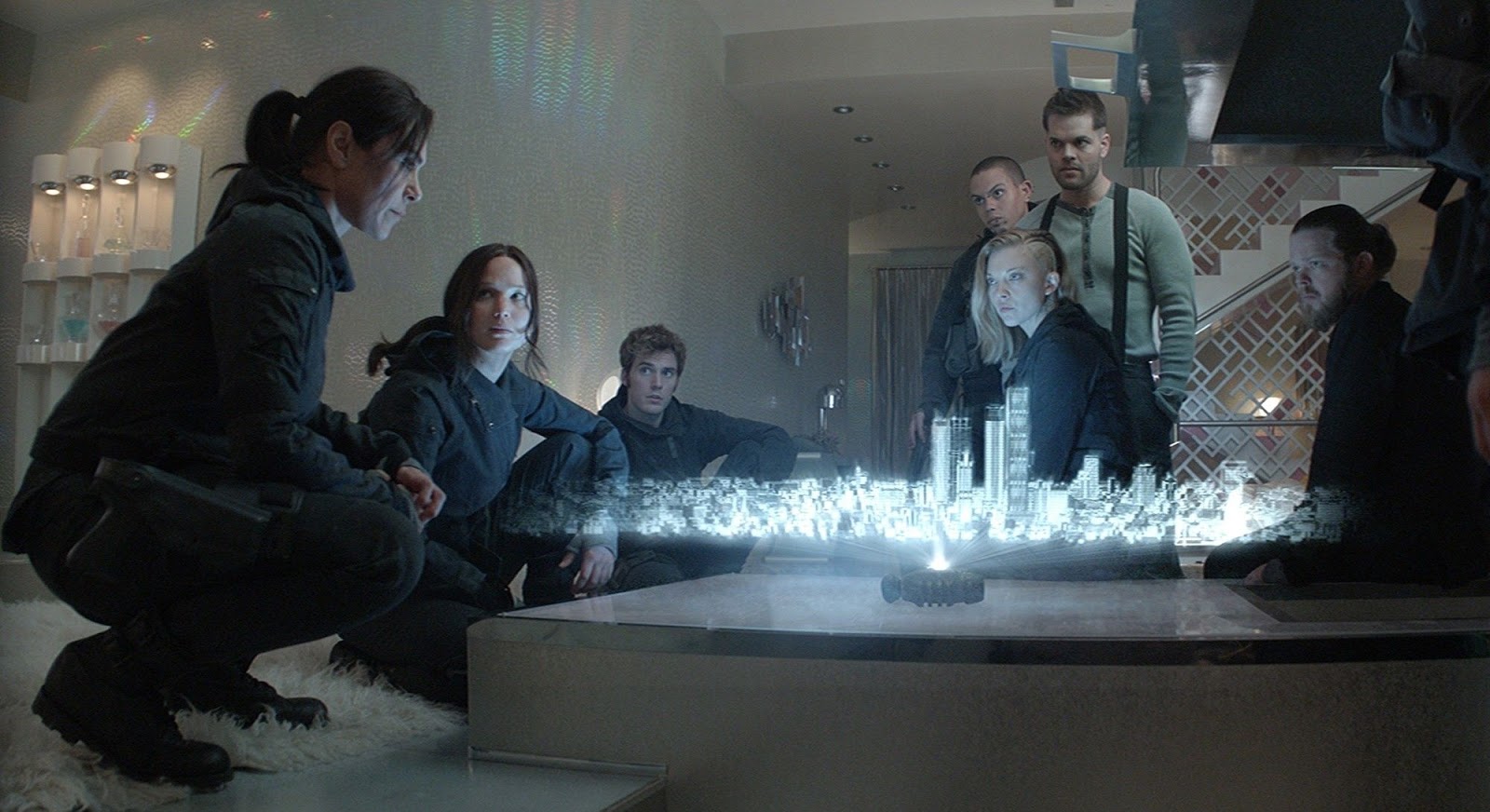
War has been depicted in many ways throughout film history but what all the best portrayals have in common are an emphasis on displaying the acts of war with unflinching focus on the frailty of human life and the courage of those willing to fight for what they believe in. “The Hunger Games” films have grown over time, starting off with an introductory film that was barely good enough to warrant a return to the sequel “Catching Fire”, which started to find focus on how to handle the deeper narrative implications being presented. The fact that the final film “Mockingjay” did the common franchise finale ploy of splitting the film into two parts was annoying, offering a somewhat needless “Mockingjay Part 1” that felt at times like an overlong setup but did a great job of building the tension of a population of people on the verge of an uprising. “Mockingjay Part 2” displays the power of a good ending, pulling together all of the best narrative themes of the franchise to display the dark nature of war and how it effects everything that endures it.

The film begins right off with rebellion figurehead Katniss Everdeen (Jennifer Lawrence) being treated by medical officials after surviving an attack by brainwashed Hunger Games champion Peeta Mellark (Josh Hutcherson). Katniss is conflicted, torn between taking vengeance and promoting peace while also being manipulated by politicians who are playing their own self-satisfying angles. Katniss chooses to take action, journeying on a deadly mission to assassinate President Snow (Donald Sutherland) and bring peace to the districts once and for all.

While the dystopian future war portrayed in the first three films may often undercut itself with plot developments, in “Mockingjay Part 2” war is front and center, quick and deadly, heartless and devastating. There is no time for goodbyes, no prolonged slow motion eye gazing; it’s a flash of an explosion and the silence of life amidst carnage. It’s strange to compliment this technique but this structural method has a devastating poignancy for the world being portrayed but also accomplishes a feeling of uncertainty for the familiar characters that have been otherwise safe so far. No one is safe in war, and that is reflected here.

The narrative suggests a world in turmoil with rebel forces from allying districts moving into attack position at the Capitol. However not much of this is seen because the attention seldom leaves Katniss and her mission, this unfortunately overlooks some potentially influencing narrative devices established in "Part 1" of this film. Still, the story is well conceived in its narrowed focus, one that takes a far more adult turn than one might assume from a young adult novel. Katniss is a soldier torn between doing what is right and what is necessary, a decision that is often marred by manipulative forces that are motivated by the kind of senseless and reckless self-serving mentality that has replayed itself throughout history. At one point in the film an idea is proposed by a political figure that is jaw-droppingly ludicrous yet a truthful and all-to-common sentiment that reflects how history often repeats itself in the most dangerous ways. 

Jennifer Lawrence has grown comfortable in the leading role, portraying Katniss with exceptional moments of confidence and uncertainty. The two leading men vying for Katniss’ heart are Liam Hemsworth as loyal friend and soldier Gale and Josh Hutcherson as the tortured and lethally influenced Peeta. Both actors offer their best performances here, Hutcherson especially contributing a portrayal that can simply be described as conflicted. But in the end it’s Jennifer Lawrence who holds the entire film, and franchise, together.

“The Hunger Games: Mockingjay - Part 2” is an exciting, and surprisingly thought-provoking, sprint to the finish line. A film that displays a dystopian world that still reflects many of the social anxieties and unreasoned prejudices that affect our world currently. While some of the interesting themes get lost along the journey, “The Hunger Games” series, especially in the finale, will be fondly remembered for crafting one of cinemas most empowered, confident, and complicated female heroes. In the current state of female portrayals, this aspect may be as powerful an accomplishment as winning The Hunger Games itself.

Monte’s Rating

4.00 out of 5.00

Monday, November 24

The Hunger Games: Mockingjay Part 1

The Hunger Games: Mockingjay Part 1
Dir: Francis Lawrence
Starring: Jennifer Lawrence, Josh Hutcherson, Liam Hemsworth, Woody Harrelson, Donald Sutherland, Phillip Seymour Hoffman, Julianne Moore, Elizabeth Banks, Willow Shields, Sam Claflin, Stanley Tucci, Jeffrey Wright, and Paula Malcolmson
PG-13
123 Minutes

In chess you are always thinking about the next move, good chess players think even farther ahead. “Mockingjay”, the third book in the enormously popular young adult series by Suzanne Collins, splits the book into two films, leaving an introduction poised for action but mostly mapping out the strategy of the far-reaching revolution, one that hinges on the participation of the symbolic Katniss Everdeen. Director Francis Lawrence, returning for the remainder of the films, paints a ravaged and abused land but also an interesting pseudo political influenced propaganda technique for harboring support. For a film that doesn’t boast the action of the first two films, it’s still quite comparatively thought provoking and continually remains engaging, even though the audience will have to wait a little while longer for the full story to complete.

Katniss Everdeen (Jennifer Lawrence) is scarred by her narrow rescue from her second Hunger Games. Saved by a group looking to rise up against the Capitol, Katniss is beside herself because of the capture of Peeta (Josh Hutcherson), who is now the leading propaganda spokesperson for the Capitol. Katniss, not wanting any part of the upcoming rebellion, is coaxed into joining in order to help save Peeta and the other Tributes. Held up in an underground compound in District 13, the group is lead by President Coin (Julianne Moore) and assisted by trusted allies from the Games. Their goal is to start a revolution by combining the forces of the other Districts in order to overthrow President Snow (Donald Sutherland) and the Capital. However, this can’t happen without Katniss who is the weapon for the revolution, the symbol that will unite the Districts.

Director Francis Lawrence effortlessly transitions into “Mockingjay”, starting the film moments after Katniss’ rescue and continues to move with an easy appeal. Where the two first films felt like complete events, especially the satisfactory “Catching Fire”, this first part feels like a prolonged introduction at times. Albeit in moments an ingeniously self-reflecting introduction that seems to resemble the methods of propaganda utilized in today’s media driven machine. Technology has played a key role in how we receive our news. Whether the images of revolt, the heinous acts of terror, or the far too seldom musings of inspiration, the world is inundated with digital influence twenty-four hours a day. The same is true here; Katniss’ fame started with an act of honor but soon became a symbol of defiance. Technology assists both the Capitol and the District, whether it’s the interviews with Peeta from the pristine Capitol pleading for obedience or the hand-held militant perspective of Katniss in a fashioned suit amidst a war torn backdrop, these are elements reflective of our society.  Lawrence utilizes these subtle relationships throughout, bringing out some rather unexpected emotional aspects and creating an even darker atmosphere.

Jennifer Lawrence is again comfortable in the role but some other fine actors assist her. Julianne Moore is a nice addition as President Coin, a somewhat emotionless and monotone woman who doesn’t see the qualities everyone else witnessed in Katniss. Woody Harrelson and Jeffrey Wright are also good but one of the standouts is Elizabeth Banks as the formerly elegant Effie Trinket who is now devoid of the flamboyance of her Capitol persona. Banks, who was the liaison for the Tributes, always seemed uncaring in her position though her character seems to understand Katniss more than anyone else. Also good is Josh Hutcherson who is given more to portray emotionally this time around.

“Hunger Games: Mockingjay Part 1” may feel like an unneeded split at times, however it utilizes the slowed pacing to incorporate some interesting setups and craft a bleak tone that is more reflective of the emotional state of an uprising.  The performances are again accomplished, though a few of the better actors seem underwhelmed by some stilted dialogue. “Mockingjay” is preparing the audience for the beginning of the end, an event any fan of the films or books should be excited to see come next year. In the meantime, let this film get you readily anticipated.

Monte’s Rating

3.50 out of 5.00