Showing posts with label mental health. Show all posts

Friday, April 15

Emery's 2022 PFF & IHSFF Festival Recap – April 9th

 Coda’s ongoing coverage of the 2022 Phoenix Film Festival & International Horror Sci-Fi Film Festival. I'll be using these posts to recap the films I've experienced as part of these festivals.


By Emery Snyder - @leeroy711


18 ½ - Directed by Dan Mirvish


The year is 1974. Connie (Scream & Reacher’s Willa Fitzgerald) is a White House transcriber working for the Office of Management & Budget when she stumbles upon the only known recording of the missing 18 ½ minute gap of the Nixon Tapes. Afraid and conflicted, she enlists the help of Paul (FIRST COW’s John Magaro), a New York Times reporter.

I was surprised at how good this film was, as it was barely on my radar at all. And I’m quite glad I made it to the screening. The sound design, cinematography and costumes are so postmodern of the 1970’s New Hollywood movement that the film almost comes off as meta. With long scenes of intelligently written and well executed dialogue that remind me of the works of Buck Henry combined with the technical sight and sound reminiscent of Francis Ford Coppola’s THE CONVERSATION (and similar subject matter), this film was going for something very specific. And I think it nailed it.

Fitzgerald and Magaro are both fantastic here. Their chemistry exudes a very specific charm. But the film also boasts a great supporting cast. I always love it when Richard Kind shows up, but Richard Kind with an eyepatch is even better. And Vondie Curtis-Hall is one of those insanely reliable ‘I’ve seen him in tons of stuff but can’t quite name anything’ actors that has the ability to steal any scene at any given time. This flick even has an all-star cast of voice talents recreating the infamous recordings. Bruce Campbell, Ted Raimi and Jon Cryer all provide the film’s background soundtrack, so to speak.

Ultimately, this film is having a lot of fun with a subject matter that has turned out to be far more prescient in recent times. With the new reporting of the 7-hour gap in Trump’s cell records and “burner phones” being used during last year’s insurrection, I wonder what a movie with this type of energy will be like looking back at the end of our nation’s 45th Presidency. How long before we’re able to look back at today’s threats against democracy and rule of law with a whimsical quirk?... This is not a rhetorical question… I seriously need to mark it in my calendar and begin counting the days…

In summary, this a very clever and accomplished film that has a lot of fun with its material. I can see myself revisiting it in years to come.


HYPOCHONDRIAC – Directed by Addison Heimann


A young gay man’s life unravels as he begins losing control of his mind and body, all while the ghosts of his childhood trauma come back to haunt him.

Due to my own carelessness, this was the film that I ended up with when I lost my ticket to the much anticipated, MASSIVE TALENT screening… Honestly, I’m kind of glad. I was going to skip this film altogether. And I ended up completely loving it. And as it turned out to be my final screening of the festival, it was a great note to end on.

This was such an unsettling depiction of mental health issues. The director (present for the screening) stood up and told us before it started that it was based on his real mental breakdown. Then, as I recall, this was re-stated in one of the film’s opening title cards. What was to follow on the screen made these statements completely unnecessary. This film wears its heart on its sleeve so blatantly that it’s painfully obvious how deeply personal this story is to the storyteller. And this, is one of the most special and refreshing things that I can find in this medium that I love.

The characters here were well crafted and organic to the story’s setting. Our main, Will was portrayed phenomenally by Zach Villa. It’s his mental condition that is the film’s focal point and a large part of its success rests on his performance’s ability to switch in between hyper-expressive and subdued into concern as he internalizes his fears. The rest of the cast works well to either trigger or react to Will’s ever-changing condition while remaining careful not to steal the show. No, we the audience are here for Will. His headspace, and every beautiful and horrifying thing going on in it is ours to experience with him as this film crescendos into a kind of Cronenbergian mental body horror climax.

If this all sounds a bit too intense for you, I don’t blame you. But I also have to mention just how funny this film can be throughout. It’s actually hard to describe the overall tone of this film. It’s serious about a serious subject that you’re definitely supposed to be taking seriously. But it also has no problem taking breaks from time to time to snicker at itself or to just be goofy. I think this is a big part of why I felt it was so obviously personal to the filmmaker. Like an actual human, this film has tons of personality. And that personality is never afraid to splatter itself all over every inch of the frame.


Follow us on Twitter @CodaReviews

Wednesday, October 13

Confessions with Theresa

Freedom

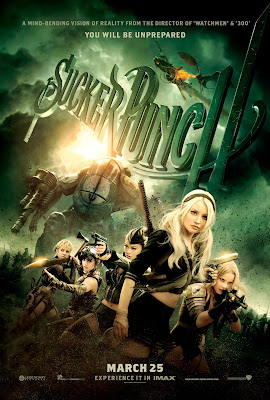
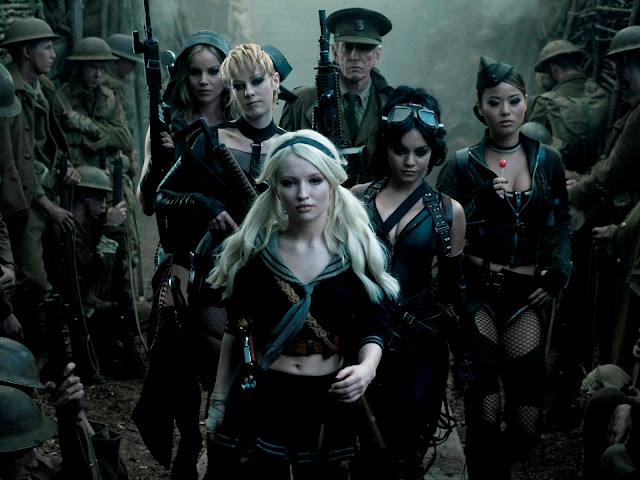
I watched SUCKER PUNCH tonight. Well, technically, it was a double feature of THE MATRIX REVOLUTIONS and then SUCKER PUNCH. Surprisingly, Lana and Lilly Wachowski’s sequel to the pop culture sensation THE MATRIX and Zack Snyder’s divisive commentary on femininity and action-fantasy compose an interesting double feature.   

Most of the female film fans I know do not love SUCKER PUNCH. With good reason. If there ever was a film to glorify sexualization of women, SUCKER PUNCH is up there. Yet, I have a soft spot for it thanks to the music, the fantastical scenes and the women who come together to help one another even if - SPOILER ALERT – they don’t all make it out alive.

To me, SUCKER PUNCH is about women’s freedom and the freedom to be open around mental illness.

Here’s my true confession and it’s not that I love SUCKER PUNCH. 

I come from a line of women who lived with mental illness. My grandma, Nana, was a sweet, Southern woman. She hugged everyone no matter who you were and it wasn’t just a quick, warm hug. It was a long, tight bear hug. She loved her husband, kids and grandkids more than anything in the world.

Yet she underwent electroshock therapy for depression.

I didn’t even know this fact until my freshman year of college. It was a few months after we lost my grandpa that I found out.

I remember going over on an early December day to help decorate for Christmas and Nana’s hair wasn't done. Her hair was always done by the same hairstylist every week. And it just sat there; flat and messy. And so did she in her recliner next to Bopper’s. 

I didn’t know how to respond. So, I kept decorating. And I told Nana everything was going to be okay. It was Christmas, after all. 

That was the only year I helped with decorating after Bopper’s passing. Not long after, I found out Nana had a history of severe depression, severe enough that she underwent electroshock therapy. I didn’t know how to take that news. I still don’t.

At 18, I was diagnosed with acute depression/anxiety disorder and have been on meds ever since. I never knew my family history. It was just assumed around female/teen issues. I filled out a multi-choice questionnaire to determine the diagnosis that put me on anti-anxiety pills. I still take them to this day. 

The day I was diagnosed, I felt frustrated, unheard, scared, vulnerable, disappointed at being brushed off and very, VERY, small.

Was the diagnosis/process wrong? Yes and no. There are days I’m grateful to be on my pills and to be engaged with my wellness app, Calm, to help me get through stressful times. But I think we’re still too quick to diagnose, especially with women. 

As a society, we push women to think, act and feel in very specific ways. 

In its own way, SUCKER PUNCH shows how easy it is for men to control the narrative of a woman’s story if they act up, don’t fit into society’s norms, and want to be free to live their life.

SPOILERS AHEAD

Babydoll is framed for killing her younger sister, who was actually murdered by their abusive stepfather in an effort to collect the inheritance their mother had left to the two girls. She is then deemed as mentally unstable by her stepfather and institutionalized. 

When he drops her off, he bribes asylum orderly Blue Jones to forge the signature of the asylum’s psychiatrist, Vera Gorski, to have Babydoll lobotomized so she cannot inform authorities of the truth. 


In parallel, a comprehensive survey of U.S. psychiatric facilities between 1949 and 1951 found that most patients lobotomized by doctors were women.1 This was during a time when women were expected to be calm, cooperative and attentive to domestic affairs. The surgery claimed to render female patients docile and compliant.

Dr. Walter Freeman (the doctor who popularized the psychosurgery) and surgeon James Watts did a case study of six patients with psychiatric symptoms. They credited the surgery for alleviating patients’ symptoms: “insomnia, nervous tension, apprehension and anxiety.”

One patient was fearful of aging but after her lobotomy claimed she could now “grow old gracefully” and care for her home. As a side effect, she complained of a lack of spontaneity, but her husband praised the changes her surgery had wrought, declaring her “more normal than she had ever been.”2

By 1951, almost 20,000 lobotomies had been performed in the United States.3 Nearly 60% of lobotomy patients were women.4

Luckily, lobotomies are mostly rejected today as an inhumane form of treatment. 

But are we listening to women’s needs, educating them and allowing them to make the best decisions for their mental health and bodies?

Not even close in the U.S.

Are the women in SUCKER PUNCH sexualized? Yes. But the story between the margins of the action-packed, high-concept film is freedom. Freedom to do what we want as women; to be deemed functioning adults who can make a difference in society, even if our emotions can get the better of us. 

We want to fly, make mistakes, and be free from the chains that can hold us back. We want freedom, of our health, our rights, our emotions, we want our choices to mean something without judgement and control. We want to own the story of our lives as women. We don’t want it to be a fantasy anymore, we just want to exist how we are. 


Citations:

1. Kramer M. The 1951 survey of the use of psychosurgery. In: Mettler Fa, Overholser W, Proceedings of the Third Research Conference on Psychosurgery. Public Health Service Publication 221. Washington (DC): Government Printing Office; 1954:162. 

2. Freeman W, Watts JW. Prefrontal lobotomy in the treatment of mental disorders. South Med J 1937;30: 23–31.

3. Levinson, Hugh. "The strange and curious history of lobotomy." BBC News. BBC.

4. El-Hai, Jack. "Race and Gender in the Selection of Patients for Lobotomy." Wonders & Marvels. Retrieved 12 August 2017.