Showing posts with label review. Show all posts

Saturday, May 31

Bring Her Back Review


Bring Her Back 
Dir: Danny Philippou and Michael Philippou
Starring: Sally Hawkins, Billy Barratt, Sara Wong, Jonah Wren Phillips, and Sally-Anne Upton
1h 44m


Filmmakers Danny and Michael Philippou's much-anticipated follow-up to the 2023 genre hit "Talk to Me" is a chilling domestic horror thriller that, while less structured than their debut, is still an undeniably effective second feature for two impressive storytellers. "Bring Her Back" explores themes of unresolved trauma and grief through an unflinching lens of violence, featuring a stunning performance from Sally Hawkins as a menacing foster parent. With "Talk to Me," the two directors crafted an unpredictable supernatural story, expertly composed with scares. "Bring Her Back" showcases the filmmaker's growth through a character-driven drama that evokes dread in more ways than expected.


Andy (Billy Barratt) and Piper (Sara Wong) are siblings who experience the trauma of losing their father unexpectedly. Andy, struggling with nightmarish visions of his deceased father, desperately pleads with the social worker (Sally-Anne Upton) on their case to stay with Piper, who is blind, until he can take custody of her when he turns eighteen. The siblings find themselves in the care of Laura (Sally Hawkins), a former social worker who cares for her son Oliver (Jonah Wren Phillips) and is trying to build a happy foster home, all while trying to recover from the unresolved pain of the tragic drowning of her daughter. Laura's true demented motivations come to light, and Andy and Piper must escape before it's too late.  


The mystery surrounding Laura's intentions, along with the constant dread seeping into the atmosphere of the film, establishes a story that builds towards a terrifying reveal. Whether a creepy cult ritual stored on a grainy video cassette or the odd behaviors of Oliver, who remains locked away most of the day, "Bring Her Back" patterns the film with a little bit of every horror characterization one could count. Children in peril, an evil parent, strange rituals, a possessed child, and a squirm-worthy scene of violence are just a few of the building blocks for this film. There are a few moments where all these inspirations come together successfully, but more often, many of these scare tactics get in the way of the fascinating characters. 


Sally Hawkins is the anchor for the entire film, delivering a performance that draws a strong comparison to the character of Annie Wilkes, played by Kathy Bates in the 1990 film "Misery." Hawkins has a kind smile, and early in the movie, the motherly gentleness of her character is a welcome contrast to the spooky happenings. Billy Barratt and Sara Wong have great chemistry as brother and sister. Barratt, whose character is manipulated throughout the film by Laura, does a great job of shifting between being self-conscious, stemming from the trauma of finding his father dead, and becoming self-aware of everything happening to his sister. Wong is charming and the sole vessel of what little humor is instated into the relationships between the characters. As the film builds to its bleak and cruel climax, it's these characters and their relationships that make the final moments so effective. 


"Bring Her Back" struggles to connect all the ideas it introduces. However, the composition of characters and the performances of the actors build emotional drama that makes the visuals of violence and ominous atmosphere more effective than they might have been otherwise. It is undeniable that Danny and Michael Philippou are voices to acknowledge and filmmakers to watch in the world of horror filmmaking. 


Monte's Rating

3.50 out of 5.00


Wednesday, November 22

Exorcist: Believer Review


Exorcist: Believer

Dir: David Gordon Green

Starring: Leslie Odom Jr., Ellen Burstyn, Ann Dowd, Lidya Jewett, and Olivia O'Neill

2h 1m


"The Exorcist" continues dominating "top 10" discussions for horror movie fans every spooky season. And it should be in every conversation; the 1973 classic is a stunning and terrifying experience that delivers on many cinematic levels. Every sequel of the original, along with any film dealing with demonic possession or exorcism, emulates the William Friedkin film with varying degrees of success. 


"Exorcist: Believer," helmed by David Gordon Green, attempts to reexamine the religious themes and recreate the startling scares of the original film. Unfortunately, it seldom comes close to conjuring a meaningful scare. It suffers from a muddled storyline that would feel like just another run-of-the-mill exorcism film if not for its title and some nostalgia with a returning character. Aside from a few unique horror designs and some committed performances for two young actresses, "Exorcist: Believer" is disappointing. 


The film begins in Haiti with a young married couple whose vacation is interrupted by a natural disaster, an event that forces Victor Fielding (Leslie Odom Jr.) to choose between saving his severely injured wife or their unborn child. Victor reluctantly chooses his child's life. 13 years later, Victor and Angela (Lidya Jewett) live in Georgia. Angela yearns to know more about her deceased mother while Victor is doing his best to be the sole parent of his maturing daughter. After school, Angela and her friend Katherine (Olivia O'Neill) go missing in the nearby woods after trying to summon Angela's mom. A frantic search ensues, and after three days, Angela and Katherine appear in a nearby barn with no recollection of what happened to them. But the two young girls have returned home with something unholy inside them, an entity that wants their souls. 


"Exorcist: Believer" begins with an intriguing setup, one that immediately situates the lead character, Victor, in a tormenting circumstance of life and death for the woman he loves; it's a decision that will define every action moving forward for the character. Victor, portrayed by Leslie Odom Jr. as a protective father and science-focused skeptic, anchors the wildly uneven story. While initially promising, the film abandons much of the emotionally driven father/daughter character development for unsatisfying nostalgic callbacks to the original movie, even bringing back the elegant Ellen Burstyn for an uninspired character arc. David Gordon Green, who co-wrote the script with Peter Sattler, seldom achieves new directions that separate his film from other exorcism films of recent memory. Without the nostalgia to continuously remind the viewer, there would be no need to connect it to the original classic. 


One of the critical issues with this film is the narrative, which never quite decides if it wants to showcase a battle of good versus evil or would instead pursue the intense and frightening horror show components. This tone imbalance and lack of character development turn the film into a clip show of storytelling elements that never come together meaningfully or scary. 


A few scenes offer chilling and unsettling moments, specifically the two young girls' deteriorating physical and emotional states. There is also some startling imagery, seen through strobing light effects, that reveals a monstrous entity that continuously haunts the thoughts of the two possessed girls. Unfortunately, much of "Exorcist: Believer" feels lost within its need to honor the past and excel beyond the many imitators. 


Monte's Rating

2.00 out of 5.00

Saturday, July 29

Talk to Me Review


Talk to Me 

Dir: Danny Philippou and Michael Philippou

Starring: Sophie Wilde, Miranda Otto, Otis Dhanji, Alexandra Jensen, and Joe Bird


Remember when shaking hands with an evil spirit would've been a terrifying experience? In Danny and Michael Philippou's haunting and horrific scary movie "Talk to Me," teenagers in Australia don't flee in fright from the encounter but instead willingly invite demonic possession into their lives and film every second of the terror for social media. It's an ingenious narrative setup, one that doesn't seem so unrealistic in the world today, that allows the genre storytelling design to push its sinister sights far into the depths of fear, revealing through violent methods a story about grief and isolation that builds an unnerving sense of dread that slowly permeates the entire tale.  


The story begins at a house party where a young man barricades himself in the bedroom in an environment of loud music and conversation. When a concerned friend breaks the door down, pulling the troubled young man through a gathering of curious teens recording every second on their phones, the party ends with a startling act of violence. Danny and Michael Philippou do a great job of establishing the dark tone for the film from the beginning, establishing a sense of panic that leads to chaos, all while maintaining an uneasy tension throughout. 


Mia (Sophie Wilde), a lonely and grief-stricken young woman, is recovering from a traumatic event, spending most of her time in the home of her best friend Jade (Alexandra Jensen) and Jade's little brother Riley (Joe Bird). The close friends organize a party to play a macabre game featuring a sculpted contorted hand. As one partygoer describes it, the hand belonged to a medium, and their embalmed appendage resides inside the sculpture. Mia, eagerly volunteering, accepts the challenge to play the game. The rules are simple: shake the hand and recite the words "talk to me." Immediately after saying the phrase, Mia sees a frail woman sitting across the table. Mia utters the words, "I let you in," and her body becomes possessed by the spirit. 


Compelling horror films have a way of tapping into shared emotions, utilizing those universal sentiments to induce a specific kind of fear in each viewer. One of the most vital components of "Talk to Me" is its ability to connect themes surrounding grief, loneliness, and love and manipulate them as a vessel of fear to target those interconnected feelings. Mia's character is a culmination of all these feelings; the tragic loss of her mother makes her trauma an easy source of manipulation for the tortured souls brought forward by the handshake. 


"Talk to Me" builds an atmosphere of unrelenting dread. Initially, the tone is structured to offer a few moments of brief fun. However, once the friends organize the possession party, where they all take turns inviting the spirits into their bodies, the film reaches its threshold for good vibes and becomes consistent with scare tactics. These terror-inducing moments have strength because of the well-crafted characters, who are all likable and sympathetic on different levels. One of the best relationships in the film exists between Mia and Riley, who have a sibling-like relationship built on trust and compassion. When bad things happen to these two characters, the film's horror hits much harder. As Mia falls deeper into the spell of the possession she invited, her emotions begin to betray her good intentions, influencing her decisions in sinister ways.


Sophie Wilde is exceptional in the lead role, composing a nuanced character while being so affected by the different emotions entering her life. While in the trance of the possession, Wilde unleashes intense mannerisms, making the character feel like an entirely other person through the eyes. Playing young Riley, Joe Bird does superbly in a subtle emotional role that turns aggressively physical. The entire movie rests on the shoulders of these character constructions and performances. Without Sophie Wilde's ability to convey the highs and lows that the character is experiencing or Alexandra Jensen's commitment as the sole tie that binds the friends together, "Talk to Me" would still be an accomplished film but not an emotional one that lingers with you long after the credits role. The combination of unrelenting horror and sincere humanity makes the film so scary.


"Talk to Me" is currently the best horror film of 2023. Its ability to create a haunting atmosphere peaked with unnerving tension and supported by creative genre subversions and superb performances, makes it an exceptional horror experience.


Monte's Rating

4.00 out of 5.00


Saturday, July 22

Barbie Review


Barbie

Dir: Greta Gerwig

Starring: Margot Robbie, Ryan Gosling, America Ferrera, Kate McKinnon, Issa Rae, Simu Lui, Michael Cera, Will Ferrell, and Ariana Greenblatt

1h 54m


The introduction for Greta Gerwig's vibrant live-action film "Barbie" features a film homage from one of the greatest science fiction films ever. It's the most unlikely of openings for the pretty-in-pink Mattel toy icon but, surprisingly, suits the silly yet sincere effort that creatively brings to life a witty and subversive story of changing times and shifting cultures. Director Greta Gerwig demonstrates a keen command of style and satire throughout the film, crafting a summer blockbuster that asks all the questions both admirers and naysayers of the most famous doll want answers for.  


Barbie Land is a world inhabited by the Barbie's being played with by humans. And, in Barbie Land, everything is perfect. The weather is always beach-appropriate. Dream houses are perfectly curated. And the fashion is runway approved. On top of everything, society functions effectively and peacefully with various influential Barbie's throughout history playing critical roles in every aspect. One Barbie (Margot Robbie) lives harmoniously with daily hangouts at the beach, nightly highly choreographed dance parties, and constant admiration from the Ken's, specifically one Ken (Ryan Gosling) who is determined to win Barbie's appreciation.


One morning, after having a distressing thought the night before, Barbie wakes up, and things are different. Her shower isn't refreshing. She falls off her house. And she quickly realizes that her heels are touching the ground! After meeting with Weird Barbie (Kate McKinnon), who is always in the splits and has permanent marker lines on her face, she journeys to the real world to find her owner and return things to normal in Barbie Land. 


Greta Gerwig understands that crafting a storytelling segue to connect Barbie meaningfully to the real world is the hardest part. Like other toy crossover films, "G.I. Joe" and "Transformers" come to mind; creating a meaningful story with engaging characters is always the most challenging aspect and often makes or breaks a film's success. Greta Gerwig and co-writer Noah Baumbach ingeniously bring Barbie to visually stunning life with a story centered on female empowerment, historical changes influencing gender roles, and the evolution of a cultural icon. The film does this all with a heavy dose of satirical humor and genuine sincerity for the representation of Barbie in the lives of young children. These topics are played with abundant fun through memorable musical setups, amusing dance choreography, and wonderfully constructed designs that feel transported into the Barbie Dream House. Gerwig curates Barbie Land with fascinating designs that are equally silly but inventive. 


Margot Robbie is sublime as the lead Barbie. The slow transition of the character, which starts as blissfully ignorant and morphs into self-aware confidence, is an excellent composition for Barbie's realization that the real world is cruel towards women and that the many identities women must embody are unfairly complicated. Robbie perfectly embodies the emotional arc. 


The supporting cast is also terrific throughout the film. Ryan Gosling hilariously portrays Ken as a hopelessly devoted heartthrob who arrives in the real world, learns about patriarchy, and returns to Barbie Land to make it his "Kendom." Gosling is having so much fun in this role. Kate McKinnon portrays Weird Barbie with perfect oddball qualities, Michael Cera is deadpan funny as Ken's forgotten buddy Allan, and America Ferrera grounds the comedy with a tender portrayal of a mom trying to reconnect with her daughter and manage the many facets of the world women must traverse.


The film moves with ease, maintaining a level of undeniably charming fun. As Gerwig begins to explore more in-depth what Barbie means in the cultural landscape, whether the representations are good or bad for young girls, the narrative shifts with an abundance of equally thought-provoking and extremely confounding ideas. While moving through these narrative discussions and on a path towards the eventual solution for Barbie's conundrum of new challenges and emotions in the real world, the film balances ideas that struggle to find a clear direction for the character. The answer to the question of Barbie's good or bad representation is ultimately positive but not without proposed complications. 


"Barbie's" third act soars with ideas, moving towards a finale that struggles to find a good place to end. Still, the film finds a way to conclude with a pitch-perfect punchline. Greta Gerwig found a way to make a Barbie movie that surprisingly honors the legacy of the toy doll while also providing heartfelt and humorous meta-commentary concerning the negative and positive representations found throughout shifting cultural times. "Barbie" is a journey of self-discovery at its core, one that, in the expert care of Greta Gerwig, proves to be a joyous display of female strength and solidarity.


Monte's Rating 

3.50 out of 5.00  

Saturday, May 6

Guardians of the Galaxy Vol. 3 Review


Guardians of the Galaxy Vol. 3

Dir: James Gunn

Starring: Chris Pratt, Zoe Saldana, Dave Bautista, Karen Gillan, Pom Klementieff, Sean Gunn, Vin Diesel, and Bradley Cooper

2h 30m


The Marvel Cinematic Universe has its fair share of inspiring champions who perform superhuman feats. And they also have the Guardians of the Galaxy, a ragtag group of oddball personalities who may not have the flash and flare of their counterparts in the Marvel Universe, but, what separates and stands them shoulder-to-shoulder with other heroes, is the huge heart and humor they bring with their heroics. Director James Gunn completes his Marvel trilogy with "Guardians of the Galaxy Vol. 3", crafting a fitting finale for an unlikely family of heroes.


"Guardians of the Galaxy Vol. 3" continues its exploration of its eccentric characters, delving deeper into the specifics that have brought each character to the current moment, ultimately motivation, in time. Where the first and second films began with lively, musically driven introductions, "Vol. 3" takes a decidedly different, darker tone with its beginnings. This film is about Rocket (Bradley Cooper) and the bleak trauma experienced as an experiment of the High Evolutionary (Chukwudi Iwuji), a villain playing god to create a perfect society. The High Evolutionary is a well-conceived menace who exerts threatening power throughout the film, and actor Chukwudi Iwuji is exceptional in the role. 


Rocket is seriously injured after an attack on the mobile home planet of Knowhere by a cosmic golden being named Adam Warlock (Will Poulter). While the other Guardians search to find a cure for Rocket's unique physically altered composition, the Guardian raccoon teeters between life and death. Through flashbacks, Rocket's origin story unfolds. It's emotional and affecting, a rare quality for the Marvel storylines of recent. Gunn does a great job of emphasizing the qualities that make the Guardians unique among the Marvel characters. The unconventional designs for locations and character creations that utilize practical effects instead of CGI, the composition of multilayered characters who consistently exceed expectations with their humanity, and that James Gunn quality of humor that can be deadpan, silly, or simply slapstick, it's the defining characteristics that have always made these films feel distinct and unique.


"Guardians of the Galaxy Vol. 3" suffers in moments with weaving too many storylines and characters into the mix, which stalls its momentum and leaves characters in places where they don't have much to do. However, each character is allowed a moment to shine throughout the film. Gunn creates a detached dynamic for the Guardians from the film's beginning. Peter Quill (Chris Pratt) struggles over the loss of Gamora (Zoe Saldana), the group camaraderie feels non-existent, and there is a consistent feeling that the Guardians may be going in separate directions. It's a nice place to start a story for a final installment. While the film struggles to service its overstuffed story, writer/director James Gunn rarely misses a step in delivering what Marvel fans have grown to love from these characters.


"Guardians of the Galaxy Vol. 3" is a fond farewell that is both emotional and fun. James Gunn composes a film that continues to implement its unique spin on the Marvel cinematic formula of hero storytelling while demonstrating his professional skillset as one of the best world-building storytellers working in movies.


Monte's Rating

3.50 out of 5.00

Saturday, March 11

Scream VI Review


Scream VI

Dir: Matt Bettinelli-Olpin and Tyler Gillett

Starring: Melissa Barrera, Jenna Ortega, Jasmin Savoy Brown, Mason Gooding, Hayden Panettiere, Jack Champion, Liana Liberato, Dermot Mulroney, and Courteney Cox

2h 3m


"What's your favorite scary movie?" It's been 26 years since the phone rang, and this question introduced Wes Craven's iconic film "Scream," a film that shifted the landscape of slasher cinema from the 80s into the 90s with an understanding of horror movie culture that both pokes fun and pays homage to the foundations of the genre. "Scream VI" takes the terror to the Big Apple. A new Ghostface looks to amend unfinished business between the latest generation of Woodsboro survivors. Directors Matt Bettinelli-Olpin and Tyler Gillett deliver an old-fashioned slasher flick with a welcome change of location that adds a fresh perspective and a hyper-aggressive masked killer who feels unstoppable. "Scream VI" doesn't stray far from its formulaic storytelling, which functions as a regurgitation of past ideas. Still, the few changes it does establish make it an easy and pleasing horror experience.  


The movie opens with a film professor waiting patiently for a blind date to show up at a packed bar. While providing directions and disobeying every scary movie red flag possible, the film professor comes face-to-face with Ghostface, uniquely establishing its metropolitan location and horror motivations. Woodsboro survivors Samantha (Melissa Barrera), now cautious about every single interaction, and her sister Tara (Jenna Ortega), who is trying to move away from her traumatic past, is confronted once again by the masked villain who will stop at nothing, even attacking in public places like an occupied bodega and a crowded subway car, to enact revenge. 


"Scream VI" is full of energy from its beginning moments, doing its best to subvert expectations with the introductions that have become a familiar formula for each film since Drew Barrymore answered the phone in 1996. Writers James Vanderbilt and Guy Busick move quickly, maintaining a frantic pace motivated by their monster. Ghostface moves intensely, jumping from dark alleyways, chasing across crowded streets, and smashing through doors. In one of the establishing set pieces early in the film, the masked killer pursues the two sisters into a crowded convenience store, wildly slashing at anyone who stands in the way. At one moment, after disarming the store owner, Ghostface picks up a loaded shotgun and uses it. Using the firearm, which rarely happens in slasher cinema, disrupts the rules of this specific subgenre just enough to make the villain feel more threatening. These small touches in design keep "Scream VI" moving at an entertaining rhythm.


The filmmakers implement some fun set pieces, a ladder stretched across two apartment buildings, and a subway stalking scene are exceptional. The tone established is aggressive. This Ghostface feels hellbent on destruction. Unfortunately, the narrative consistently needs help finding its path as it cycles through characters and attempts to construct a mystery. Characters from previous films make cameos again. Journalist, Gale Weathers (Courteney Cox), is pulled into the middle of everything. Kirby Reed (Hayden Panettiere), who survived the mayhem in "Scream 4," is an FBI agent who has dedicated her life to the Ghostface murders. The script doesn't allow much time to develop the supporting characters besides running and screaming. The emotional connection between the two sisters, who are dealing with social media negativity and still working through the trauma of the brutal incident in Woodsboro, is utilized nicely in a few early scenes to convey how disconnected they are from one another and how they are dealing with the world around them. Unfortunately, the film rarely returns to these moments as it quickly turns into an extended chase scene, fleeing toward the finale. 


"Scream VI" proves that Ghostface can still be scary; here, the villain is a daunting force that enlivens the terror in ways past films haven't been able to do. A few set pieces are franchise highlights; the subway setup is old-school horror movie fun, and the brutal chase through an apartment and onto a ladder is terrifying. The film keeps close to its established formula, which unfortunately runs out of surprises, and suffers from a third act that falls flat with its big reveal. Still, these aspects don't keep the filmmaking team from trying new things. "Scream VI" doesn't have a great story but operates the genre's tools in fun and engaging ways.


Monte's Rating

3.00 out of 5.00 

Friday, March 3

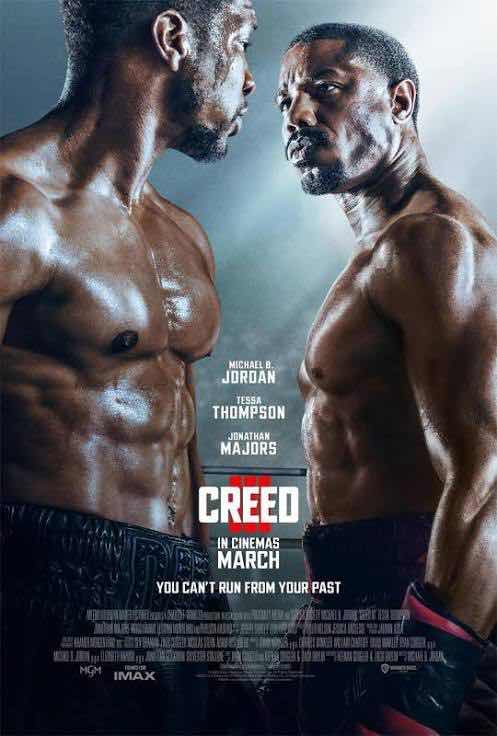
Creed 3 Review


Creed 3

Dir: Michael B. Jordon

Starring: Michael B. Jordan, Jonathan Majors, Tessa Thompson, Wood Harris, and Mila Davis-Kent

1h 56m


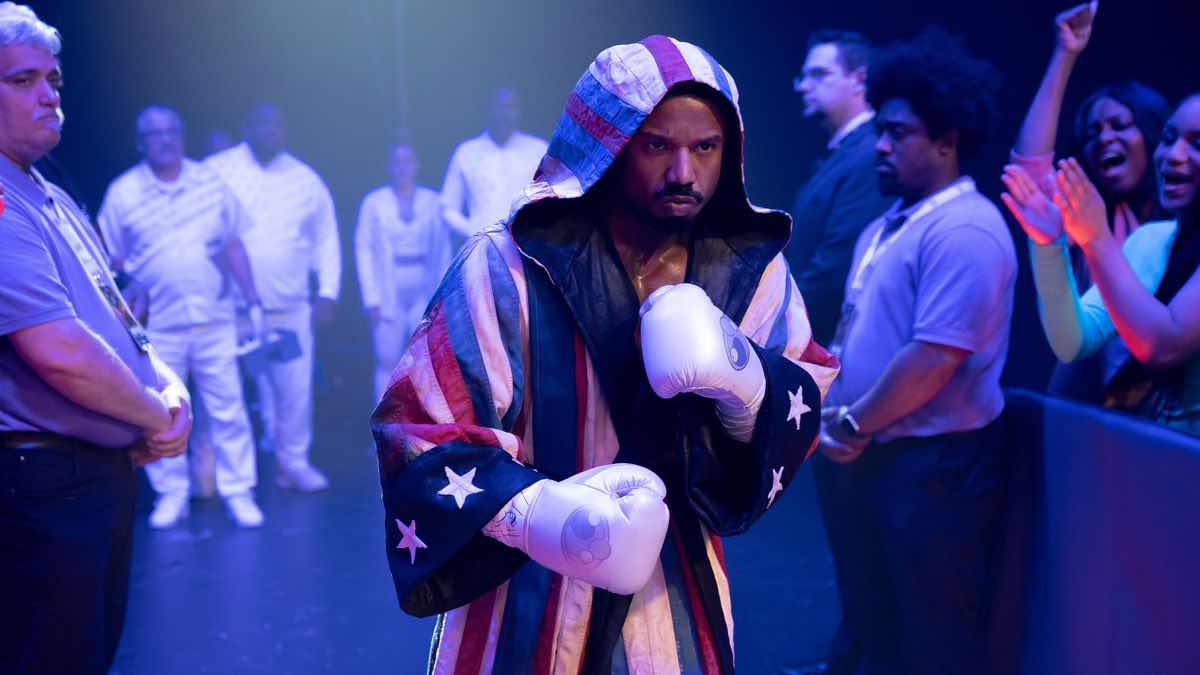
The tagline for "Creed 3", the latest entry for the franchise started 47 years ago with "Rocky," is "You can't run from the past." Making his feature debut and third round playing the title character Adonis Creed, Michael B. Jordan doesn't run from the iconic past. Instead, "Creed 3" acknowledges the influence of the "Rocky" saga while stepping out from the shadow of Rocky Balboa with a film that stands firmly on its established trilogy foundation. Michael B. Jordan delivers a film with energy, allowing for excellent character development with a retired Adonis Creed and a new heavyweight contender played with nuanced menace by Jonathan Majors. Adding some flashy techniques to separate the boxing fight style from past films and "Creed 3" delivers consistently for 12 rounds.


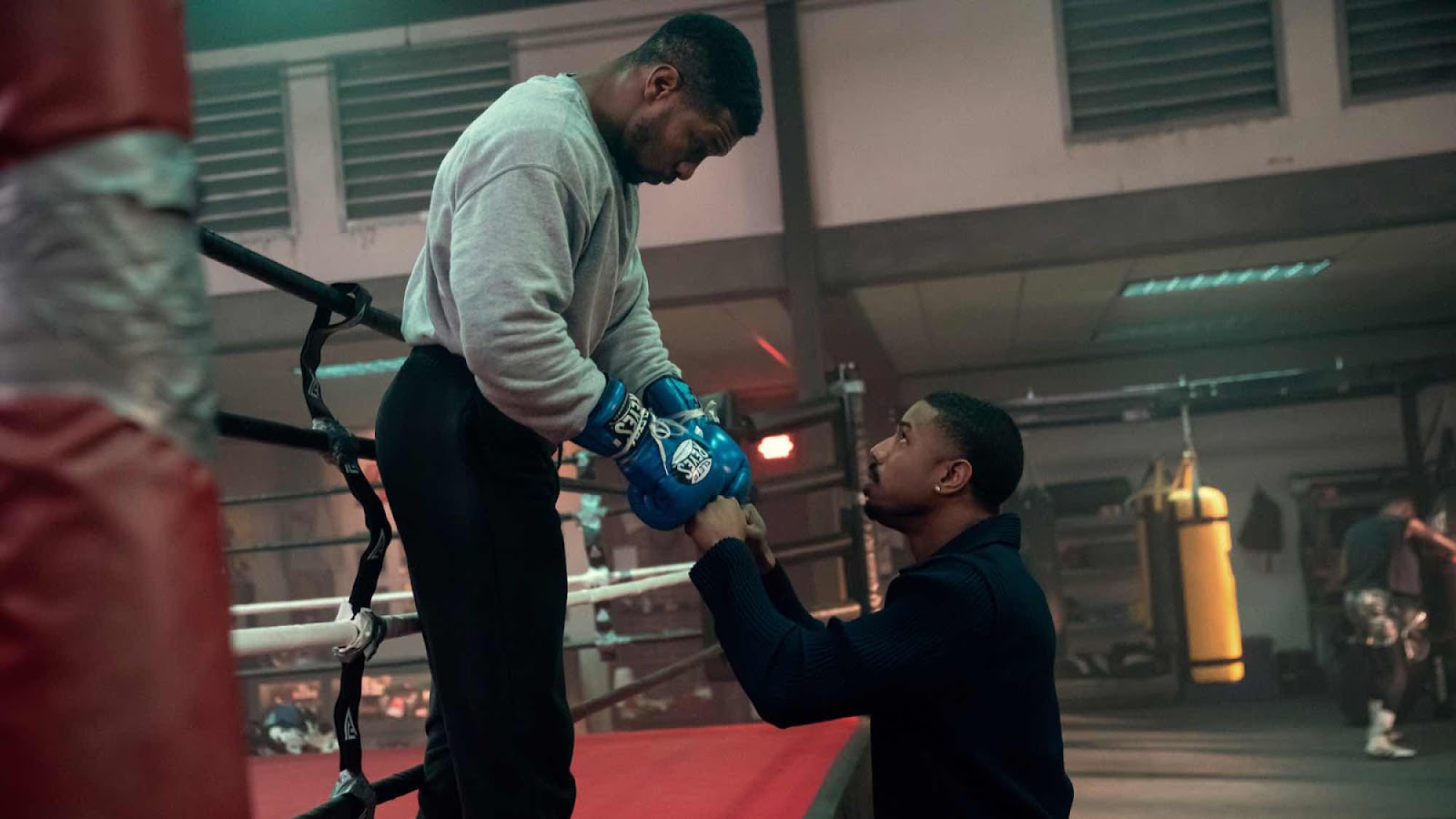
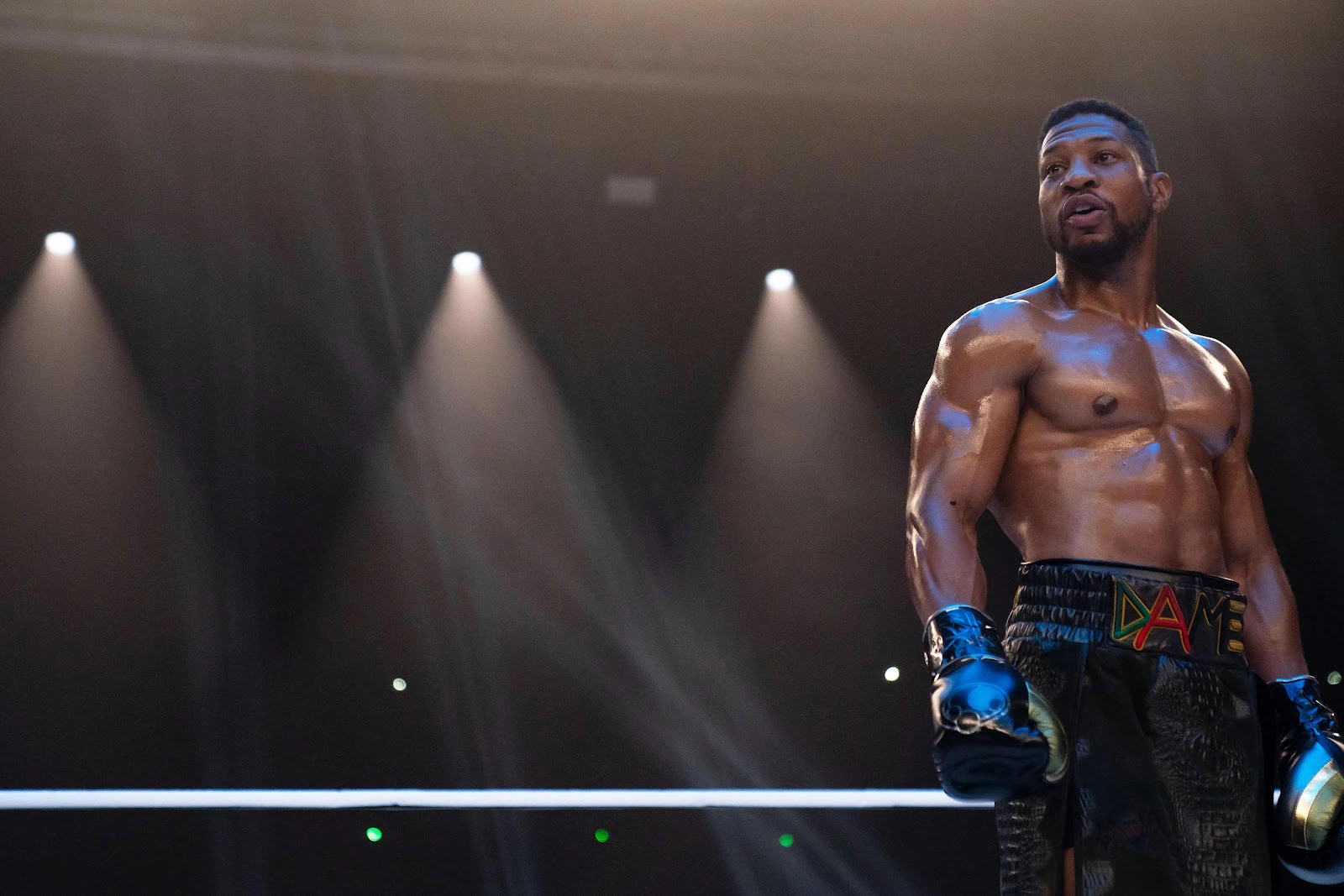
Adonis Creed (Michael B. Jordan) has dominated the boxing world, leaving a legacy that sports enthusiasts honor while establishing a family life that no way near resembles his troubling upbringing as a youth. Creed owns a gym and mentors the current world champion while creating an outlet for up-and-coming fighters to train. Bianca (Tessa Thompson), Adonis' wife, is a successful music producer, and Amara (Mila Davis-Kent), their daughter, is tender and tough, just like her parents. When a childhood friend named Damien (Jonathan Majors), a boxing prodigy and mentor to young Adonis, is released from a lengthy prison sentence, Adonis feels compelled to help his old friend. Damien is ready to return to the ring. With nothing to lose, Damien is determined to reclaim what was taken from him at any cost, even when it means forcing Adonis out of retirement for another match.


"Creed 3" noticeably takes a decisive step to fight on its own, away from the "Rocky" franchise and without the iconic force of Sylvester Stallone to assist in any way. Aside from one mention of Rocky and a brief needle drop of the original score, "Creed 3" is its own story. And for the most part, it successfully builds an entertaining, if never too unfamiliar, arc of spectacle and emotion that lets Michael B. Jordan confidently own the character and directing responsibilities.


Jordan flexes his directing skills with the performers, specifically in scenes involving the primary supporting leads, Tessa Thompson and Jonathan Majors. Thompson may not have much to do on the page, but the actress brings a charm as a mom and confidence in scenes as a wife trying to understand the complicated trauma of her partner's past. Jonathan Majors steals the show throughout the film, playing a soft-spoken yet intimidating former friend to Adonis (who he calls "Donnie"). Majors is physically menacing both in and out of the ring; the actor consistently maintains an anxious and cautious posture, as if, at any moment, someone might attack him. As the film transitions, with Damien trading niceties for intimidations with his childhood friend, Majors' swagger turns tentative to threatening, making his villain the best of the "Creed" series.


In the ring, Jordan takes the opportunity to introduce a new style to the boxing composition. The flare with the fight scenes is inventive and action-packed, with slow-motion hits that make every punch feel like an explosion and cuts that keep the pacing frantic and unexpected for the viewer. There is even an artistic touch with the final bout in a ring shrouded in a haze of smoke and shadows intercut with flashbacks to emphasize the internal battle with the past for both fighters. It works in creating screen drama but takes away from the energetic emotion of the fight.


Michael B. Jordan proves a promising director to watch in the future. Jonathan Majors' performance is a big reason for the successful drama established for the film, and the family dynamic adds an emotional quality that makes the fight, in the end, have more significant stakes. "Creed 3" confidently moves with only a few knockdowns, establishing a film willing to fight its own match.


Monte's Rating

3.50 out of 5.00


Saturday, February 11

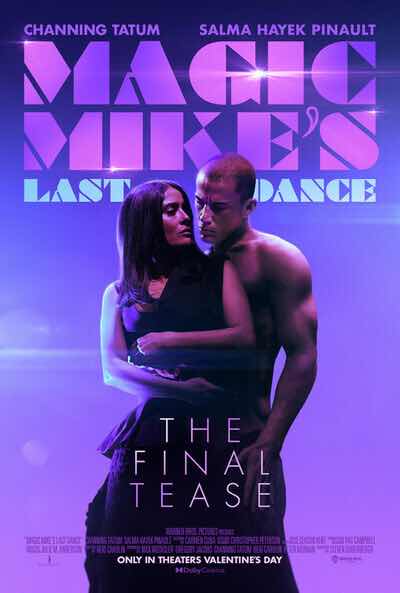
Magic Mike’s Last Dance Review


Magic Mike's Last Dance

Dir: Steven Soderbergh

Starring: Channing Tatum, Salma Hayek, Caitlin Gerard, and Gavin Spokes

1h 52m


At the press screening of "Magic Mike" in 2012, a group of talented male performers danced their way around a crowd of eager viewers ready to see Channing Tatum striptease. In the film's first minutes, the naked backside of Mr. Tatum appeared onscreen, and the entire theater erupted in hoots and hollers so loud that any dialogue following this scene was muffled entirely out. It didn't matter from this point whether the movie review would be negative or positive, "Magic Mike" already was a hit. 


"Magic Mike," directed by Steven Soderbergh, explored the glamorized lifestyle of an adult  entertainment performer in a South Florida nightclub as a cautionary tale and a star-turning stage for Channing Tatum. "Magic Mike XXL," directed by Gregory Jacobs, took the show on a road trip with a lighthearted buddy comedy with an unsuspecting heart. "Magic Mike's Last Dance," directed again by Soderbergh, takes place a decade later, post-Covid, as a film about second chances and chasing your passion. Is another journey with a retired male stripper necessary? Not at all. But "Magic Mike's Last Dance" has enough charming Channing, Hallmark channel romance, and seductively-charged dance choreography to keep fans of the series satisfied with one final dance. 


Mike Lane (Channing Tatum) experienced the same struggles as the rest of the world during the pandemic. After pursuing a dream and finding success as a furniture designer, the worldwide health event put Mike's passion out of business. Still living in South Florida, Mike works as a bartender-for-hire at a luxury charity event run by Maxandra "Max" Mendoza (Salma Hayek), a wealthy Londoner who is going through a marriage separation. A guest at the party recognizes Mike from his past life as a male stripper; Max finds out and coyly coaxes Mike to demonstrate his skill to her in private. Mike, initially reluctant, obliges Max's request, which awakens an opportunity that jettisons them to London for a unique creative collaboration.


"Magic Mike's Last Dance" steps away from the examination of desire and performance prevalent in the previous two films and instead emphasizes the theme of sex as art, performance for pleasure, and the blurry line between lust and love. Soderbergh, director, cinematographer, and editor under various pseudonyms, focuses on developing a love story between Mike and Max and exploring the connection between performer and patron that exists when the fantasy dissolves. 


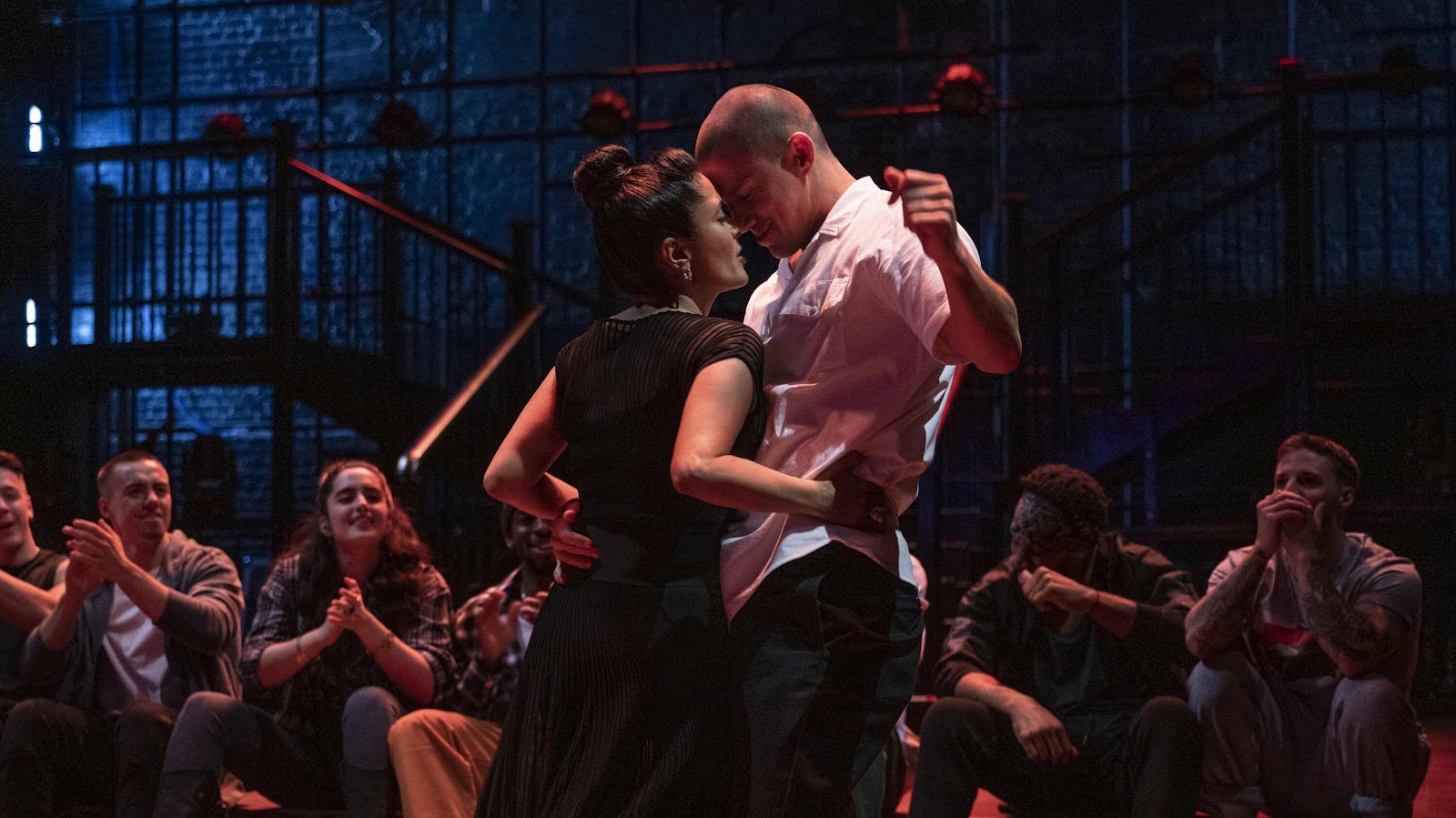
The execution of the love story seldom finds its swoon-worthy stride, even though the chemistry between Channing Tatum and Salma Hayek evokes a complicated yet sweet relationship. As Mike and Max grow from artistic collaborators to emotionally connected soulmates, the story provides a few moments of love's influence that are amusing to watch. Whether a sexy private dance scene or a makeover montage, Hayek and Tatum's performances sizzle. Unfortunately, the good moments aren't strong enough to sell the journey of love for these two older, world-weary adults. Still, the non-too-serious approach keeps the emotions light and digestible for audiences looking for a simplistic love story.


Channing Tatum is comfortable with the role of Magic Mike. The Prince Charming quality of the character's development in this film suits the actor's endearing sensibilities. Salma Hayek is in prime form throughout the film as a newly empowered woman taking control of her choices. Hayek exudes confidence throughout the film, making the character arc far more interesting when Max loses assuredness as the emotions for Mike grow irresistible.


"Magic Mike's Last Dance" is a good romantic cinema date night option for Valentine's Day. Salma Hayek and Channing Tatum hold the film together; their onscreen connection is undeniably charming. While the film may not always evoke those timeless love story vibes, it has enough sweet sentiments and entertaining dance numbers to satisfy fans of the franchise. 


Monte's Rating

3.00 out of 5.00