Showing posts with label Musical. Show all posts

Friday, September 24

Dear Evan Hansen Review


Dear Evan Hansen

Dir: Stephen Chbosky

Starring: Ben Platt, Kaitlyn Dever, Amy Adams, Danny Pino, Nik Dodani, Julianne Moore, and Colton Ryan

2h 17m


"Dear Evan Hansen" makes its way from the stage to the screen, banking on its Tony award-winning success to translate its problematic subject matter into a moving musical movie sensation. 


Director Stephen Chbosky, who is no stranger to youth-focused drama, having directed "The Perks of Being a Wallflower" and "Wonder," has the unenviable task of adapting the stage content for the movie theater. It proves a tremendously difficult task as "Dear Evan Hansen," a story about adolescent mental-health concerns translated with musical numbers and teen rom-com sentiments, fails in finding its emotional pulse. 


The film opens with a teenage Evan Hansen (Ben Platt) writing a therapy-assigned letter addressed to himself. Evan, struggling with crippling social anxiety, among other undisclosed mental-health concerns, is reframing with positive affirmations about his final first day of high school. After being yelled at by a volatile classmate named Connor (Colton Ryan), Evan retreats into his loneliness, an existence of yearning for the girl he likes to notice him, eating lunches alone, and trying desperately to be more than just an invisible face in the crowd. 


One of Evan's self-addressed letters finds its way into the hands of Connor, who again challenges Evan in front of all their peers. The next day Evan is called into the principal's office and is informed that Connor took his own life. Connor's parents' (Amy Adams and Danny Pino) only clue is one of Evan's self-addressed letters. Believing Evan was Connor's only friend, the parents begin asking Evan questions about their relationship. Evan untruthfully fabricates a story that initiates a series of lies that grow greater as Evan propels into popularity. 


"Dear Evan Hansen" is a problematic film. The handling of a narrative centered on mental-health concerns for young people builds a complicated character at the core of its story. It asks the viewer to sympathize with a young person who manipulates a tragic situation. Along the bumpy path, Evan leads two grieving parents into falsehoods surrounding their deceased son while also using the problem to gain time and attention from the girl he has a crush on, who also happens to be the sibling of the boy who took his own life. 


The narrative handles issues of suicide, grieving, loneliness, and the impacts of social media on mental-health concerns with surface-level exploration. It's neither meaningful nor thought-provoking when the characters are offered minimal time to explore some of these concerns. It is often undercut by a musical number that pulls the emotion away from young people simply being honest with one another. It's troublesome, difficult to watch at times, and leads to a finale that doesn't feel at all earned. 


Ben Platt, reprising the stage role, is an excellent performer with a beautiful voice, but he doesn't pull off the look of a high school student. Platt has a few shining moments, primarily when tasked with carrying a musical number. Still, the subtle performance pieces surrounding the character's struggle and motivation are lost in the superficial narrative. Kaitlyn Dever, playing Evan's love interest Zoe, does an excellent job of balancing grief and hope. Playing Evan's mother, Heidi, Julianne Moore mostly disappears for much of the film but in her small moments provides a sense of gravity when questioning her son and a tender sensibility found in her struggle as a single mom. 


"Dear Evan Hansen" offers a few moments to discuss issues of mental health for young people. Most of these scenes happen between two characters, sometimes one sole character, with minimal emphasis on showy dance routines and without heavy-handed emotional coercion. Within these small, quiet scenes, the film brings valuable attention and an important message to the conversations surrounding depression, loneliness, grief, and coping with negative feelings. I wish there were more of this. Unfortunately, much of the adapted stage sensation fails to connect meaningfully with the situation and emotions found in the source material. 


Monte's Rating

2.25 out of 5.00

Friday, August 6

Annette Review


Annette

Dir: Leos Carax

Starring: Adam Driver, Marion Cotillard, and Simon Helberg

2h 20m


In the opening 10 minutes of director Leos Carax's musical "Annette," the cast, director, and writers Ron and Russell Mael (alternatively knows as the band "Sparks") break the fourth wall and perform a surreal musical number while walking through the illuminated streets of Los Angeles. It is a moment of joyous cinema, a unique introduction that seemingly prepares the viewer for something special to follow. Unfortunately, 130 minutes later and I was still waiting for the feeling the first 10 minutes gave me. 


"Annette" is a complicated artistic vision from two complicated creative artists. Leos Carax, who helmed one of my favorite movies of the last decade, "Holy Motors," is an impressive auteur at twisting fantasy into a distinctive and startling reality. Ron and Russell Mael, featured so lovingly rare and embracingly odd in Edgar Wrights's documentary "The Sparks Brothers," have composed beautiful blends of pop-rock music throughout the 1970s and 1980s. In "Annette," these two creative forces craft a frustrating, confusing musical mishmash of emotions that seldom finds its tone and often struggles to identify what it is trying to say to the viewer. 


Henry (Adam Driver) is a comedian with a biting, cutting edge one-person performance piece. Ann (Marion Cotillard) is a world-renowned opera singer whose beautiful voice aches with torment and joy throughout every single note. Henry and Ann fall in love and begin a much-publicized relationship, making media headlines with every transition in life. Their glamorous lifestyle is a shared experience, but also a selfish one; both Henry and Ann have egos that they must compete with, both in the relationship and individually. 


Ann gets pregnant and gives birth to a little girl named Annette. Her representation is seen through the use of a wooden marionette. Henry and Ann grow further apart once Annette is born. Henry's career spirals out of control negatively, while Ann's star continues to shine brighter. Henry becomes egocentric, Ann becomes discontent, and Annette watches her parent's future falter. 


Adam Driver and Marion Cotillard give committed performances from start to finish. Driver does a great job of embracing the self-loathing, arrogant nature that grows more rotten as the character struggles to maintain relevance. Marion Cotillard lovingly imbues the tender and tormented characteristics of her ambitious opera singer. The issue with "Annette" does not exist in the level of commitment these two fine actors give their characters. Instead, it's the story they must operate.  


The Mael brothers have composed albums that challenged the contemporary norms of pop rock music, many times emulating but never copying the popular trends. They have always been distinctly individual creative minds; throughout "Annette," ideas surrounding performance, the artistic process, and even the vessel for this film, the musical genre, shift in tone that straddles the line between mockery and sincerity.


Annette, a wooden marionette with expressive features and deliberate movements, represents how the two adults, mostly Henry, view their child. The execution of this element is unsettling. While it defines Henry's devolving mentality in small ways, the story becomes so lopsided with the emotion it is trying to coerce that the subtle pieces get lost in the confusion. As the film progresses and grows less like an incredible performance piece and more like a bleak relationship drama, "Annette" never recovers.


While Leos Carax composes a few scenes with dazzling flair and enchanting whimsy, and some of the songs connect with amusing results, the majority of "Annette" feels misguided.


Monte's Rating

2.25 out of 5.00
Friday, May 31

Rocketman Review


Rocketman

Dir: Dexter Fletcher

Starring: Taron Egerton, Jamie Bell, Richard Madden, Bryce Dallas Howard, Gemma Jones, Matthew Illesley, Kit Conner, Tom Bennett, and Steven Mackintosh


Arizona State University, during my freshman year of college, was a great place to go to school if you were music fan because of a little slice of heaven called Hoodlums Record Store. This music shop was on campus, always had a great selection of music, and had a staff recommendation wall where you could find brand new musical adventures to explore. It was on this wall where a choice selection from one of my favorite record store clerks was on display, “Goodbye Yellow Brick Road” from Elton John. 


Up to this point Sir Elton was an overlooked artist in my music catalog, I knew the all the hits but never explored an Elton John album completely. By the time you get to the third track on “Goodbye Yellow Brick Road”, “Benny and the Jets”, it’s undeniable that you are listening to something special, something classic. 


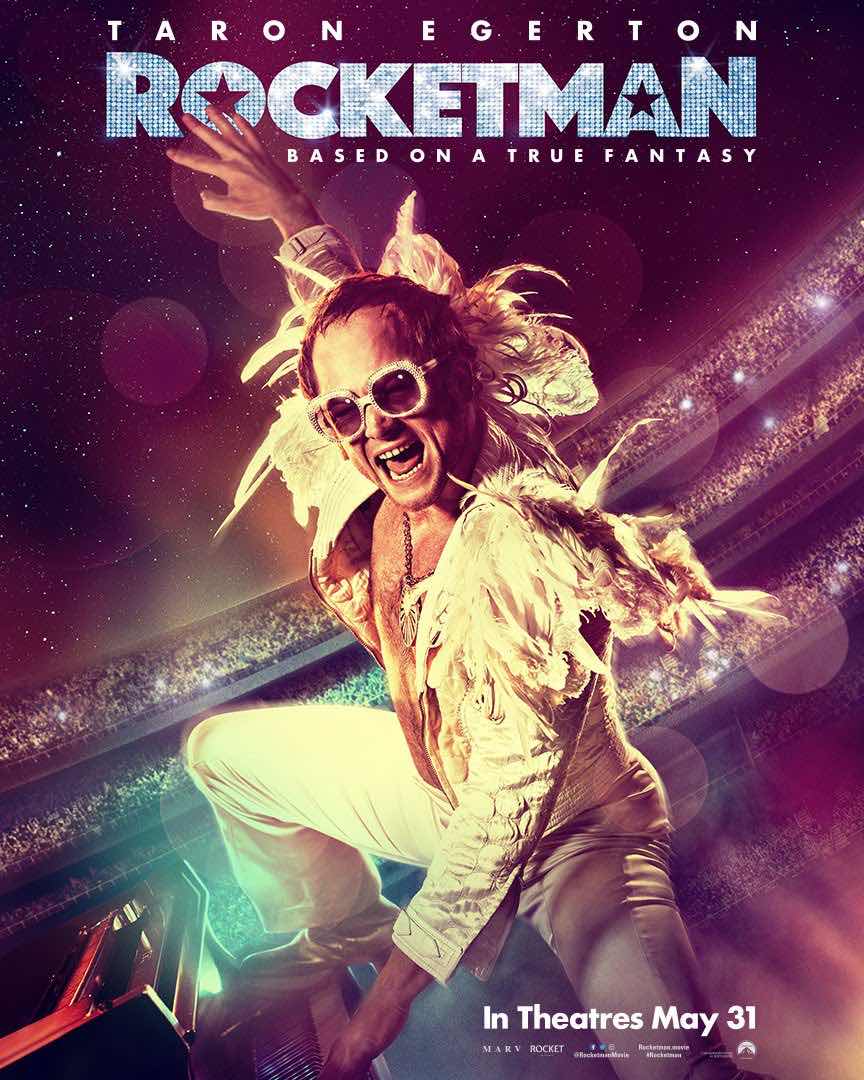
Director Dexter Fletcher, who stepped in to fill the shoes vacated by Bryan Singer on “Bohemian Rhapsody”, brings the story and music of Reginald Dwight to fantastical and heartfelt life in “Rocketman”. This is a musical, from start to finish; one that feeds on the fan fascination of Elton John’s musical prowess with touches found in direct song and dance numbers to simple composition moments tinged with familiar elements from the artist’s catalog of songs. It’s also a story about therapy and rehabilitation, about a broken family structure and a newfound relationship found through friendship, and it’s also a story about that magical process of making music and the magic that happens when music touches the heart. 


The film begins in a room with a support group where Elton John (Taron Egerton) is telling his story, from the beginning, as a young boy (Matthew Illesley) called Reggie by his mother (Bryce Dallas Howard) and ignored by his stern father (Steven Mackintosh). Reginald is a prodigy, playing music by simply listening to the tune, composing original melodies by simply feeling which keys sound good together. It doesn’t take long for Reg to gain notoriety in London, soon leaving home to compose music for Liberty Records, and quickly skyrocketing to an American showcase with songwriter Bernie Taupin (Jamie Bell) at the West Hollywood venue The Troubadour. It’s at this concert where the legend of Elton John takes form.


Director Dexter Fletcher and writer Lee Hall apply some interesting elements throughout “Rocketman” which is trying to be more than just a standard music biopic. The film implements a good narrative structure which starts in a support group room and moves back in time to tell the story. While this causes a few occasions where the timeline may be hard to identify, it allows some freedom in crafting the design of the film elements. Throughout the movie characters move from dialog to song, from walking to dancing, and the world changes from reality to fantasy to match the personal themes Elton is experiencing at each specific moment in time. It allows the film to have a fairytale like quality in some moments but also some poignant imagery when it comes to the relationship Elton had with being loved and the harmful indulgences that consumed part of his life.


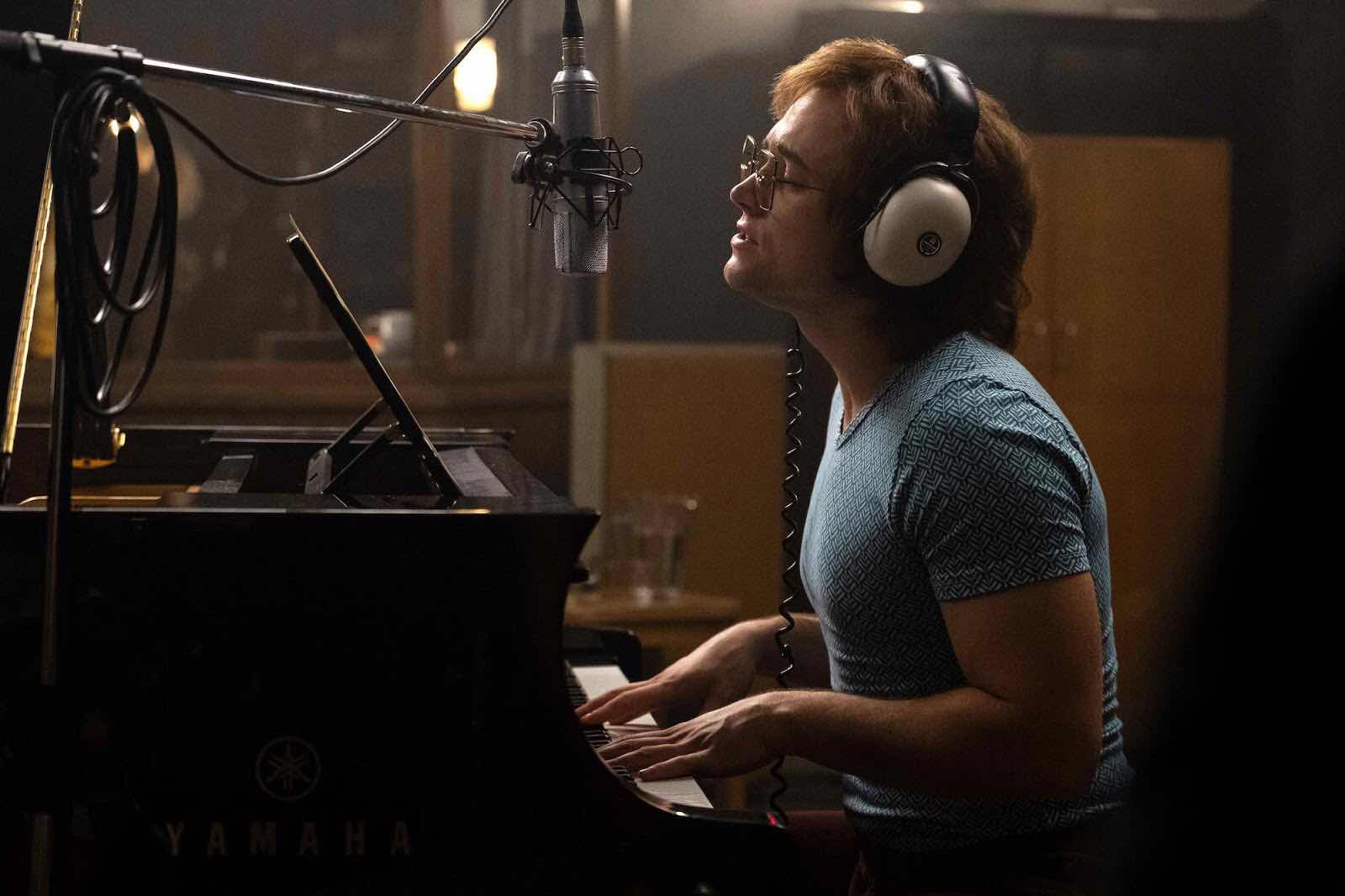
Taron Egerton is great in the lead role, singing all the songs with familiar inflections and displaying performance scenes with all the swagger and confidence Elton is known for. Egerton also does an impressive job with the emotional aspects, specifically in scenes where Elton is craving simple moments of love from his father and his partner/manager John Reid played by Richard Madden. Jamie Bell is also good throughout film playing the calm and quiet songwriter Bernie Taupin. You can feel the unbreakable kinship that Elton and Bernie have for one another, Jamie Bell and Taron Egerton handle the changing identify of the characters with ease. 


“Rocketman” struggles in moments, specifically in terms of scope in addressing the reach Elton John had during his career which transcended mere album sales and extended into another definition of what a “rockstar” could be. Also, some of the indulgences in the design take over too aggressively, with forced dance numbers or music cues that don’t fit into the narrative composition of the character. 


Still, “Rocketman” is having a great time showcasing the joy of making music while also characterizing a musician who struggled to find happiness and love outside of the tunes he crafted so beautifully. While some elements struggle to hit the mark they are aiming for, the vast majority of the film does a great job of making people remember why the music of Elton John will never go out of style. 


Monte’s Rating

3.50 out of 5.00


Friday, December 21

Mary Poppins Returns Review


Mary Poppins Returns
Dir: Rob Marshall
Starring: Emily Blunt, Lin-Manuel Miranda, Ben Wishaw, Emily Mortimer, Julie Walters, Meryl Streep, and Colin Firth

The moment a group of lamplighters, led by the talented Lin-Manuel Miranda, start dancing with whirlwind choreographed precision and singing a memorable, foot-tapping number called “Trip a Little Light Fantastic”, it’s easy to remember that Disney has been crafting these sorts of unforgettable sequences consistently throughout its storied career. “Mary Poppins”, made in 1964 and Disney’s first film to receive an Academy Award for Best Picture, is one of the most iconic live-action films in the Disney catalog. Julie Andrews, in her feature film debut, and Dick Van Dyke are exceptional in the roles, even still today. 

“Mary Poppins Returns”, a direct sequel, is guided by Rob Marshall, a director who has some experience bringing musicals to life on film with the 2002 Academy Award Best Picture winner “Chicago” and the 2014 crowd pleaser “Into the Woods”. Taking the role of the affable Mary Poppins is Emily Blunt, who does a surprisingly good job of filling the gigantic shoes left by Julie Andrews by making the role her own, and offering support is the multi-talented artist Lin-Manuel Miranda, who is completely amusing every time he is on screen. “Mary Poppins Returns” doesn’t try anything completely new here, which is unfortunately felt in some spaces, but instead focuses on honoring the past in numerous ways. 


Michael (Ben Wishaw) and Jane Banks (Emily Mortimer), the youngsters from the first time Mary Poppins came to visit, are all grown-up and leading very responsible lives. Michael works at a bank and has three little children (Pixie Davies, Nathanael Saleh, and Joel Dawson), Jane is a union organizer during this Great Depression time who has made a significant point in helping her brother who is grieving after the death of his wife. Things aren’t going great for the Bank’s family, money is running low and their house is being sought after by a greedy bank owner (Colin Firth). But just as things are about to get worse, an unexpected visitor from the past arrives to help the family.

“Mary Poppins Returns” is doing its best job of paying homage to the original classic. The structure of the story is very familiar and mostly unsurprising; the original film casts a long shadow and this sequel tries its best to stay within its shade. This makes for a story that never quite finds its own unique path or creates much of its own emotional connection with its new audience. Still, there are some really interesting moments that distract from these concerns, specifically when Mary Poppins guides the youngsters into fun environments or into situations with amusing characters like Cousin Topsy played with scene-stealing glee by Meryl Streep.

The classic cut-in animation is still represented and, in a very pleasant surprise, is utilized in a unique and effective way. Rob Marshall has a talent for engaging movement within in the frames of his films, here blending different aspects of animation makes for some really engaging images that are interesting to watch. In one of the best scenes of the film, the characters walk into an animated world similar to one directly from Disney’s early cartoon genesis. 

The musical numbers are filled with pure Disney cheer and joy. While some of the songs may not have the staying power like the ones from the original, the themes “Nowhere to Go But Up” and “Trip a Little Light Fantastic” are still being hummed weeks after seeing the movie. 

“Mary Poppins Returns” doesn’t tell a new story as much as it honors everything from the past. Nostalgia is a powerful tool and for many fans, this spoonful of sugary nostalgia will be a memorable ride.

Monte’s Rating
3.75 out of 5.00

Friday, December 16

La La Land Review

La La Land
Dir: Damien Chazelle
Starring: Emma Stone, Ryan Gosling, Rosemarie DeWitt, and J.K. Simmons

A Los Angeles freeway gridlocked with traffic is the beginning image for Damien Chazelle’s film “La La Land”. With the camera sweeping through and around the rows of vehicles, the commuting masses jump out of their vehicles and break into song and dance to a carefree, California personified tune called “Another Day in the Sun”. It isn’t until after the melodic spectacle that the film focuses on the characters that the viewer will follow for the remainder of the film. It’s a perfect introduction to a film as much influenced by musicals of the past and classic love stories as it is about the trials of being ambitious and being in love and the difficult choices that occupy each. It’s a whimsical, melancholy musical jaunt filled with delicate emotion and beautiful structure. Damien Chazelle has invigorated this musical and crafted a film that is simply intoxicating.

Mia (Emma Stone) is a struggling actress working as a barista on the Warner Bros. backlot. Everything in her world is focused on getting that audition that will change her life. Sebastian (Ryan Gosling) is a struggling musician, a jazz pianist forced to play Christmas tunes in a restaurant and 80’s pop songs in a cover band though his true ambition of keeping the vanishing life of jazz music alive can be easily seen through his many concert posters and a stool that belonged to Hoagy Carmicheal. The paths of these two ambitious artists cross early and over the course of four distinguished seasons they experience a life-changing relationship that forces them to answer questions about their future as two people in love and two artists pursuing their dreams.

Who doesn’t like a good musical? I’m sure a lot of people don’t but “La La Land” is a different kind of musical, one that doesn’t boast polished vocal performers but rather utilizes two strong actors to connect romantic emotions and then having them genuinely move through song and dance numbers. The musical moments are secondary, though a very strong secondary component, that accommodates the story of the two characters.

With that said, the music is exceptional. A blend of dreamy ballads, personal melodies, and cheerful choruses; the music is it’s own character in the film, offering an identity to the world of the two heartfelt lovers. “City of Stars” is the piano-tinged song that becomes the definition of the story, a somber piece that displays at different moments touches of hope, despair, success, failure, confidence, and insecurity. It’s a perfect piece of music for the film from composer Justin Hurwitz.

The performances are impressive. Emma Stone is particularly great, adding moments that show the uncertainty of putting yourself in the spotlight. In one particular scene her character is asked during an audition to read a dramatic scene, the progression of emotions during this section is superb. Ryan Gosling is also great, giving a passionate performance that allows Mr. Gosling opportunity to mold the character naturally. Watching his reaction during a small moment where he is lost in a sea of emotions is outstanding.

The film builds towards an interesting point, one that would be easily wrapped up in a nice bow if it weren’t for the confident hand of director Damien Chazelle who instead challenges the viewer and the characters in the film to look beyond the happy-go-lucky moments and the cheery musical movements and identify with the characters, their aspirations and their love for each other. “La La Land” is a film about the past and the future and how the decisions people make in the moment define their connection with both. It’s one of the best musicals of recent memory and one of the best movies of the year.

Monte’s Rating

5.00 out of 5.00

Friday, June 20

Jersey Boys Review

Jersey Boys
Dir: Clint Eastwood
Starring: John Lloyd Young, Erich Bergen, Vincent Piazza, Michael Lomenda, and Christopher Walken
Rated R  /  134 Minutes

The Broadway smash “Jersey Boys” has been dazzling audiences for nearly ten years. The musical, getting the big screen treatment from the capable hands of director Clint Eastwood, is based on the tumultuous life of Frankie Valli and The Four Seasons. Known for standards like “Sherry” and “Walk Like A Man”, Valli grew up in rough neighborhood with equally rough friends but was always guided towards music. Eastwood shaped “Jersey Boys” into a film that unfortunately lacked the flair and energy of the stage performance but instead added some character depth for a nostalgic experience.

Eastwood is an avid fan of music, which can be seen by the numerous music documentaries he has produced and the addition of composed music he has created for his films. The 84-year-old icon has done nearly everything in film, recently his directorial catalog has been filled with character driven films within a specific time period. The common thread however has always surrounded people making difficult choices in a complicated world.  While the decision for Eastwood to direct a musical for the first time may seem odd, the narrative themes in “Jersey Boys” are all right up Eastwood’s alley.

Francesco Castelluccio (John Lloyd Young), who would later change his name to Frankie Valli, grew up on the mean streets of Belleville, New Jersey. Getting in trouble with the mob or joining the military, as narrator Tommy DeVito (Vincent Piazza) explains, were the only two occupations for Jersey youth in 1951, unless you were a talented singer like Frankie. Tommy, a handsome con artist looking for a quick turn, is the leader of the band known as The Four Lovers. Frankie, who has found some singing cred with a local mob boss (Christopher Walken), is brought on as lead singer. With the addition of clean-cut songwriter Bob Gaudio (Erich Bergen), the band finds fame. Though the road to success for the newly christened Four Seasons is filled with struggle.

Eastwood striped “Jersey Boys” down in musical numbers and included more character depth than the stage version. These changes were complimentary for the screen, unfortunately for those familiar with the stage version the alterations in pacing and mood will be sorely disappointing. Eastwood’s mix of gangster film tropes and commentary on the “American Dream” were interesting and worked well when the film shifted into more serious territory. Having many of the stage actors reprise their roles, which included live singing performances on camera, gave the film exceptional musical quality. Still, the film had difficulty changing gears from feel good musical to focused drama and some of the deliberate pacing choices strained the film from scene to scene. For a musical there was a significant lack of score, which was unusually considering there was so much to utilize. It was the music, both the familiarity of the classic hits and moving performances, which has kept the stage production alive for so long. Eastwood, moving the focus away from those qualities, struggled to find an identity for the film.

“Jersey Boys” on screen may not have the audience dancing in the aisles like the stage production but it did bring about the love and nostalgia music invokes. Frankie Valli and the Four Seasons may not be as identifiable as they once were, but their music featured in this film is still recognizable and uplifting.

Monte’s Rating

3.00 out of 5.00