Showing posts with label Netflix. Show all posts

Thursday, September 3

I'm Thinking of Ending Things Review


I’m Thinking of Ending Things

Dir: Charlie Kaufman

Starring: Jessie Buckley, Jesse Plemons, David Thewlis, and Toni Collette


The backdrop of director Charlie Kaufman’s new film, “I’m Thinking of Ending Things”, is an oncoming storm, one that signals its foreboding nature with dark gray skies only to transition into a beautiful disaster of howling wind with pure white snow concealing every object in its path. It’s cold, lonely, and scary.  Mr. Kaufman continuously tackles the human condition with profound insights into the delicate nature of relationships, connecting emotions that are both overtly fantastical yet overwhelmingly authentic.


Based on the novel by Iain Reid, “I’m Thinking of Ending Things” follows the budding relationship between Lucy (Jessie Buckley) and Jake (Jesse Plemons). They are on a road trip to meet Jake’s parents (Toni Collette and David Thewlis), who live in a country farmhouse. In the car, Lucy and Jake discuss, debate, and dissect philosophy, art, history, and even their own understanding of how their relationship came to fruition. Lucy, who narrates throughout as if we are sitting in her brain while she wanders from thought to thought, displays a keen intuition of numerous subject areas even though her thoughts are often obscured by random distractions. She examines Jake and his quirks while musing “I’m thinking of ending things” when it comes to their ongoing relationship. She will explain to Jake that she doesn’t care for poetry and then recite a beautiful verse she claims to have written herself. She consistently contradicts herself. 


Kaufman has never studied relationships, especially romantic ones, through an ordinary lens. He has a way of making the analysis of humans and their connection to romance and love so brutally simplistic while at the same time making it feel so uniquely intricate. It’s almost otherworldly as if we have been sent to an alternate universe where everything we know and understand, that is predictable and reliable, is somehow jeopardized by an off-kilter object, word, or characteristic.


You can see Mr. Kaufman’s particularly unorthodox methods for constructing the cynical and fanciful flights of naïve and unbridled passion for life, love, and self in the emotionally complicated stop-motion-animated story “Anomolisa” and the reality-challenging nature of a theater directors’ self-indulgent quest for control in “Synecdoche, New York”. The emotional elements explored in these films are further searched in “I’m Thinking of Ending Things”: the struggle for control in a relationship, specifically from an insecure man who challenges and becomes moody in the face of uncontrol; the obsessive nature of romance, challenged by a woman who is unsure about the man she has chosen and whether the feelings she is experiencing are real or part of another construct she hasn’t figured out yet; and the thin line that exists between the identity of reality and fiction, displayed by Jake’s parents who age older and younger every time they leave the room.


Kaufman spends his time with Lucy and Jake, allowing the viewer to find connections with their personalities and emotions before adding strange events into the mix, like the family dog who endlessly shakes or a picture on the wall that is all too familiar to Lucy. Still, dinner with the parents is just half the story. There is an adjoining story woven through Lucy and Jake’s experiences, a story of a lonely janitor at a high school who wanders the halls cleaning and encountering young people throughout the school. The character arrives into the story during interesting spells of conversation at the contentious family dinner. It’s never completely identified but the janitor’s role seems connected to Jake and his family. The couple eventually leave the house and venture back into the wilderness of white snow in an effort to get home before things get worst. 


Kaufman layers the film with references, including callouts to David Foster Wallace, Mussolini, Tolstoy, and John Cassavetes. The dialog is dense, deliberate, and distracting; Kaufman roams Lucy’s spiraling thoughts, switching from conversations with Jake to internal monologues with herself. Lucy is a character composed of doubts about everything around her. Are her insights trustworthy? Is she faking something to pretend to be something else? There is no simple answer, and that’s part of the intriguing nature of the film, making everything feel uneasy, lonely, and desperate. 


Some have called this film Charlie Kaufman’s horror film. While it does not meet the standards that typically define the genre, this film still finds a realm to explore that has all the feelings associated with the genre of horror, but in an unconventional way. The unease of the unknown, the creepiness of coincidences too familiar, the fear of discovering hidden intentions within others and, specifically within this film, yourself. It’s all there, shaped and molded in a way that is distinctly Charlie Kaufman.  


“I’m Thinking of Ending Things” is confusing yet fascinating. At times I figured it out, other times I was completely lost. The subtle, superb performances from Jessie Buckley and Jesse Plemons completely consume the viewer to indulge the 2-hour-plus story. All the feelings produced throughout the film challenge one another: it’s interesting and infuriating, sometimes at the same time. But altogether it is simply pure cinema, another highlight in the career of Charlie Kaufman.


Monte’s Rating

4.25 out of 5.00

Friday, July 24

The Kissing Booth 2 Review


Kissing Booth 2
Dir: Vince Marcello
Starring: Joey King, Jacob Elordi, Joel Courtney, Taylor Zakhar Perez, Meganne Young, Maisie Richardson-Sellers, and Molly Ringwald

Film has painted the high school drama in many ever-changing strokes of emotions. While the stories today may not echo the same world settled in the visions of John Hughes, the underlying conflicts for young people are still present and far more complicated. Experiencing the many facets of love, making choices both confident and vulnerable, and finding the person you want to be past those fleeting moments inside the safety of the high school halls are still valuable lessons to explore.

“The Kissing Booth” is back to explore more of these teenage issues with a heavy scope of sappiness and slapstick. However, for Elle (Joey King), who just had the best summer of her life with her new beau Noah (Jacob Elordi), high school senior year is complicated by having to prepare for college, balance a changing relationship with her best friend Lee (Joel Courtney) and his new girlfriend Rachel (Meganne Young), and handle the strains of long-distance love while Noah goes to school across the country at Harvard. 

It doesn’t take long for the drama of these feelings to take hold. As the strain on the relationships in Elle’s life take hold, with a girl named Chloe (Maisie Richardson-Sellers) garnering much of Noah’s attention in college and a new boy at school named Marco (Taylor Zakhar Perez) strumming his way into a partnership with Elle for a dance competition, everything gets complicated and confusing, both for the characters in the film and the viewers at home.

There is so much going on in “The Kissing Booth 2” that even with a 2 hour and 10-minute running time, it still feels overstuffed with rambling premises. We have evolving character development from the first film, new characters to meet and insert into the storyline, side stories to explore with supplemental characters, a video game-dance competition, a Halloween school dance where tempers flare, and a heated Thanksgiving dinner where all the held back words are unleashed. We move from happy, quickly edited montages of fun and silliness to sad, long cuts of characters gazing into the sadness of their counterpart’s social media on cellphones, back and forth, over and over. 

With so much being packed into the narrative suitcase, it’s strange that the movie still feels so empty. The safety-net storytelling, where characters fall but not too hard or complications arise but nothing a perfectly timed pop song can’t resolve, becomes overwhelmingly contrived and extremely predictably. 

Character growth is so important for sequels, especially in matters of youth where growth happens at exponential speed. The characters here rarely have those moments of maturity, forced or otherwise, that happens in films like this. The harshest reality that exists in this film boils down to Elle having to decide where to go to college. Does her allegiance align with her boyfriend or her best friend? This question is proposed early then completely disappears, only to arrive at the tail end of the film for a resolve that can only be described as a “cop-out”.

Still, there is a charm and sweetness achieved with “The Kissing Booth 2”, one that is often preferred for many movie watchers perhaps especially during this time in our world. Joey King and Joel Courtney accomplish impressive chemistry as best friends throughout the film, with Mr. Courtney going full throttle with the slapstick elements in a scene that finds him rushing across school campus to protect his best friend from embarrassment. It’s funny and cute, one of those scenes that always seems fitting in a school daze comedy. Joey King has an abundance of charm, her performance is a major highlight of the movie. The rare appearance from parental figure Molly Ringwald, playing Lee and Noah’s mom, floods nostalgia into the film from the 80’s films that laid the groundwork for the teen drama. 

“The Kissing Booth 2” will definitely appeal to some viewers looking for an easy and safe escape into a teen universe that is rarely threatening and often more concerned with sweet and silly sentiments of youthful exuberance. However, the lack of exploration into the real complications and struggles faced by young people keeps this film from being much more than a fleeting moment in the hallways of teen movies. 

Monte’s Rating
2.00 out of 5.00

Saturday, July 18

Confessions with Theresa – Part 2


Confessions with Theresa - Part 2

By: Theresa Dillon


“I’ve got another confession to make!” – Dave Grohl, Foo Fighters, Best of You


I, Theresa Dillon, am a 35-year-old woman who still enjoys middle grade fiction. 

I will gladly pick up the latest Brandon Mull book to read over any Oprah Book Club picks (and she has great ones). 


Why can’t I just grow up? Maybe because a part of me honestly doesn’t want to. And why should I? I already have so many responsibilities as adult, the adventures and innocent growing pains are refreshing to read – and watch.


My latest middle grade obsession is the Netflix series “The Babysitters Club.” 


I was obsessed with those books (at the deemed-appropriate age of 11). I had every single book in the series. I watched the original TV series from the 90s on the Disney Channel. I saw the “The Babysitters Club” movie the first weekend it came out and bought the soundtrack during our family trip to Best Buy (I also miss those days).


Author and producer, Ann M. Martin.

When I had to pack up my room before college, I was torn about giving all my BSC books away. But I chose to keep a few of my all-time favs for future reading and gave the rest away so another girl (or boy) could get the same satisfaction I did with every page I read.

And now those same girls and boys, can watch this latest revival of “The Babysitters Club.”


It is probably one of my favorite series of the year. Not only did Netflix stay true to the characters and story arcs of the series but they masterfully introduced today’s tech and culturally landscape and made the BSC an even stronger anthem of girl power.


As author and series producer, Ann M. Martin said in a recent People interview, “It’s incredible to be talking about the series in 2020 and I’m proud that the series reflects the different landscape, 34 years later. A lot has changed. I love that they made Dawn [Schafer’s] father gay and that they introduced a transgender babysitting charge. As someone who is gay, I know how much positive representation matters, especially to kids.”


And that’s not all, The Babysitters Club was always known to touch on tough topics such as divorce, health, death and diversity. One of the most poignant episodes features character Claudia Kishi coming to terms with her family’s history as Japanese Americans. 


I wish I had a daughter I could share this with right now. Instead, I’ve resorted to telling all my mother-daughter friends that “The Babysitters Club” is a must watch. One day, I may be lucky to share this great series. Until then, I watch it for my 11-year-old self.


Saturday, February 8

Horse Girl Review


By Emery Snyder @leeroy711
Director: Jeff Baena
Starring: Alison Brie, John Reynolds, Debbie Ryan, Molly Shannon & Paul Reiser
Netflix Original – February 7, 2020

Sarah (Brie) is a young, nervous and awkward woman that spends her time crafting, hanging out with her horse, impending mental collapse and/or being abducted by aliens. In the meantime, she sparks up a new romance with Damien (Reynolds) while still navigating her semi-tumultuous relationship with her roommate (Ryan). When her hallucinatory dreamscape starts to intrude on her real life, she dives down the investigatory rabbit hole into her family history. Results vary...

“I have the rainbow sprinkles with the cone. Every time I talk it’s a fucking poem…” – Actual rap lyric from Sarah’s roommate’s boyfriend (Jake Picking)

The first half of this film really had me invested. Sarah was a well-conceived and well-
written character that I felt for. I can easily identify with the type of person that religiously pauses whatever they’re watching when others enter the room. Seriously, I’m not trying to be rude. I just want you to leave me alone now… She’s sweet and goofy, awkward but not reclusive or abrasive in the least. I think my favorite moments were the organic and clumsy courtship scenes between her and Damien. The film was at its best when it was being silly, hinting at more. But every bit of positivity shown in the earlier parts are tainted by an unsettling and heartbreaking sense of dread.

The overall construct of the genre bends here is quite unique. The comedic elements don’t do much to soften the tone because the sense of impeding doom is so strong. The supernatural/sci-fi/psychological thriller aspects of the film reminded me of things like Panos Cosmotos’ BEYOND THE BLACK RAINBOW, with a tiny dash of Glazer’s UNDER THE SKIN. This is especially true in the constantly shifting score. From scene to scene, we range from bouncy synth-pop to ominous strings. Rather than inform, these shifts sometimes seem only to confuse and conflate the tone. A lot of films are ambiguous about how literally we’re supposed to interpret what we see. But here, it’s hard to tell how seriously we’re even supposed to take the story. The aforementioned doom that we’re dreading is always present, but often undercut by the films humorous tone. But by the third act however, this playfulness between themes begins to tread into very uncomfortable territory.

As Sarah’s grip on reality becomes increasingly loose, the story dives deeper into her paranoia. Always shrewdly switching between the hints of supernatural and mental health explanations.  Brie’s performance is more believable, the less seriously I take her. She’s a fantastic comedic actor. But I found she had trouble expecting the audience to follow her mood shifts. To be clear, although I had trouble with this, I think this may actually be specifically what the film is going for. On one hand, it may have been making the case to take a more realistic look at the still overused ‘manic-pixie’ character. Unfortunately, it may have simultaneously undercut the significance of real mental health issues.

In its cleverness, I am a bit concerned that this film lacks the sensitivity and nuance that may be required to tackle this type of topic. At times, I was seriously bothered by how glib the entire first act was in setting up what was supposed to be a heavily weighted conclusion. But even as I write this, I’m not sure if I’m properly arriving at the filmmaker’s intention. And maybe that’s my point. As much as this film has going for it, I was disappointed that it seemed much more content in endlessly circling multiple interpretations, loosely wound around mixed themes and genres, than it was in expressing any sort of tangible truth.

In summary, there’s plenty enough good here to outweigh the bad. But don’t be surprised if it leaves a sour taste in your mouth.


Emery’s Rating
3 out of 5 Stars

Friday, October 25

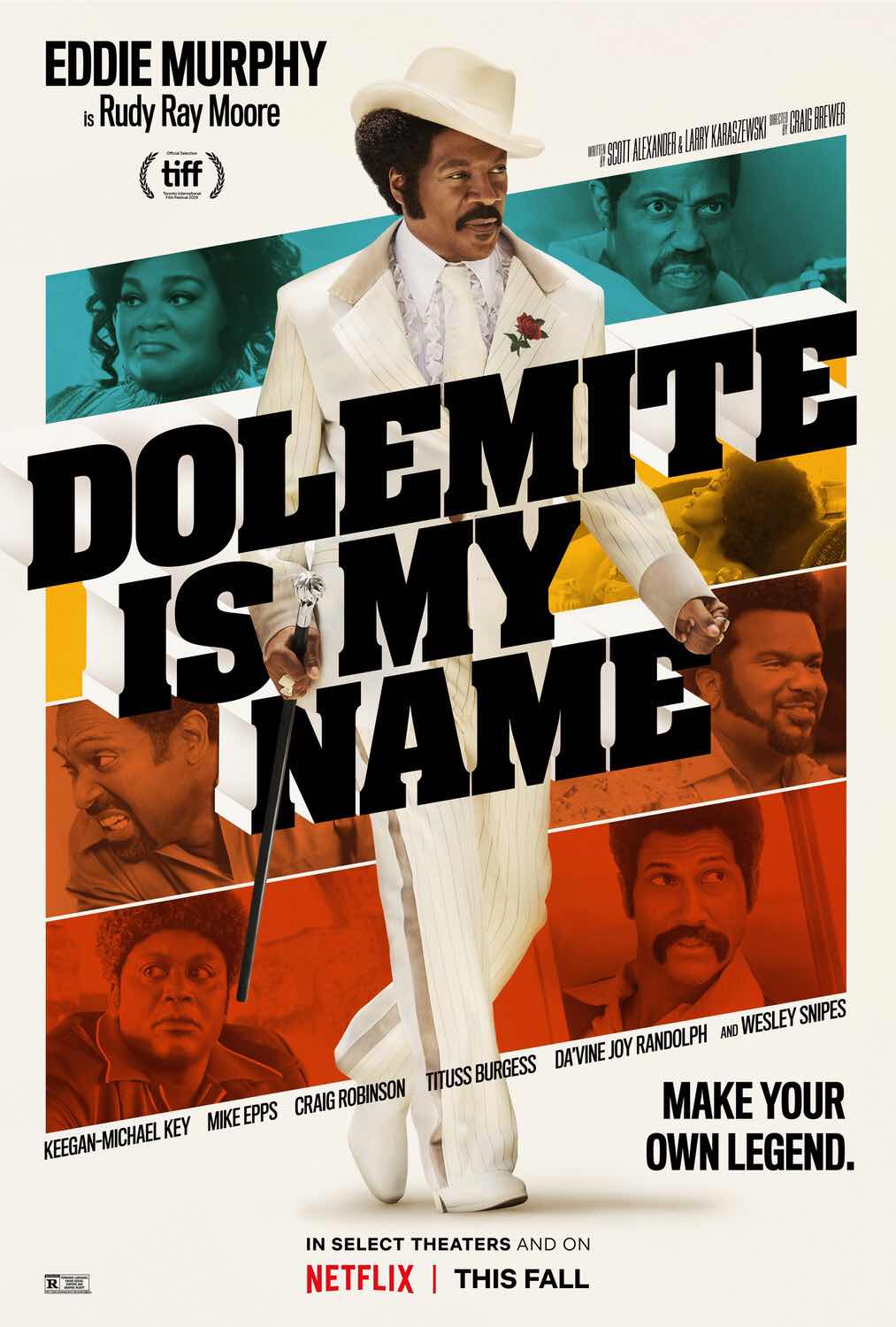
Dolemite is my Name Review


Dolemite Is My Name

Dir: Craig Brewer

Starring: Eddie Murphy, Keegan-Michael Key, Craig Robinson, Wesley Snipes, Mike Epps, Da’Vine Joy Randolph, Chris Rock, and Snoop Dogg


In the late 1960’s, the multi-tasking talent Rudy Ray Moore was working at a record store trying to get one of his songs played on the radio station, he was also working the nightclubs in hopes of getting a permanent stand-up comedian gig; Moore was doing everything in his power to break into the Hollywood system, to find fame and notoriety in an industry that strongly exhibited prejudice to people of color. 


But in 1975, at the peak of the Blaxploitation cinema movement where films like “Shaft”, “Super Fly” and “Coffy” found major success beyond the supportive black community, Rudy Ray Moore’s dedication would pay off as the now successful comedian, with a blend of raunchy, boastful anecdotes and braggadocios self-talk, would introduce the world to the legendary stylings of Dolemite.


For a character as bold, confident, and imposing as Rudy Ray Moore was, it would take an actor equally as commanding to compose a representation that was justified for a cinematic biopic. How about Eddie Murphy? “Dolemite Is My Name”, from director Craig Brewer who helmed “Hustle and Flow” and “Black Snake Moan”, is an exceptionally fun film that takes a glimpse into a moment in time for Rudy Ray Moore’s career resolve but also into the independent process of making your celluloid dreams come true. Even with these positive attributes, “Dolemite Is My Name” belongs completely to the impressive performance of Eddie Murphy. 


“Dolemite Is My Name” feels similar in tone and pacing to another biopic, Tim Burton’s “Ed Wood”. Makes perfect sense considering writers Scott Alexander and Larry Karaszewski wrote both of these films. The structure of the film is broken up into two different kind of movies; the film begins with a character study, following Rudy Ray Moore through the struggle of chasing his dreams of fame and stardom. It’s an effective design that allows the viewer to gain an understanding of Moore’s determination but also the specific circumstances that offer opportunity and influence creativity for the comedian. There is a great scene where Moore finds his confidence, turning words into a character in front of a mirror.


Eventually the story transitions into something different, it shifts into Moore’s journey into the film industry a trip to the movies left him wondering why films weren’t made for people that looked and talked like him in leading roles, or why films didn’t indulge in the gratuitous, often silly, elements of violence, sex, and nudity. This portion of the film is an absolute treat, displaying the difficulties, the ingenuities, and the early spirit of the independent filmmaking process. It’s completely fun and very humorous watching it all come together.


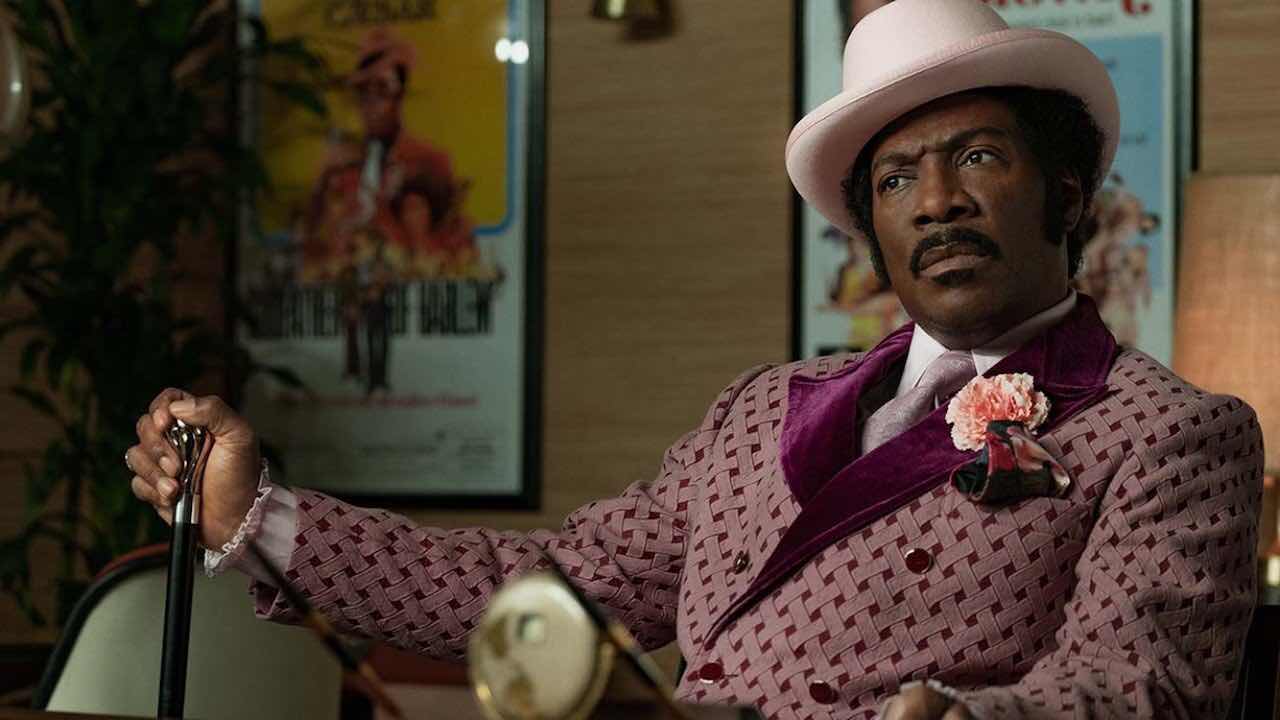
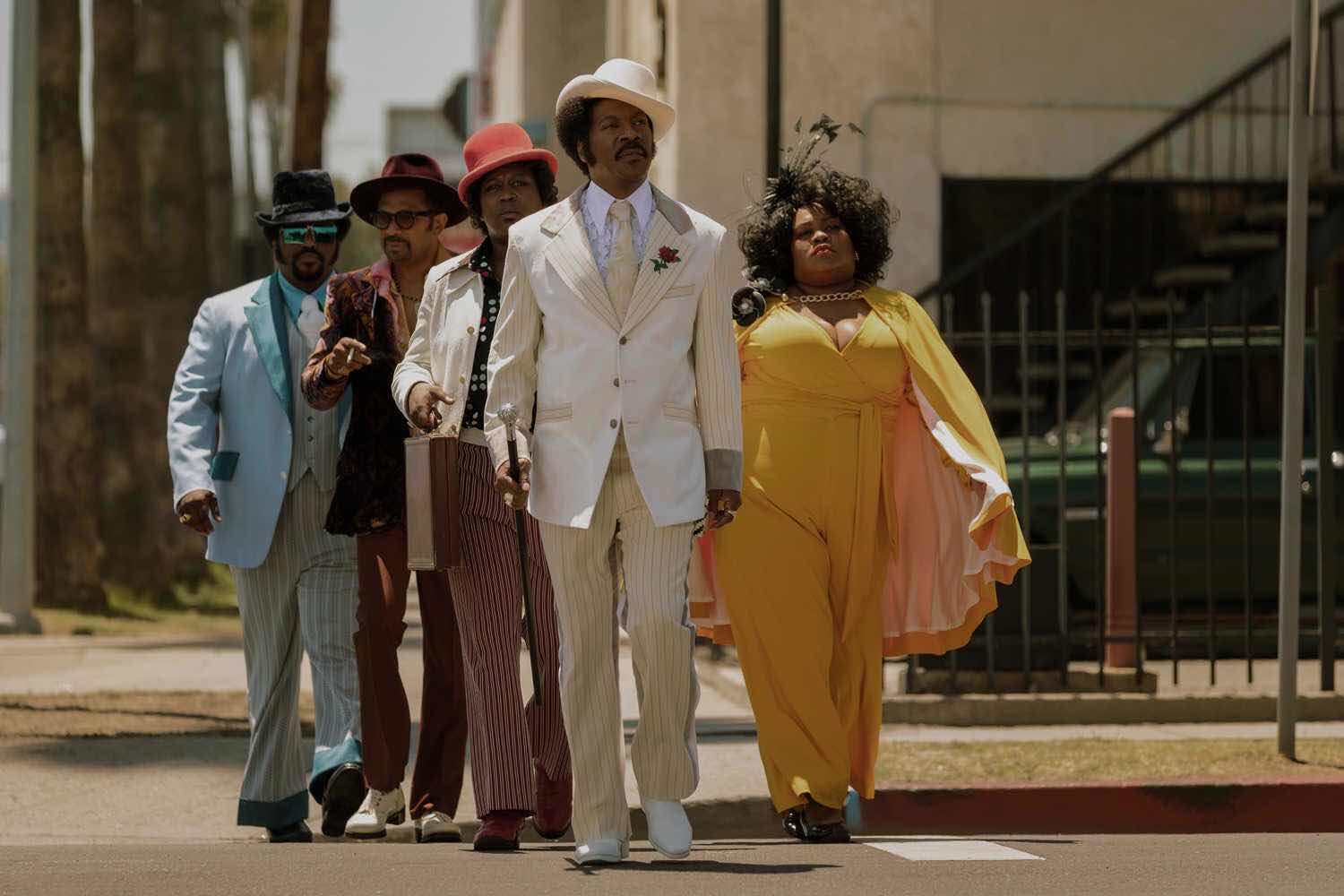
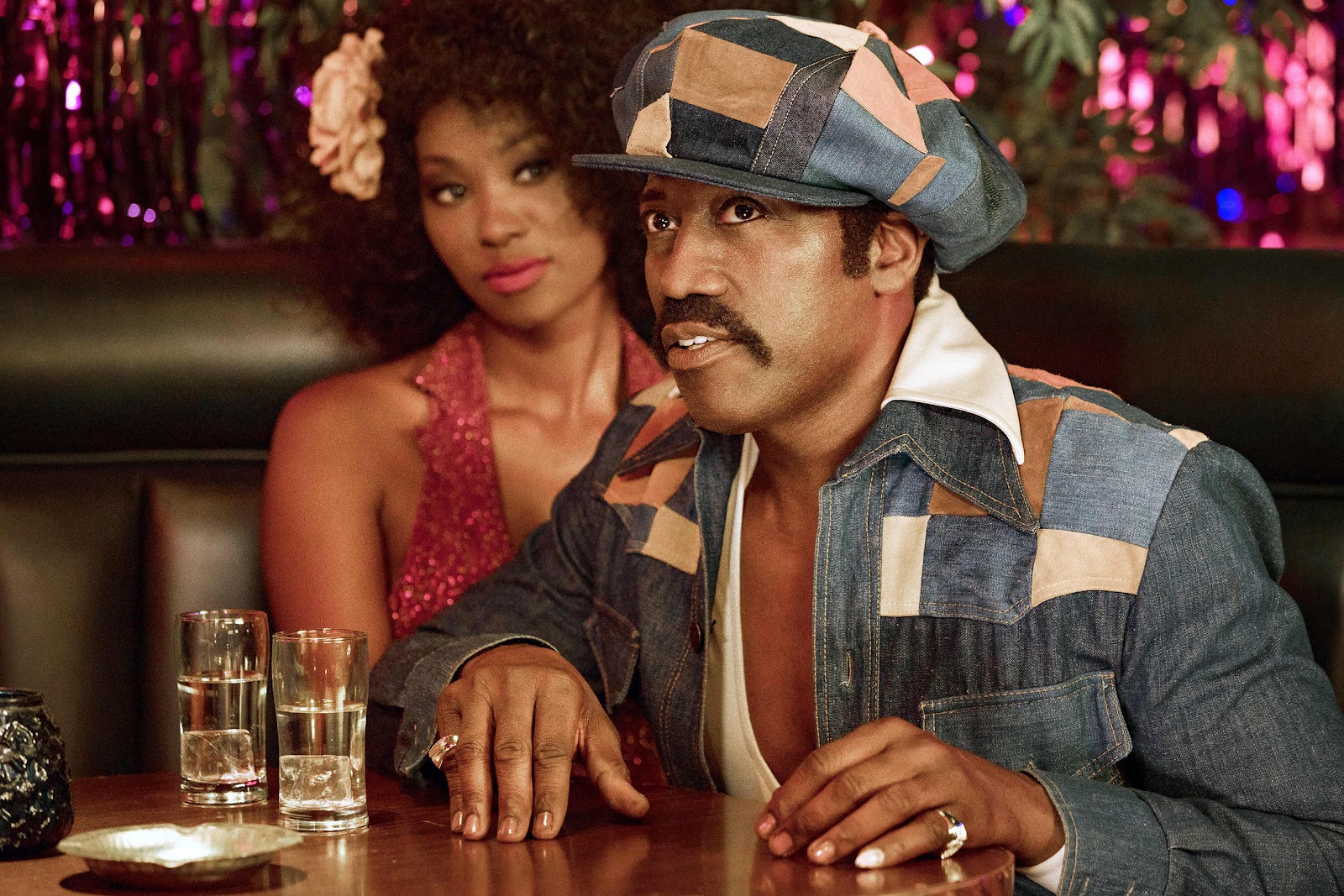
The cast is fantastic here. Eddie Murphy composes Moore with exuberance and bravado but also keeps clearly visible elements of sadness and desperation behind his eyes and between the tremble of the words he is speaking. It’s nuanced and quiet in small moments but also flashy and buoyant whenever the character Dolemite makes an entrance. Perhaps the standout from the film, alongside Murphy, belongs to Wesley Snipes who absolute nails the performance playing actor D’Urville Martin. Snipes steals every single scene that he is in. 


Director Craig Brewer rarely takes a break in the film, the pace is always fast moving. The melodrama that could sneak in never does, the forced romance and unnecessary conflicts that often take over biopics are pushed back in favor of letting the character of Dolemite chew scenery. While this keeps the film focused on entertainment value, it also keeps the film from delving deeper into the inherit drama associated with being a performer in Hollywood, let alone a black man trying to find his place in a world run by white men.   


Still “Dolemite is my Name” is a funny, heartfelt, and passionate ode to Rudy Ray Moore, the independent filmmaking process, and also the career of comedian Eddie Murphy who gives one the best performances of his career here.


Monte’s Rating

4.00 out of 5.00


Friday, May 24

The Perfection Review

The Perfection
Dir: Richard Shepard
Starring: Allison Williams, Logan Browning, Alaina Huffman, and Steven Weber

Practice makes perfect. There are musicians who practice the most difficult musical compositions for their entire careers, all with the hope of achieving the perfect manipulation of notes. The amount of perseverance, motivation, and ambition needed to accomplish this feat of perfection is a mindset that many cannot, and will never, accomplish. 

Director Richard Shepard crafts a genre-bending tale of perfectionism, jealousy, and deep trauma with the “The Perfection”. Assisted by a wonderful performance from Allison Williams, this bizarre, engaging, yet also unfortunately flawed, horror/thriller/science fiction mashup is consistently operating at maximum capacity, even when there are moments that it should make room for something other than gratuitous spectacle. 

Charlotte (Allison Williams) is a former musical prodigy who had to leave a house for musicians, run by an eccentric and wealthy husband and wife (Steven Weber and Alaina Huffman), when her mother became ill. Charlotte, now older and no longer a revered musician, seeks out the new prodigy, Lizzie (Logan Browning), who is now the star pupil of Charlotte’s old school. The two women are drawn to each, and eventual take a journey together that begins to lead to sinister outcomes. 

The mystery presented “The Perfection” is a major piece of the fun; the design of the narrative utilizes more than a few fun devices that keep the viewer guessing about what is going on and where the film is leading, specifically the editing style and the manipulative nature of the character development are key elements. There is a Brian De Palma-esque quality to the structure of the film, with manipulation of time and detailed story perspectives, however this film doesn’t have the auteur’s sense of subtlety within the frame. 

The film isn’t too interested in balancing the different elements of tension and suspense. Instead, this film completely swings for the cinematic fence every time it steps to the plate. And, on a few occasions, the approach towards instituting a twist in the story feels so forcefully implied that it ultimately takes away from the dark and twisted fantasy horror story being told. Still, it’s refreshing to see the chances that this film is willing to take, especially in its push towards being its own unique and unexpected vision. 

One of the strongest links within “The Perfection” is the fascinating performance from Allison Williams, who is building a strong horror credential with this film and Jordan Peele’s “Get Out”. Ms. Williams has a way of being devious and delicate at the same time, of being a manipulator and the manipulated; her smile has a quality that is both naïve and sinister. Watching Ms. Williams build her character, amidst the twists and turns, is amusing throughout the entirety of the film. 

Elements pile one after another, building upon each other, and all leading towards a finale that seems impossible to conclude after all the genre manipulations being operated at every corner of the film. This makes it difficult to conclude this film, especially when the spectacle of everything is being pushed towards extraneous limits, and unfortunately the addition of a specific story device doesn’t help “The Perfection” find its place in the end. 

“The Perfection” is a nicely composed, sometimes bizarre and sometimes fascinating, genre mashup. With a great performance from Allison Williams it’s a pleasant surprise to see a film play with genre in such interesting ways, even when it doesn’t always work out like it should. Still, for those willing to take the strange journey being offered here, “The Perfection” is looking to stimulate all your horror senses. 

Monte’s Rating

3.50 out of 5.00

Wednesday, March 13

Triple Frontier Review


By Emery Snyder @leeroy711
Director: J.C. Chandor
Starring: Oscar Isaac, Ben Affleck, Charlie Hunnam, Pedro Pascal & Garret Hedlund
Netflix Original – March 13, 2019

A group five of disaffected and financially stressed special ops adrenaline junkies all suffering from varying levels of PTSD get together to pull the ever-fated “one last job.” The plan is to break into the fortress of a ruthless Colombian cartel kingpin and steal his $75 million, then smuggle it out of the country and retire. All goes exactly according to plan, the bad guys all perish, and the soldiers spend the rest of their days sipping rum drinks on some beach without an extradition treaty…. That would be a pretty lousy movie.

The film was co-produced by Kathryne Bigelow and Mark Boal and it was co-written by Boal and Chandor. As expected from a Boal screenplay, the military procedural aspect is the film’s highlight. The stakes are heightened by situation only while characters remain largely stoic and wooden. We are meant to extrapolate the men’s emotions strictly from their backstories, never from their faces. I’m not degrading the film because of this. This type of indifference has its place. And Boal spent time as an embedded reporter in the earlier years after the invasion of Iraq, so I trust that his writing draws from the soldiers he witnessed in combat. Suppression of emotion is seen as a necessary survival tactic here.

So much of how successful a movie like this is to me will always depend on how well the scenes are shot. This film boasts several very well composed shootouts. The spaces are beautifully scoped in 2:11:1 ratio, giving the audience a clear perspective of the action presented. This is something that I always tend to mention because it is something that is so often done poorly. But here, I was glad to be able to easily follow along with each set piece, always having a good sense of where the threat was coming from and where our protagonists were moving towards. Cinematographer Roman Vasyanov has already made a name for himself in action cinema with films like END OF WATCH (’12) and THE WALL (’17) and I see his work continuing to improve.

I was also pleased to find that this, unlike many similar films, seemed to have an acute awareness of the moral ambiguity of what these men were up to. Although the characters were easily able to overcome their individual crises of conscience, the film itself keeps its thumb down on them as they struggle to keep themselves and each other convinced that what they are doing is righteous or even justified. It doesn’t take much to draw the parallels between their actions and the duplicitous nature of our own government’s involvement in Latin America over the past century. This is a moral tale more than anything. The fruits of ill-gotten gains are heavy, and fraught with peril. The money they steal becomes the reason they have such a hard time escaping the region. It weighs on them, both physically and metaphorically.

Unfortunately, this film suffers from some strange pacing issues. I think this is what separates it from better works. The scene from the trailer, that you would expect to be the climax, happens about thirty minutes in. Nothing afterwards manages to live up to the promise of the first act. It actually feels like the stakes dwindle the longer you watch, as does your overall interest. And this is a problem when your running time is over two hours.

In summary, TRIPLE FRONTIER is a well-made and better than average action flick that refreshingly acknowledges the faults of its own heroes. But fall well short of greatness in its overall delivery.


Emery’s Rating
3.25 out of 5 Stars
Follow us on Twitter @CodaReviews

Saturday, March 2

The Boy Who Harnessed the Wind Review


By Emery Snyder @leeroy711
Director: Chiwetel Ejiofor
Starring: Maxwell Simba, Chiwetel Ejiofor, Lily Banda & Aissa Maiga
Netflix Original – March 1, 2019

A small tribal village in Malawi is facing a “hunger season” due to a combination of flooding as well as a lack of foreign aid and an economic structure that devalues the crops of the farmers. William Kamkwamba, a local child engineering prodigy helps them build a wind turbine to power an electric well pump after reading about it in his school library, enabling their survival.  This film is based on his true story.

This is Ejiofor’s feature directorial debut, but it doesn’t show. The film was made with the steady and competent hand of a more experienced filmmaker. Of course, with 50 acting credits to his name, it’s not as if he’s a stranger to the medium. He’s worked with accomplished directors like Spike Lee, Stephen Frears, Steve McQueen and Alfonso Cuarón and I’m sure that his experience with technical craftsmen like that helped.

What we are given here is a fairly ‘paint-by-numbers’ plot with the technical flourishes to elevate it a bit above par as well as some nice subtext to chew on. To be clear, the plot’s predictability does nothing to lose points. It’s based on a true story and the title essentially gives away the film’s triumphant ending. We’re here for the journey, not the destination. The screenplay, adapted by Ejiofor hits the cinematic beats we have all grown accustomed to for the past century. But again, I’m not knocking it for this, familiarity is not always a bad thing. It is a compelling and inspiring story and I’m glad that it’s being told through film. Frequent Mike Leigh collaborator, Dick Pope provided the beautiful sweeping cinematography. The film is shot wide and does a great job of capturing the isolation and vastness of the region.

The subtext that Ejiofor used this film to elude to is what I found to be of particular note. What we are watching is a region that is caught in between two worlds. William is struggling to gain an education he can’t afford that would lift him up above his station. The full knowledge that this education would not only benefit him personally but also his village as well as the entire country does nothing to change the immediate fact that his able body is needed to toil in the fields. School is a luxury for those not currently facing starvation.

The country is seen as struggling to transition towards some form of democracy. But these early stages only pay lip service to the concepts of free expression and equality. And when bottom-line capitalism, meant to promote individual liberties quickly devolve into the cut-throat economics of desperation, the constituents begin to wonder what good the democratic process is at all.

William’s parents as well as the village elders are stuck in a similar struggle as they try to find the balance between their ancestral traditions and the modernization of the rapidly encroaching Western World. Trywell (Ejiofor) and Agnes (Maiga) lament that they always identified themselves as ‘modernists’ and that they had promised themselves that they would never ‘pray for rain.’ At the same time, they actively work to block the progress of their own children, dismissing William’s invention as ‘a toy’, blind to its potential. I found this to be the most prescient and interesting allegory of the film. Progressiveness is more than just abandoning the values and traditions held by previous generations. It also requires the embrace and acceptance that future generations will do the same to you. True progress will always need the rejuvenation of youth. This film, above all is a hopeful look at how this can and does work and I appreciate it for that.

Emery’s Rating
3.5 out of 5 Stars

Saturday, February 16

The Breaker Upperers Review


By Emery Snyder @leeroy711
Director: Madeleine Sami & Jackie Van Beek
Starring: Madeleine Sami, Jackie Van Beek, James Rolleston & Ana Scotney
Netflix Original – February 15, 2019

Mel (Sami) and Jen (Van Beek) are best friends and business partners. They provide a service concocting elaborate schemes to break people up from their unhappy relationships. As is inclined to happen, feeling get caught, and emoticons get in the way of their professionalism. This is a comedy from New Zealand, executive produced by Kiwi comedy royalty, Taika Waititi. It is written and directed by its two stars, Sami and Van Beek, both of which have previously had small roles in other Waititi films.

Central to the plot is the two ladies’ profession. It’s a job that obviously could never exist in the real world and it tends to set off alarm bells in my head. It’s not that I need these types of elements to be rooted in anything remotely resembling reality. It’s just that it immediately reminds me of some of the worst and laziest romantic comedies of the past two decades. These are the films in which Mathew McConaughey would typically play the handsome man-child who goes toe-to-toe with the beautiful but cold interventionalist like Sarah Jessica Parker in FAILURE TO LAUNCH (’06) or Kate Hudson in HOW TO LOSE A GUY IN 10 DAYS (’03). Montages are used to pass the time, writing templates are strictly adhered to, the lies and cover-ups get more ridiculous and hilarity ensues. In these films, the central conflict typically falls apart if one of the main characters would just simply tell the truth… you know… like real people do. These films typically bug me quite a bit because I find the characters to be so unbelievably unrelatable.

Fortunately, this film avoids the worst of these landmines. It still follows the same plot beats
and a lot of the characters’ actions lean into the outlandish zone. But the relationship between the film’s two main characters feels organic and weighted. The ‘May-December Romance’ and the ‘Hung-up on the ex-boyfriend’ subplots are just that. They’re ancillary and tangential at best. What is key is the relationship between two long-time best friends. They feel like real people, just funnier. And their friendship is based on a history of mutual love, respect and support.

The film suffers a bit unfortunately from the needlessness of the ‘ex-boyfriend’ subplot. It was fine as part of the characters’ background. But it seems like filler when we have to actually meet him. Ultimately, the scene he is in ends up only detracting from the overall charm. And with a running time of only 82 minutes, there are others showcased that I would have much rather spent time with.

What shines here are the performances. Sami and Van Beek both have great comedic timing and I would love to see them as a recurring duo in future projects. James Rolleston’s “Jordan” is very funny as the lovable doofus and Celia Pacquola’s “Anna” is one of the most hilarious manic-depressives in film history. And then there’s Ana Scotney as “Sepa”, Jordan’s jaded ex… Please give her a TV show. I’m actually not sure if I want to watch anything that she is not in. Her on screen personality is as magnetic as her cornrows. And if there is any point in the film that you begin to worry about her absence from the other choreographed dance numbers, just be patient. I had to look up her previous work and so far, it’s pretty thin. Apparently, she plays a “she-wolf” in an episode of the Waititi created, Wellington Paranormal, a show that looks to be a cross between Reno 911 and The X-Files. So, I’ll be looking that up on Youtube in a few minutes.

What this film may lack in tightness and plot, it makes up for in promise. I love the already established Kiwi troupe centered around Waititi and Jermaine Clement and if this is how the new crop is ushered in, I’m all for it. I would love to see more from these ladies.

Emery’s Rating
3.75 out of 5 Stars

Saturday, February 9

High Flying Bird Review


By Emery Snyder @leeroy711
Director: Steven Soderbergh
Starring: André Holland, Melvin Gregg, Zazie Beetz & Bill Duke
Netflix Original – February 8, 2019

Sports agent, Ray Burke (Holland) is representing the number one overall draft pick in the NBA, Erick Scott (Gregg). Unfortunately, no one is getting paid because the league is in a lockout due to a dispute between the team owners and the player’s union. Tensions are high, and resources are low. This leads Burke to concoct an innovative scheme, enacting a power shift in the league.

I’ll start off by saying that I’ve never considered myself a huge fan of Steven Soderbergh’s work. In the past decades, he’s had a lot of output. And largely, his films are almost always above average. But as much of them as I’ve seen, I couldn’t tell you what his masterpiece is. He always seems to be leaning towards the cutting edge and experimenting with equipment and techniques. But more often than not, I’ve felt that this tends to detract away from any heart in his stories. It seems that his passion lies more in filmmaking as an exercise and a process than as an expression. I don’t want to sound like I don’t have respect for his work. Again, he has had surprisingly few duds. I just have rarely if ever, emotionally connected with his work.

On the other hand, I have been a huge fan of NBA basketball since the late 80’s. So, I was very intrigued to see how this subject was tackled. I wasn’t expecting what this turned out to be. I was surprised to see the level of industrial understanding Soderbergh and writer, Tarell Alvin McCraney had. The inner workings exposé impression in the film was far more insightful than anything you’re likely to see from an ESPN daytime talk show. It was also unique to see real interviews with three NBA stars intercut with this fictional tale. It was as if they were there explicitly to give validation and weight to the story.

Soderbergh’s dedication to experimentalism can primarily be seen here in his camera work. He is also credited as the film’s cinematographer. It’s got a unique look to it. Like his 2018 UNSANE, it was also shot on an iPhone. You can sense the fun he’s having with it and I appreciate the almost amateurish and at times even voyeuristic look, especially in the first act. A lot of the framing is static. Characters come in and out of view. I think this is meant to mimic some of the thematic elements that the film is expressing. I’ll get into those later.

The cast has some exciting elements. MOONLIGHT’s Holland does well as the calculating agent and I hope I’ll never get tired of watching “Atlanta” star, Zazie Beetz. She’s always interesting to watch. The ever dependable, Kyle MacLaughlin shows up also in a thankless but crucial role. But, the one that I was most interested in was Bill Duke. I was surprised and thrilled to see the COMMANDO and PREDATOR star last year in a small role in MANDY. He’s probably the best part of this film. He plays Spence, a hard-nosed coach of a charity youth league. There’s a complexity to his character that I’m sure he understood and embodied better than I can describe. So, I won’t try.

What I find most special about this film is its screenplay. Ultimately, this is the clever story of exclusivity and exploitation. And how modern technologies and media platforms are challenging the capitalistic old-guard. We live in a time in which the perceived exclusivity and secrecy of almost every industry is constantly having to compete with a relentless flow of free information. Real estate agents are losing their commissions to online self-listings and mechanics and handymen are challenged by DIY Youtube channels. The entertainment industry has had to adjust as well. More and more recording artists are finding that they have to monetize concerts and t-shirts because their music is only an on-demand click away. Filmmaking is the same way. Not only do theaters have to compete with streaming sites, but the progression of technological advancements in camera and editing equipment has made filmmaking more accessible to the hoi polloi.

There’s no reason to think that this same mentality will not also seep into the powerful and lucrative sports entertainment industry in due time. While watching this, I couldn’t help but draw a parallel to the NFL and team owner’s attempt last year to impose new rules regarding player’s conduct during the National Anthem. Their bluff was called, and no actual rule ended up changing. But when the dust began to settle, the power began to shift. The owners and the leagues have their place as the stewards of the infrastructure that puts these talents on display for us, the fans. But we don’t show up or tune in to watch them. The more that this truth is realized, the more fairly the power and wealth will be distributed amongst the industry.

Emery’s Rating
3.75 out of 5 Stars